

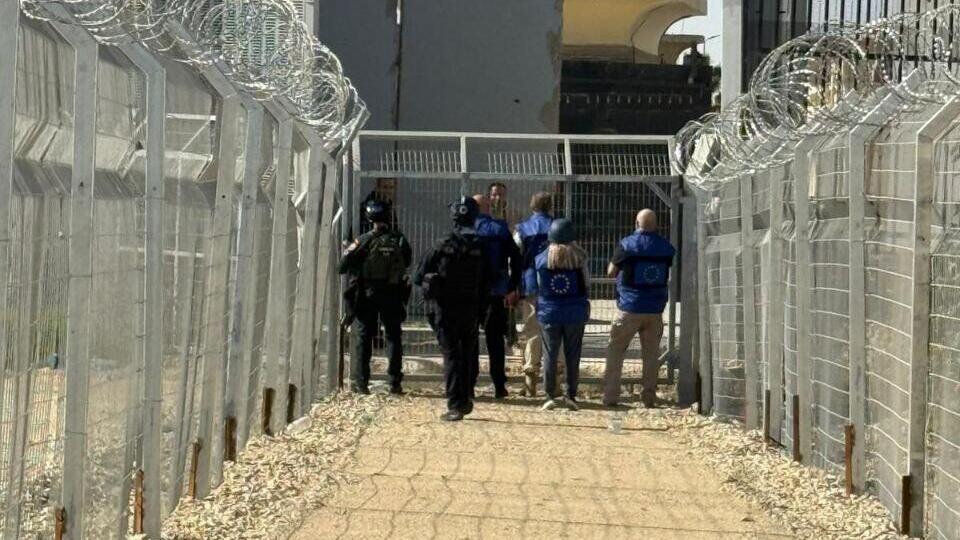
Representatives of a dedicated European Union body entered the Rafah Crossing from the Sinai Peninsula on Sunday for the first time, to oversee movement at the terminal reopened by Israel as part of the ceasefire agreement with Hamas.
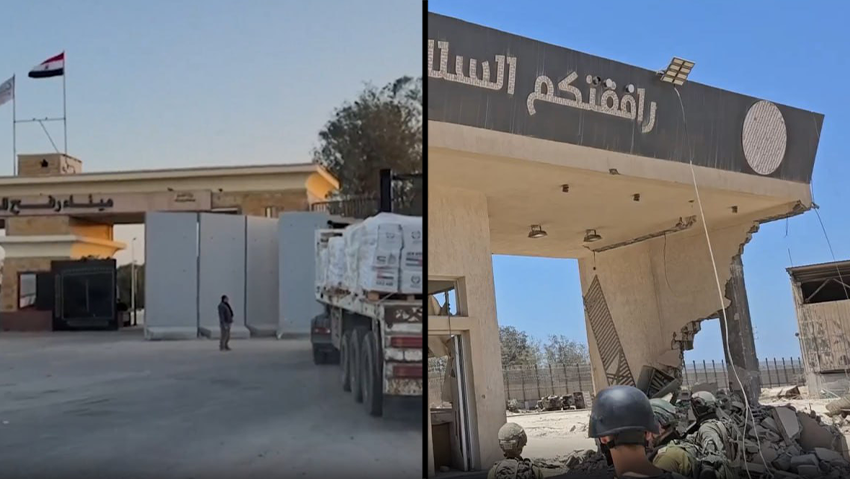
The crossing, which connects Gaza and Egypt, was destroyed in May 2024 during the IDF’s takeover of Rafah. In recent months, the site has undergone extensive renovations, including the removal of debris, leveling and paving of the ground, and the installation of caravans to serve as passport inspection stations on the Gaza side.
The Rafah Crossing in June 2024 and today, February 2026
(Video: Reuters, Yoav Zitun)


Alongside the European representatives, the crossing will be operated by Palestinian workers identified with the Palestinian Authority. IDF forces will remain deployed along the Philadelphi Corridor, while an IDF inspection post located about 300 meters from the crossing will monitor travelers remotely using technological means, without a physical presence of soldiers.
Initially, the renovated terminal is expected to handle hundreds of crossings per day in both directions, with capacity set to expand later. The reopening was approved by Israel following U.S. pressure to move toward Phase B of the agreement to end the war, after the return of the last fallen Israeli hostage, Ran Gvili. At this stage, the crossing is operating on a trial basis.
EU officials were documented at the crossing on Sunday, while buses carrying Palestinian workers arrived on the Egyptian side ahead of the start of operations. Palestinian reports said the full operating protocol has not yet been finalized, and discussions are ongoing between the mediators and the IDF regarding procedures and arrangements.
The European Union delegation at the Rafah Crossing
Actual movement of people is expected to begin on Monday. About 150 people are slated to exit Gaza each day, while roughly 50 are expected to return. The crossing had remained almost entirely closed throughout the war, since October 7.
Last week, the IDF announced that exits from and entries into Gaza would be permitted in coordination with Egypt, subject to prior Israeli security approval and oversight by the EU mission. The mechanism mirrors the one used in January 2025 during a previous ceasefire as part of the second hostage deal.
Officials said returns from Egypt to Gaza will be allowed only for residents who left the Strip during the war. In addition to initial identification and screening by the EU mission at Rafah, further checks will be conducted at an additional inspection point operated by Israel’s security system in IDF-controlled territory.
Israeli monitoring will be carried out remotely using surveillance systems, rather than by soldiers on the ground. The Egyptians will provide Israel each day with lists of the hundreds of people scheduled to cross in both directions the following day. Israel will also allow lower-level terrorists wounded during the war to exit Gaza if they choose, and in principle, all those leaving will retain the right to return.
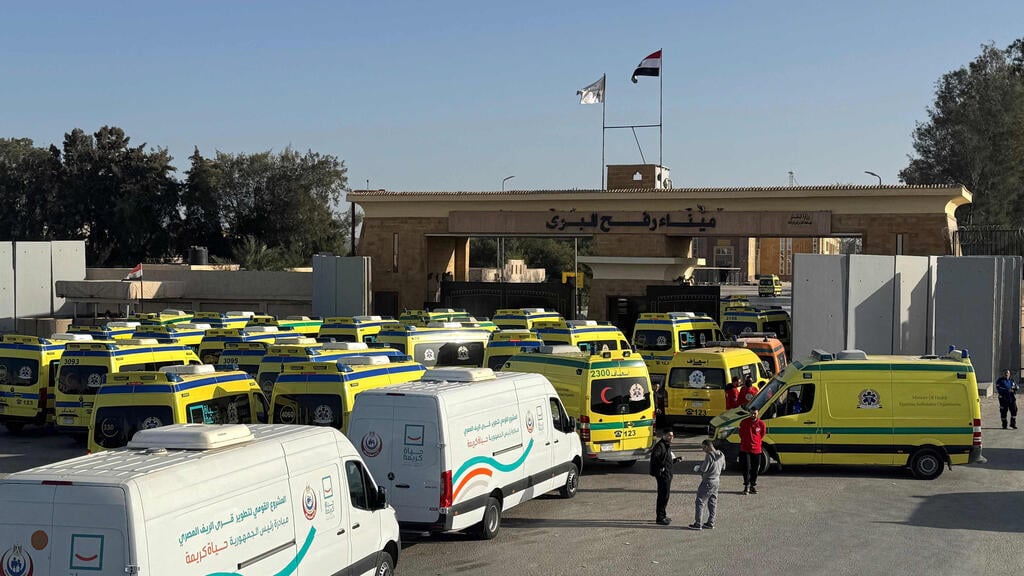
The Egyptian side of Rafah Crossing
(Photo: AFP)
According to Gaza’s Health Ministry, about 20,000 wounded and sick individuals are awaiting approval to travel abroad for medical treatment, including 440 said to require immediate evacuation to save their lives. Palestinian officials claim that since the crossing closed on May 7, 2024, 1,268 patients have died while waiting for permission to leave. Only 3,100 patients managed to exit Gaza during that period.
Against the backdrop of the reopening, eight Arab and Muslim foreign ministers issued a statement condemning Israel for what they described as repeated ceasefire violations in Gaza, while ignoring violations by Hamas, whose armed terrorists continue to emerge from tunnels east of the so-called yellow line, approach it in various parts of the Strip and threaten IDF forces.
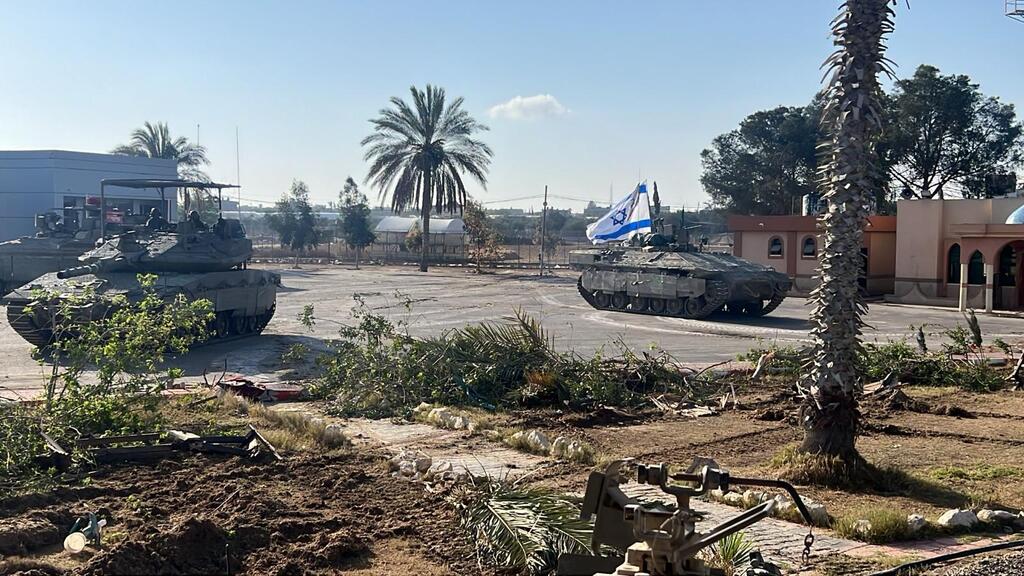
IDF forces in the Rafah Crossing on June 2024
(Photo: IDF)
The statement was signed by the foreign ministers of the United Arab Emirates, Turkey, Egypt, Jordan, Indonesia, Pakistan, Saudi Arabia and Qatar. They claimed Israel’s actions led to the killing and wounding of more than 1,000 Palestinians, and warned that such practices risk escalating tensions and undermining efforts to advance the second phase of the peace plan proposed by U.S. President Donald Trump, as well as the implementation of U.N. Security Council Resolution 2803.
The ministers called on all parties to act with restraint, uphold the ceasefire and avoid actions that could destabilize ongoing efforts to create conditions for recovery and reconstruction in Gaza.