


A week after its publication, the storm around what New Yorkers are already calling Mayor Zohran Mamdani’s “Mapgate” is refusing to die down, placing the mayor at the center of a culture and demographics battle. The controversy began after City Hall published an official map of 30 immigrant enclaves, intended as a guide for World Cup tourists.
But the initiative infuriated several of the city’s older communities. Italians, Irish and Jews discovered, to their dismay, that they were no longer on the map. While famous historic neighborhoods such as Little Italy were left out, the city added Muslim enclaves including Little Palestine, Little Egypt and Little Senegal. A fourth new addition was Little Odessa.

Mamdani’s response to the criticism did little to calm the uproar. On Friday night, he tried to apologize in his own word-conscious style, saying it was “clear” the map was not an exhaustive list of the city’s more than 200 ethnic communities.
He promised future changes, including the addition of Little Italy. But in an attempt to deflect the criticism, he shifted responsibility to his predecessor, Eric Adams. “This map was originally created by the previous administration in 2023, and when we inherited it, we added several more neighborhoods,” Mamdani said.
In practice, the Mayor’s Office of Immigrant Affairs under Adams never created such a map. The previous administration produced a series of hand-drawn illustrations for 27 communities as part of Immigrant Heritage Week, showing local churches, markets and restaurants. The Mamdani administration took the list, compressed it into a single citywide map and added four new neighborhoods.
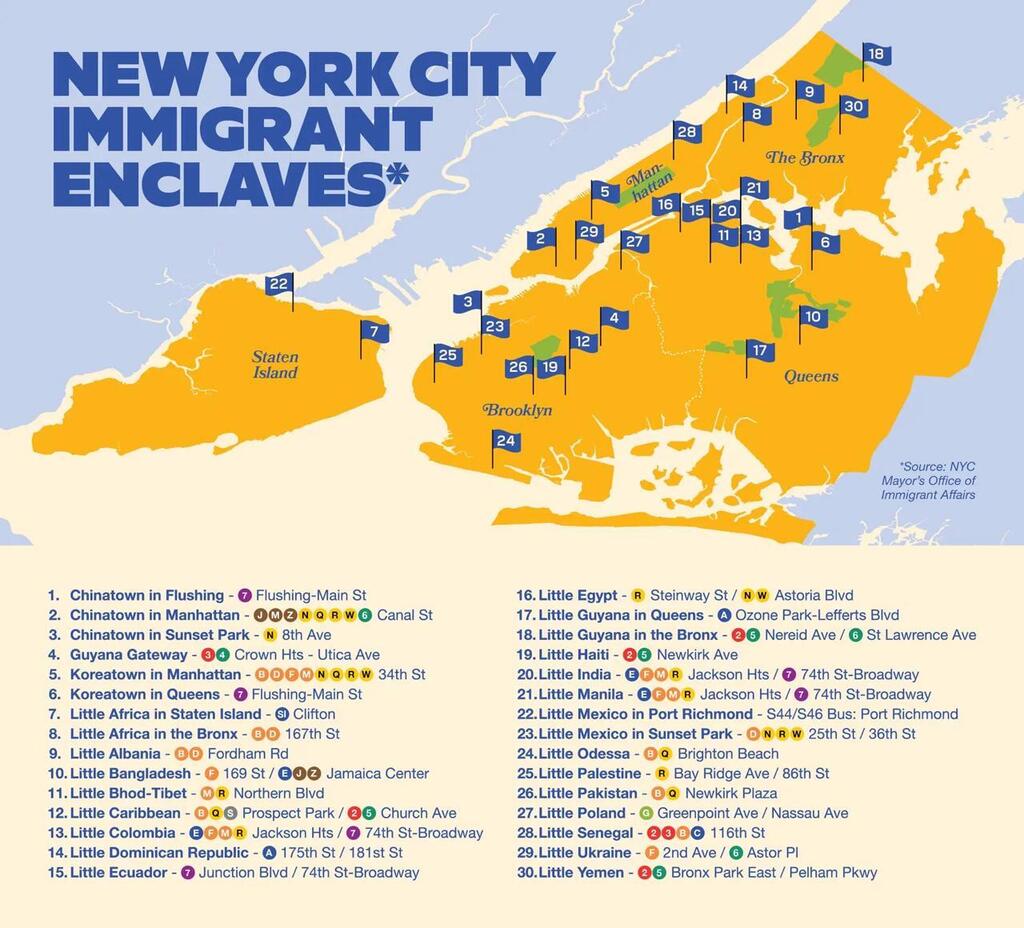
Critics argue that the fact that most of the communities prominently added this year are Muslim reveals a clear agenda by Mamdani. The city’s first Muslim mayor promised throughout his campaign to fight Islamophobia and bring the Muslim community, now nearly equal in size to the city’s Jewish population, to the forefront.
Little Palestine, in Brooklyn’s Bay Ridge neighborhood, is indeed a well-known area to New Yorkers and is not a Mamdani invention. Nor would many New Yorkers deny that today’s Little Italy contains far more tourist-trap restaurants than actual Italian immigrants.
Still, frustration is boiling on Mulberry Street, the neighborhood’s historic heart. The Italian caucus in the City Council, composed entirely of Republicans, accused the Democratic administration of erasing Italian Americans and said the new map was incomplete at best and a real insult at worst. Restaurateur Tommy DeNuza, nicknamed for his famous nose, urged Mamdani to visit him. “What do I know about politics? I serve pasta here,” he said.
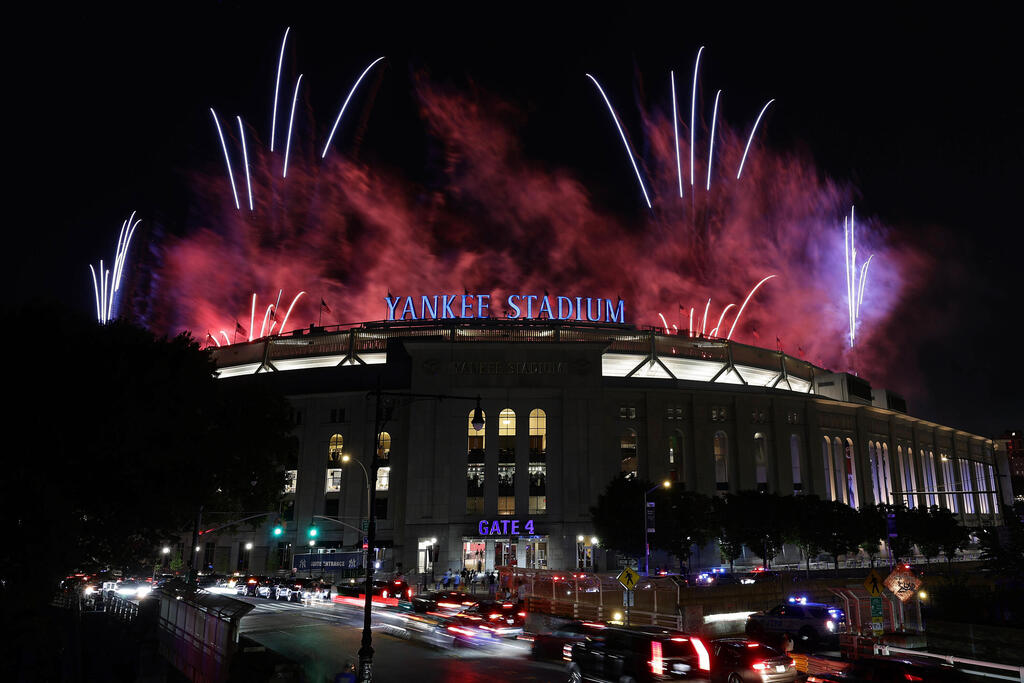
America 250 celebrations in New York
(Photo: AP Photo/Adam Hunger)
Irish residents noted that their neighborhoods in Woodlawn and Breezy Point were left out, while many also questioned why Williamsburg’s Hasidic area was omitted.
David Aronov, a local Jewish politician who represents the city’s Bukharian community, said such a large community in central Queens was left off the map because it dared to criticize Mamdani over his harsh positions against Israel.
Moshe Davis, former director of the office to combat antisemitism under Adams, advised Mamdani to visit the Jewish enclaves he left out, including Syrian Flatbush and Hasidic Borough Park. “Maybe if he actually visits there, he’ll stop calling them monsters,” Davis said, alluding to a speech in which Mamdani compared the pro-Israel lobby AIPAC to monsters.
The “Mapgate” affair joins another controversy involving Mamdani’s speechwriter, Julian Gerson, who omitted Catholics from a draft mayoral speech dealing with persecuted religious groups. When a staff member suggested adding them, Gerson left a dismissive note on the draft: “Meh, we can’t include everyone.”
For many New Yorkers, the episode reinforced the sense that the administration knows exactly whom it chooses to include, and whom it leaves outside the lines.