

Three IDF troops — an officer and two soldiers from the Yahalom combat engineering unit — were seriously wounded early Saturday when a Hezbollah explosive drone struck them near the Ali Taher ridge in southern Lebanon, the IDF said after the Sabbath. The attack occurred at around 2:30 a.m.
The Prime Minister’s Office had unusually disclosed the incident earlier Saturday, before a formal IDF announcement and during the Sabbath.
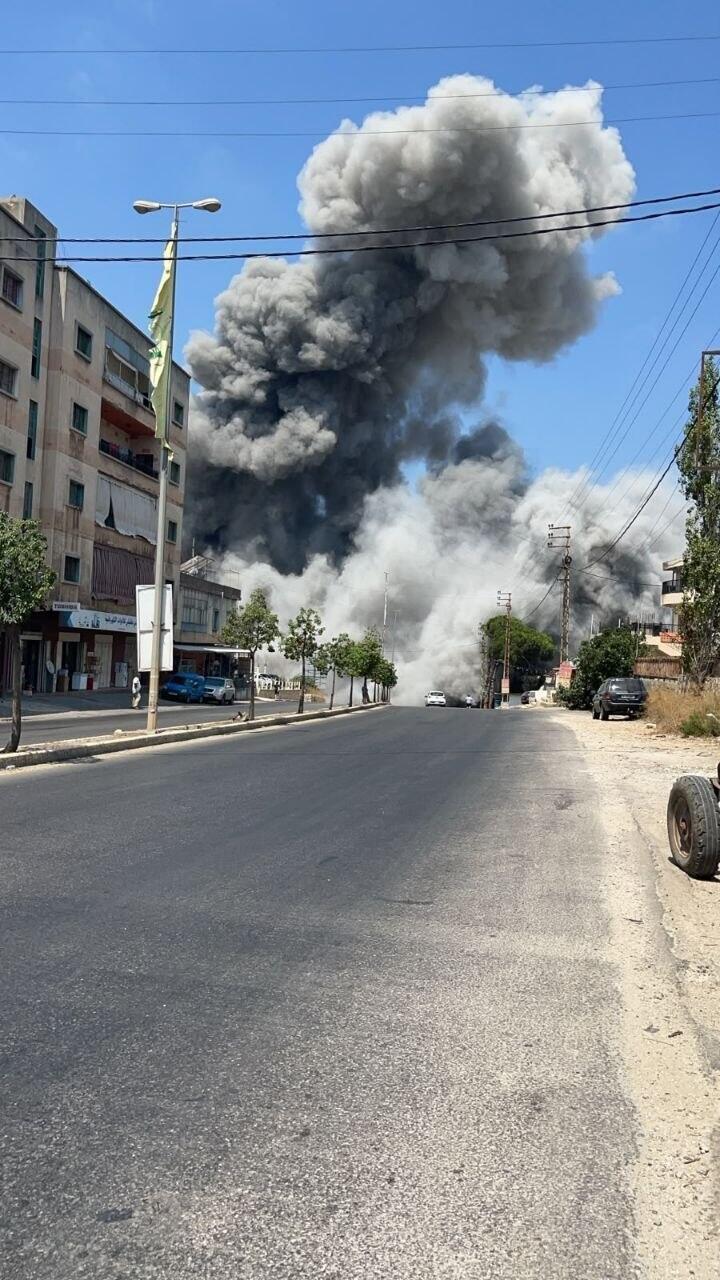
“This morning Hezbollah violated the ceasefire in Lebanon by attacking our soldiers in the security zone, which protects Israeli communities just across the border,” the PMO said in English. “The Hezbollah attack seriously injured three of our soldiers. The IDF responded by striking the Hezbollah terror headquarters which ordered the attack.”
The three troops were evacuated to Rambam Medical Center in Haifa. By Saturday evening, two remained in serious condition while the third had improved to moderate condition.
Shortly after the PMO statement, the IDF said its retaliatory strikes killed Ali Hassan, a battalion commander in Hezbollah’s elite Radwan Force, at a central Hezbollah headquarters in Ansar in southern Lebanon. The military said additional Hezbollah operatives involved in advancing attacks against IDF forces in the security zone were also killed.
According to the military, Hassan’s family was inside the military headquarters with him at the time of the strike and was reportedly also hit.
“They were not the target of the strike,” the IDF said. “The strike was specifically directed at Hassan, who was a lawful target under international law. The terrorist used his family as human shields and hid with them inside the military headquarters.”
“The IDF will not allow the Hezbollah terrorist organization to harm the citizens of the State of Israel or its forces and will continue to act to remove threats,” it added.
The Israeli statements came after Lebanese media reported that 11 people were killed and 19 wounded in Israeli strikes Saturday in the Ali Taher ridge area of southern Lebanon.
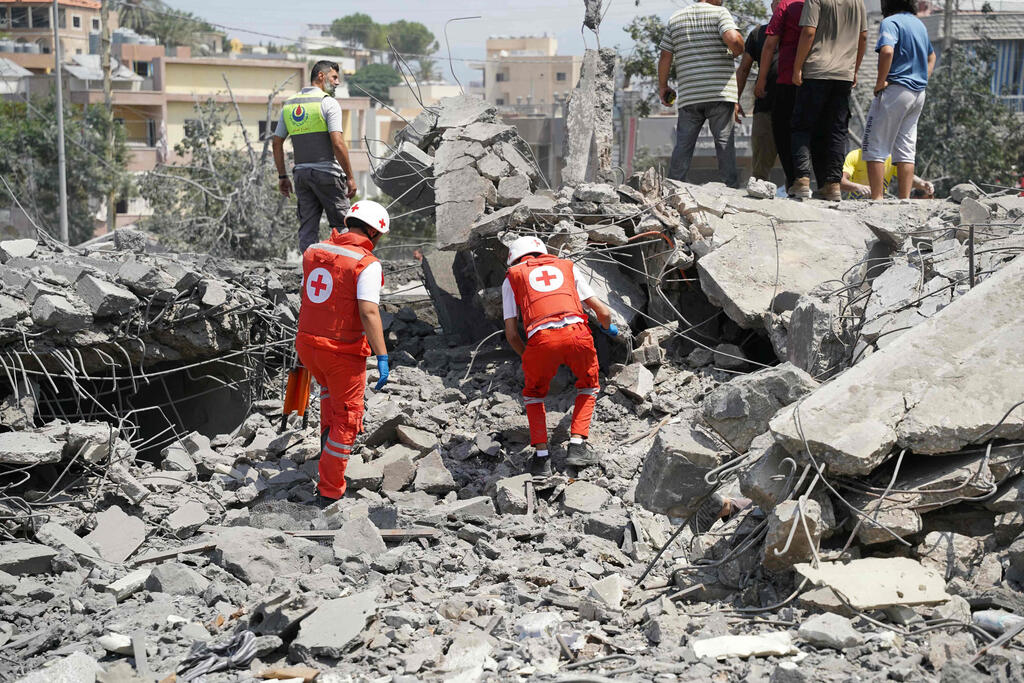
Aftermath of an Israeli strike in southern Lebanon
(Photo: Abbas FAKIH / AFP)
According to the reports, four people were killed and 17 wounded in a strike on Deir al-Zahrani in the Nabatieh area, with a child and 11 women among those wounded. Seven more people were reported killed in Ansar. Lebanon’s Health Ministry said the dead there included two children and three women.
The Prime Minister’s Office said the IDF learned only after the strike that civilians had been brought into the military compound.
“Only later did the IDF learn that Hezbollah deliberately put civilians in that military compound,” the statement said. “Hezbollah is willing to do anything, including using its own civilians as human shields, to falsely accuse Israel of deliberately targeting civilians, which the IDF clearly did not.”
Israeli officials later explained that the unusual statement was issued during the Sabbath because the reaction in Lebanon to the strikes had been “very harsh” and Israel felt it needed to clarify the circumstances of the attack.
“There was no choice,” the officials said.
A spokesman for Prime Minister Benjamin Netanyahu also told AFP after the strikes that Israel wanted “more serious” negotiations.
Hezbollah accused Israel of carrying out a “brutal massacre” against civilians and claimed the escalation was politically motivated.
“The Lebanese people woke up this morning to attacks and a brutal massacre carried out by Israel against innocent people,” the group said. It accused Netanyahu of seeking to escalate the war for domestic political purposes and urged Lebanese authorities to reconsider direct negotiations with Israel.
Lebanese media also quoted U.S. Ambassador to Lebanon Michael Issa responding to a question about when Israeli strikes would end by saying: “Tell Hezbollah that if it hands over its weapons, everything will stop.”
Saturday’s strikes produced the highest reported death toll since Israel and Lebanon signed their framework agreement at the end of June.
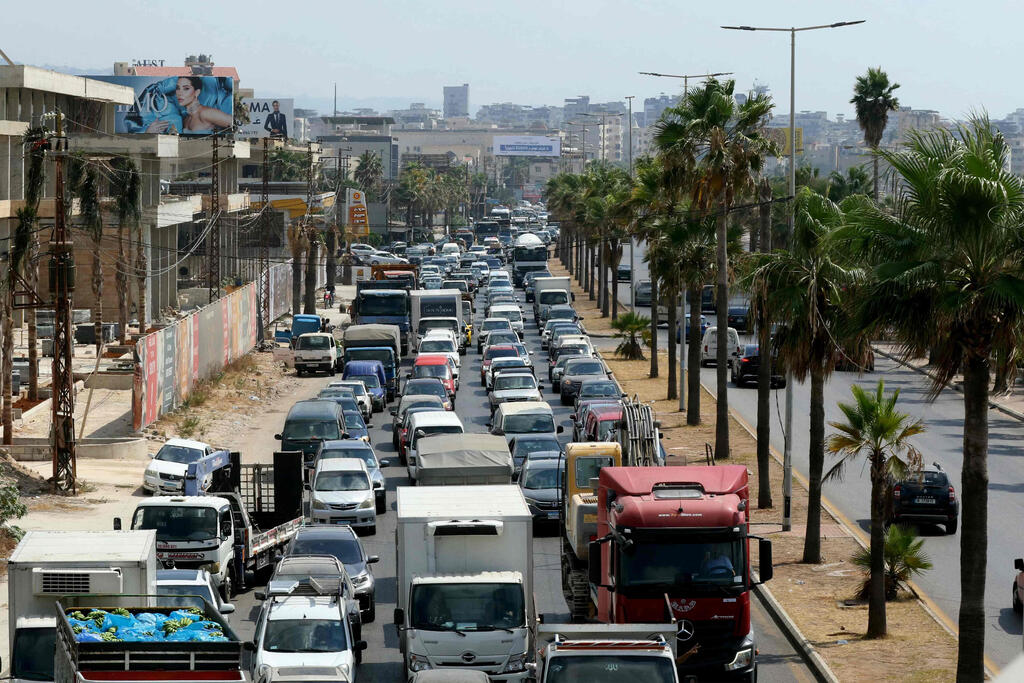
Southern Lebanese heading north after the strikes
(Photo: Mahmoud ZAYYAT / AFP)
Hezbollah subsequently accused the United States of complicity with Israel, saying Washington was prioritizing Israeli security over Lebanese sovereignty and warning that continued Israeli action would face “an appropriate response.”
Lebanese President Joseph Aoun condemned the strikes and what he described as repeated violations of the framework agreement and international laws protecting civilians.
The Lebanese presidency said the strikes had killed an entire family from Ansar and described them as “a clear message regarding the negotiation process and the American efforts aimed at implementing the agreement.”
Lebanese Prime Minister Nawaf Salam also rejected Israel’s claim that the strikes targeted military infrastructure.
“The Israeli escalation since this morning is extremely dangerous and harms efforts to establish stability,” Salam said. “Those killed in the Israeli strike were not part of military infrastructure, nor were the children and women.”
He added that responsibility for dealing with any military structures inside Lebanon rests exclusively with the Lebanese state, army and legitimate institutions, arguing that their existence does not give Israel the right to violate Lebanese territory or endanger civilians.
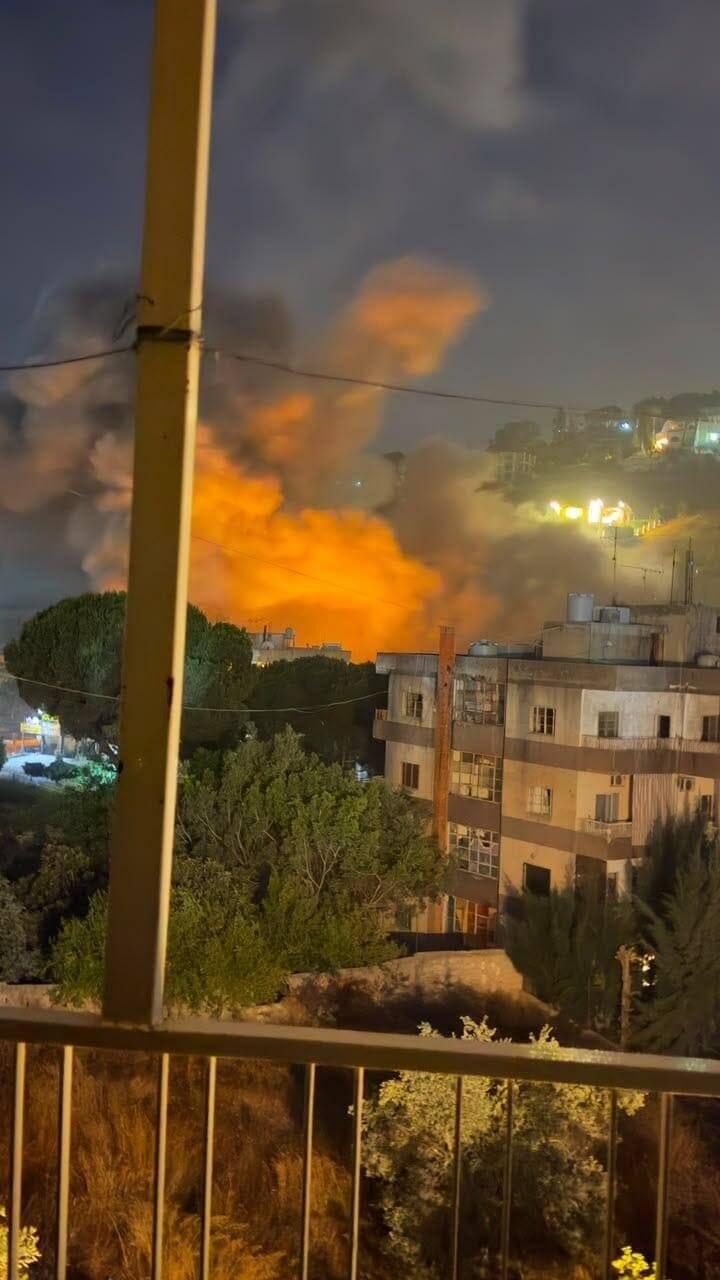
IDF strike in Lebanon
Israel’s ambassador to the United States, Yechiel Leiter, said Hezbollah had attacked IDF troops operating in the security zone in violation of the ceasefire and that the commander killed in response had used his own family as human shields inside a military headquarters.
He warned that if the Lebanese government used the incident to delay or halt peace contacts, it would hand Hezbollah “a tactical victory.”
U.S. Ambassador to Israel Mike Huckabee also backed the Israeli account, writing that “Iran’s proxies are pure evil” and accusing Hezbollah of deliberately placing children in the military area knowing Israel would respond.
The escalation comes amid growing tensions over the strategic Ali Taher ridge.
Lebanese channel Al-Jadeed reported Friday, citing official sources, that Tehran had sent a direct warning that an Israeli strike in the Ali Taher area would lead Iran to enter the cycle of escalation.
According to the report, Israel has refused to withdraw from the area in a way that would allow it to be transferred to the Lebanese army, while Hezbollah is insisting that no handover take place without a full Israeli withdrawal.
The report followed warnings in Lebanon that Israel could be preparing an operation to seize the strategic ridge. A senior security official told Lebanese newspaper Al-Joumhouria that officials in Beirut had received messages indicating Israel was prepared for such a move and was awaiting a green light from the United States.
First published: 17:58, 08.15.26