


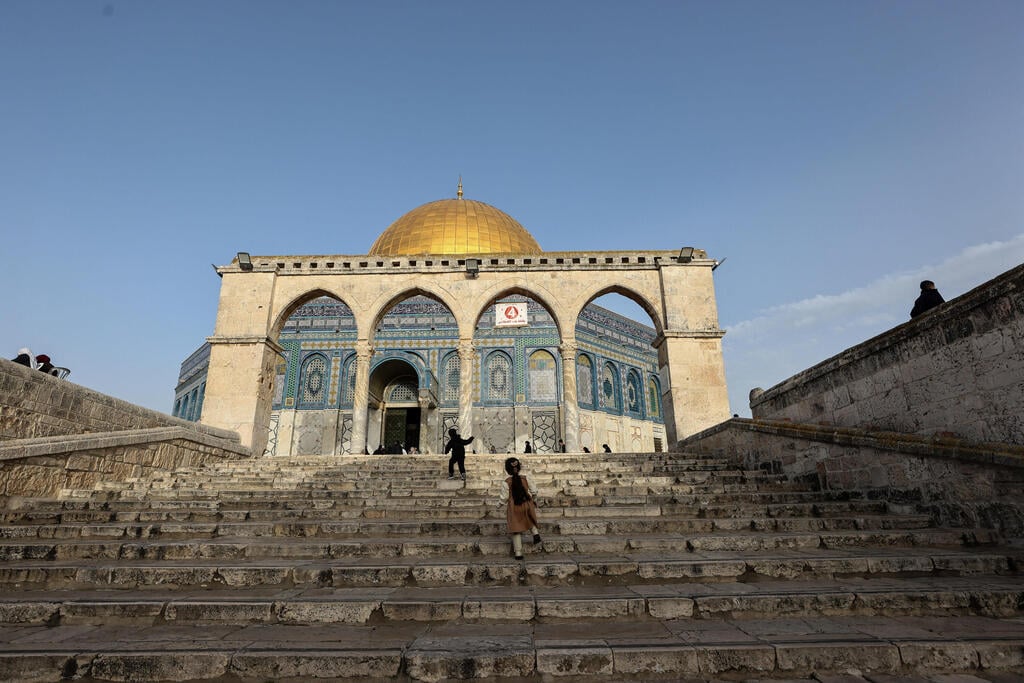
The IDF Central Command has completed preparations for the start of Ramadan on Friday, as thousands of Palestinian worshippers are expected to travel to Jerusalem for prayers at a contested holy site sacred to both Muslims and Jews.
The Muslim holy month, marked by daily fasting and heightened religious observance, has in recent years been a period of heightened tensions in Jerusalem and the West Bank.
Israeli security officials say this year’s preparations are shaped not only by concerns about unrest but also by regional tensions with Iran and uncertainty over whether the United States may launch a military strike against Tehran over its nuclear program.
Central Command said it is focusing on defensive measures aimed at preventing escalation.
As a lesson from previous years, when some Palestinians who entered Jerusalem for prayers did not return to their homes in the West Bank, Israel will introduce a new monitoring system. Palestinians granted permits to cross into Jerusalem for prayers at the Al-Aqsa Mosque compound — known to Jews as the Temple Mount — will be required to use a special magnetic card at designated checkpoints near their place of residence. Those who fail to exit by the end of the permit period will have their details forwarded to Israeli police and face immediate sanctions.
Security officials say Palestinian leaders are pressing for eased restrictions during Ramadan, arguing that unlike the previous two years — when the war in Gaza was at its height — the fighting has subsided, there is no active northern front with Hezbollah in Lebanon and tensions with Iran have decreased. Among the requests is a relaxation of movement restrictions to allow easier passage through checkpoints.
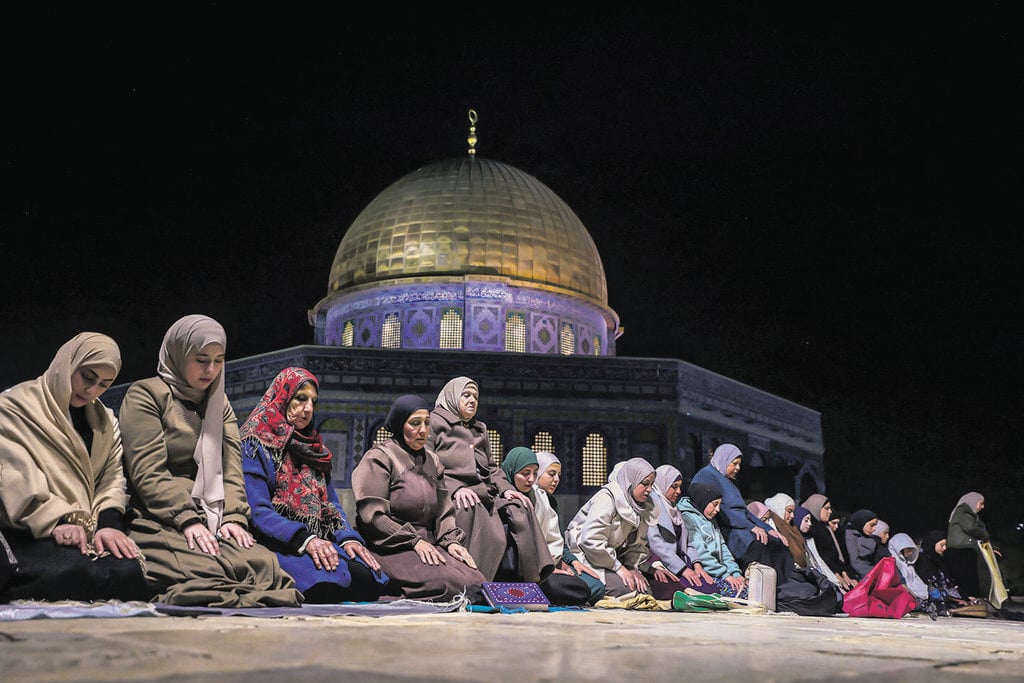
Muslims praying on Temple Mount
(Photo: Jamal Awad/Reuters)
Meanwhile, Israeli officials describe conditions within the Palestinian Authority as deteriorating. They cite rising crime, increased violence and higher divorce rates, as well as a worsening economic crisis. The authority has faced financial strain in part because of disputes over tax clearance revenues — funds that Israel collects on its behalf and periodically withholds or delays over its payouts to convicted terrorists and their families — contributing to rising prices and public frustration.
This will be the third Ramadan since Hamas’ Oct. 7, 2023, attack on southern Israel, in which terrorists killed about 1,200 people and abducted roughly 250 others, triggering the war in Gaza. Since then, Israel has imposed tighter movement restrictions on Palestinians in the West Bank. Most worshippers traveling to Jerusalem are expected to pass through the Rachel Crossing near Bethlehem and the Qalandiya checkpoint north of Jerusalem.
Since the war began, Palestinian laborers from the West Bank have largely been barred from working inside Israel, cutting off a major source of income. Over the past two years, Central Command says it has developed the ability to isolate roads and specific areas in the West Bank to better enforce movement controls.
The military says it has identified an increase in stone-throwing attacks against Israeli vehicles, a long-running tactic in the conflict. Under current directives, soldiers are authorized to use lethal force against individuals throwing stones in life-threatening situations. However, noting that many of those involved are teenagers between 13 and 15, commanders say they are reinforcing security along roads and near settlements identified as frequent flashpoints in an effort to prevent incidents before they escalate.
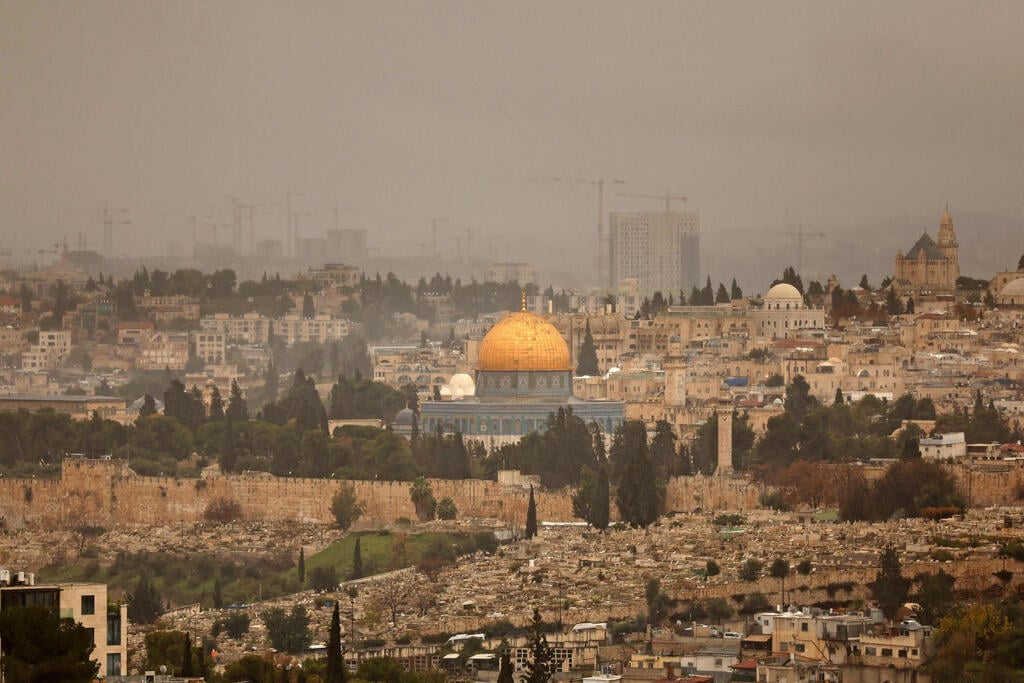
The Temple Mount
(Photo: AHMAD GHARABLI / AFP)
The army also reports a rise in friction between Jewish Israeli shepherds and Palestinian shepherds in rural parts of the West Bank. Israeli officials attribute some of the tensions to the expansion of small agricultural outposts and farms, which they say has narrowed grazing areas and increased contact between communities. The West Bank Division distinguishes between such clashes and what it calls nationalist crimes — ideologically motivated attacks by Israeli extremists against Palestinians.
Security officials say the cumulative effect of these incidents is stretching military resources and complicating efforts to implement recent Cabinet decisions regarding West Bank policy.
The division is also preparing for the return of a group of Israeli settlers to the former settlement of Sa-Nur in the northern West Bank. The settlement was evacuated in 2005 as part of Israel’s disengagement plan, which saw the withdrawal of Israeli forces and settlers from the Gaza Strip and four small settlements in the northern West Bank.
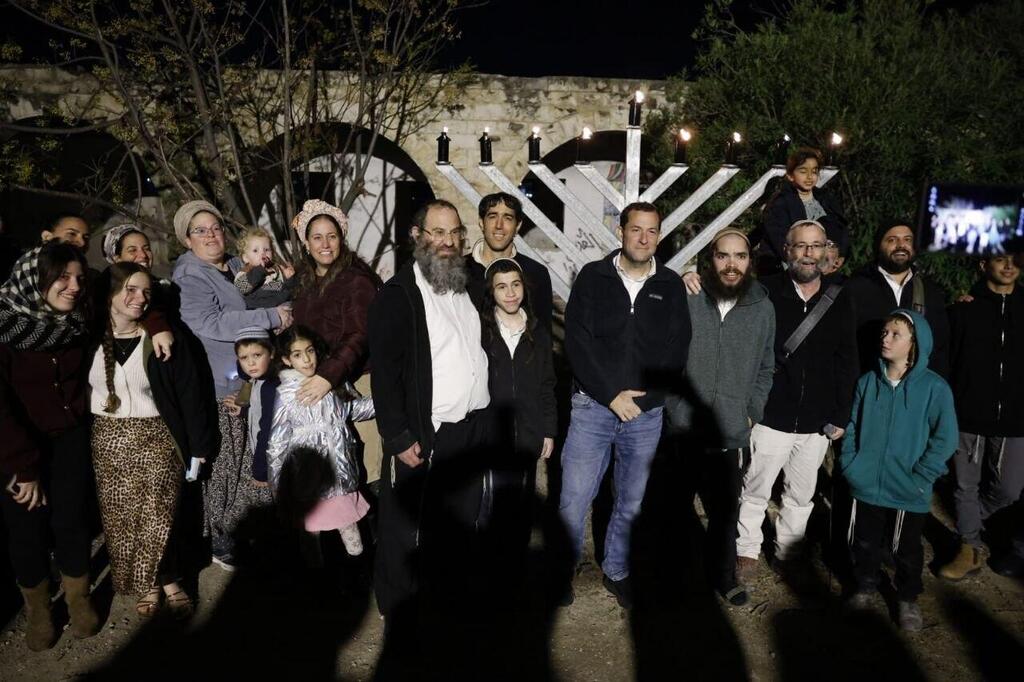
Hanukkah candlelighting in Sa-Nur, West Bank
(Photo: Shomron Regional Council)
Last month, Defense Minister Israel Katz approved preparations for settlers to return to the site, including security arrangements and the reopening of access roads. Military officials say ongoing clashes divert attention and manpower from those preparations.
Meanwhile, tensions are rising within the Palestinian Authority itself. Earlier this week, Palestinian security forces shot and killed two youths in the village of Tamoun in the northern West Bank, according to local reports. The incident has fueled anger in nearby communities and highlighted internal strains between residents and the authority’s leadership.
Israeli defense officials say they are monitoring the situation to assess whether it could trigger wider unrest and require adjustments to their deployment.
Many Palestinians blame their leadership for worsening conditions, accusing it of focusing on Gaza and international diplomacy rather than day-to-day economic hardships in the West Bank. Some express hope that a possible second phase of arrangements in Gaza, including the formation of a technocratic committee to govern the territory, could eventually have a stabilizing effect beyond the enclave.
In the past week, the IDF, working with Israel Police and Border Police units in the West Bank, said it arrested about 19 individuals suspected of incitement. Since the start of 2025, officials say 184 such suspects have been detained as part of ongoing operations.