

Israel pressed the United Arab Emirates on Tuesday to issue an official denial of a report that Prime Minister Benjamin Netanyahu received an explicit warning about a major operation being planned by Hamas leader Yahya Sinwar shortly before the Oct. 7, 2023, attack, but Abu Dhabi declined to address the account directly.
Instead, the UAE Foreign Ministry issued a statement saying it would not comment on media reports or speculation about private conversations.
Gallery
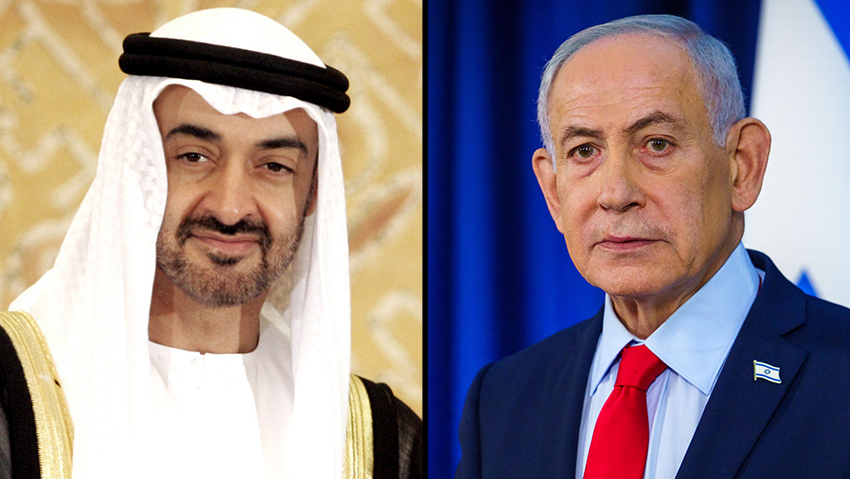
UAE President Sheikh Mohamed bin Zayed Al Nahyan, Prime Minister Benjamin Netanyahu
(Photo: AP, Shalev Shalom)
“The Ministry of Foreign Affairs underscores that the UAE Government does not comment on media stories or speculation regarding conversations between government leaders,” the ministry said. “The UAE’s engagement since October 7 was consistently directed toward de-escalation, regional stability and preventing violence.”
The ministry added that since the UAE and Israel established diplomatic relations in 2020 under the U.S.-brokered Abraham Accords, government agencies in both countries have maintained “open and direct lines of communication.”
“When necessary, all relevant intelligence has been and continues to be communicated between the relevant entities,” the ministry said.
The carefully worded statement neither confirmed nor denied the central claim that UAE President Sheikh Mohamed bin Zayed Al Nahyan personally raised a warning about Sinwar with Netanyahu before the Hamas-led attack, in which about 1,200 people were killed and 251 were taken hostage.
Israeli officials had sought a more explicit denial of the report.
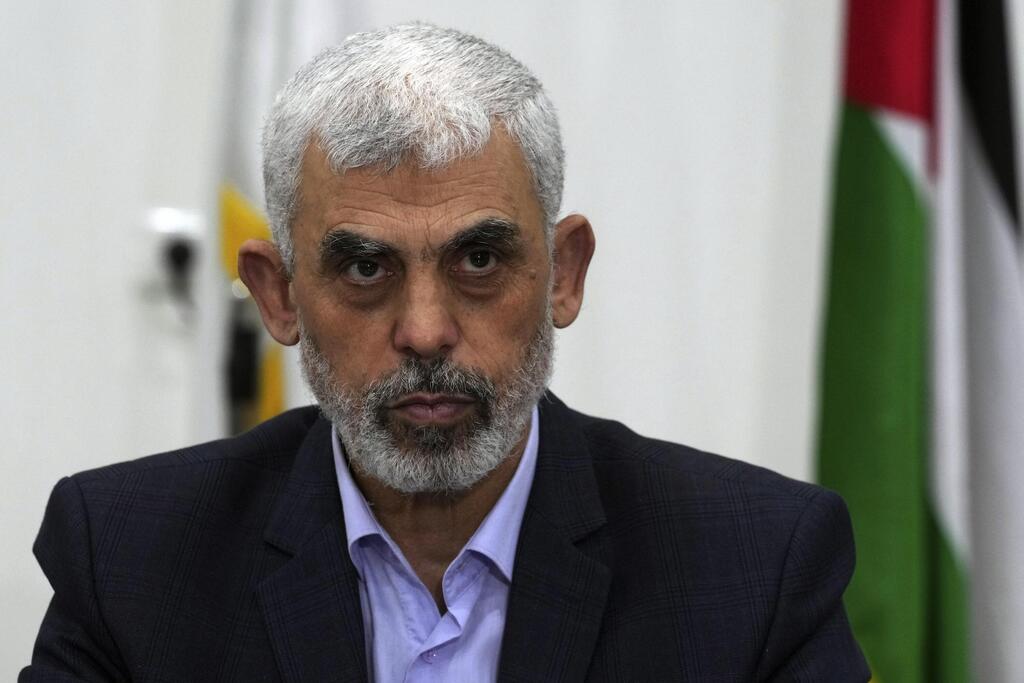
Yahya Sinwar
(Photo: Adel Hana, AP)
Speculation in Israel on Tuesday also centered on Mohammed Dahlan as a possible link in the chain through which the warning allegedly reached the UAE. Dahlan, a former senior Palestinian security official in the Gaza Strip and longtime rival of Palestinian Authority Chairman Mahmoud Abbas, has lived in the UAE for years and has been discussed as capable of potentially leading Gaza’s post-Hamas future.
Dahlan has remained silent amid the controversy over the alleged warning and the reported conversation between Netanyahu and bin Zayed. He has not publicly denied the account.
Netanyahu’s office later issued its own English-language response on X, categorically rejecting reports that the UAE president had warned the prime minister before Oct. 7.
“The press reports are false. No warning was given to the Prime Minister from the United Arab Emirates before October 7th,” the Prime Minister’s Office said. “If there was any relevant information, it was passed through intelligence channels between the two countries.”
The statement followed an earlier, broader denial by Netanyahu’s office, which called the investigation “a complete lie” and said Netanyahu had not spoken with bin Zayed during the period in question.
The alleged explicit warning before Oct. 7
The allegations emerged in a new book by Israeli journalists Shlomi Eldar and Ruth Yuval, “Hostages: 843 Days of Abandonment,” which says Netanyahu received an explicit warning about a major operation being planned by Sinwar shortly before the attack.
The account adds to an earlier report by Yedioth Ahronoth journalist Smadar Perry, published in the opening days of the war, that Egypt had also warned Netanyahu that Hamas was preparing “something unusual, a terrible operation.”
Eldar said Tuesday that the chain of events began during indirect negotiations involving Israel, Hamas and the Palestinian Fatah movement over Israeli hostages held in Gaza.
At the time, the negotiations concerned the bodies of IDF soldiers Hadar Goldin and Oron Shaul, who were killed in the 2014 Gaza war, as well as Israeli civilians Hisham al-Sayed and Avera Mengistu, who were being held alive in Gaza. All four were subsequently returned to Israel during the war that began on Oct. 7.
According to Eldar, the negotiations stalled in early September 2023, when Sinwar, then Hamas’ leader in Gaza, disappeared from contact and dropped off the radar of the Shin Bet domestic security agency.
Eldar said Sinwar then contacted a Fatah figure and delivered an ominous message for Israel.
“Pass on to the Israelis that I’m planning a big surprise for them if they don’t make progress,” Sinwar was quoted as saying.
According to Eldar, Sinwar used the Arabic word “zilzal,” meaning “earthquake.”
Alarmed by the conversation, the Fatah figure allegedly passed the message to an associate who now serves as an adviser to bin Zayed. Eldar said Sinwar later repeated the warning: “Pass it on to the Israelis, I’m planning an ‘earthquake’ for them.”
Eldar said then-Shin Bet chief Ronen Bar received the information on Sept. 15, 2023, and passed it to Netanyahu.
About a week and a half later, according to the investigation, bin Zayed sought to make sure Netanyahu had received the warning and called him through a special secure communications system developed by the UAE.
“They have conversations through a unique system,” Eldar said. “A representative from the embassy arrives with the application, with a phone, and they hold a conversation that lasts 45 minutes.”
During the alleged conversation, Netanyahu sought to reassure bin Zayed, according to the investigation.
“We are prepared in Gaza,” Netanyahu was quoted as saying.
Netanyahu allegedly assessed that if serious trouble erupted, it was more likely to occur in the West Bank.
The book says Netanyahu did not subsequently inform then-IDF chief of staff Herzi Halevi, Bar or then-Mossad chief David Barnea about the alleged conversation with the UAE president. Bar and Halevi have said they were not informed of any warning conveyed by bin Zayed.
A similar warning allegedly reached the Prime Minister’s Office from then-Egyptian intelligence chief Gen. Abbas Kamel during the same period.
According to Perry’s earlier reporting, Kamel warned Netanyahu of “something unusual, a terrible operation” being prepared by Hamas.
Perry reported that Netanyahu replied: “In Gaza, we are on top of things, we are in control. Our problem is the West Bank, and that is where we are also moving forces.”
Eldar said security officials told him that knowledge of the alleged UAE conversation could have changed the way intelligence already received about Sinwar was assessed.
“People in the security establishment said, both in the Shin Bet and the IDF, that if we had known about that conversation, we would essentially have received another assessment reinforcing the information that had already arrived on September 15,” Eldar said.
He said the journalists stood behind their reporting.
“We have documentation. We are fully backed up on this story,” Eldar said. “We would not have published it without recordings, documentation and cross-checking.”
The investigation also says that on Oct. 1, less than a week before the Hamas attack, Bar again proposed targeting senior Hamas leaders, including Sinwar, amid unrest along the Gaza border and indications Hamas was seeking to carry out an attack in the West Bank.
According to the investigation, Netanyahu told security officials to prepare plans for his consideration but did not authorize an operation at that stage.
“Keep working on the capability, but for now calm the situation,” Netanyahu was quoted as saying.
The investigation says Netanyahu did not mention the alleged UAE or Egyptian warnings during that meeting. One senior Shin Bet official said knowing about them might have given greater weight to Sinwar’s earlier message and helped analysts interpret his sudden withdrawal from negotiations in September differently.
Former prime minister Naftali Bennett, who recently met bin Zayed, has publicly backed the report, saying the claim that Netanyahu was warned about Sinwar’s intentions before Oct. 7 was true. Bennett accused Netanyahu of bearing direct responsibility for the failures preceding the attack.
Gadi Eisenkot, a former IDF chief of staff and chairman of the Yashar party, has also seized on the report, arguing that it adds to evidence that warning signs were missed or disregarded before the attack. Both men are political opponents of Netanyahu.
The October Council, a group representing families and activists seeking accountability for the failures surrounding Oct. 7, said the controversy underscored broader unanswered questions about what intelligence reached Israel’s political leadership before the attack and how it was handled.
The group called for answers about who received the warnings, what information reached Netanyahu, what he did with it and what was passed on to Israel’s security establishment.
The competing accounts add to the continuing political battle over responsibility for the intelligence, military and political failures preceding Oct. 7, when thousands of Hamas-led militants breached the Gaza border and attacked communities and military bases across southern Israel.