

The Air Force is establishing a new squadron of unmanned aerial vehicles based on the Heron MK 2 system, as the military expands its drone capabilities following a sharp increase in operational activity since the Oct. 7 war.
The first aircraft is expected to be delivered next month, with the new squadron set to become operational this summer at Hatzor Airbase in southern Israel, according to a report by the Calcalist financial daily. It will operate alongside an existing squadron at the base that uses the same platform for intelligence gathering, real-time surveillance and strike missions, including at long range.
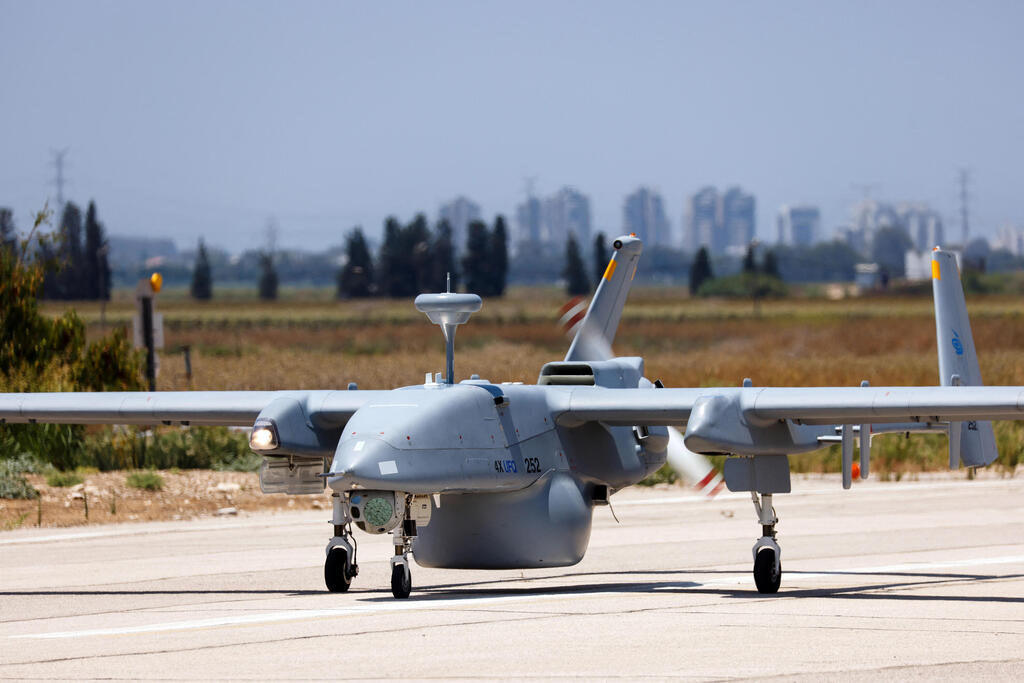
The expansion comes amid what military officials describe as a surge in drone operations during the ongoing war.
“We need a significant number of remotely piloted aircraft and we are in a process of rapid buildup in this field,” said Col. K., who heads the IDF unit overseeing unmanned aerial systems.
She said that before the war, such aircraft logged hundreds of thousands of flight hours annually, but since the fighting began, activity has increased fivefold.
The IDF declined to disclose the total value of the deal with Israel Aerospace Industries, which is expected to supply about 20 Heron MK 2 drones. Each aircraft is estimated to cost around $10 million, with additional mission-specific payloads — including surveillance systems, cameras and precision munitions — adding millions more to the price.
The drones can be equipped for intelligence collection and real-time monitoring or for targeted strikes, depending on operational needs.
The expanded drone fleet has played a central role alongside advanced fighter jets, including the F-35, in recent conflicts involving Iran. Military officials say the unmanned systems have conducted long-range missions, including identifying and destroying missile launchers and other strategic targets.
“The main advantage is the ability to operate in complex environments without risking human life,” Col. K. said, adding that the systems have demonstrated the capability to reach Iran and support broader air operations.
The Air Force acknowledged that several drones were lost in operations over Iran, including nearly 10 during a previous campaign last summer. Officials said losses were due to ground fire rather than technical failures.
In one incident, a Shoval drone was damaged by shrapnel after a surface-to-air missile exploded nearby, hitting its fuel tank and wings. Despite the damage, it managed to land safely at Hatzor Airbase, was repaired within about a week and a half, and returned to operational use.
The ongoing conflicts across multiple fronts — including Iran, Lebanon, Syria, Gaza, the Red Sea and Yemen — have significantly increased demand for continuous aerial coverage, including along Israel’s borders and over strategic assets such as natural gas platforms in the Mediterranean.
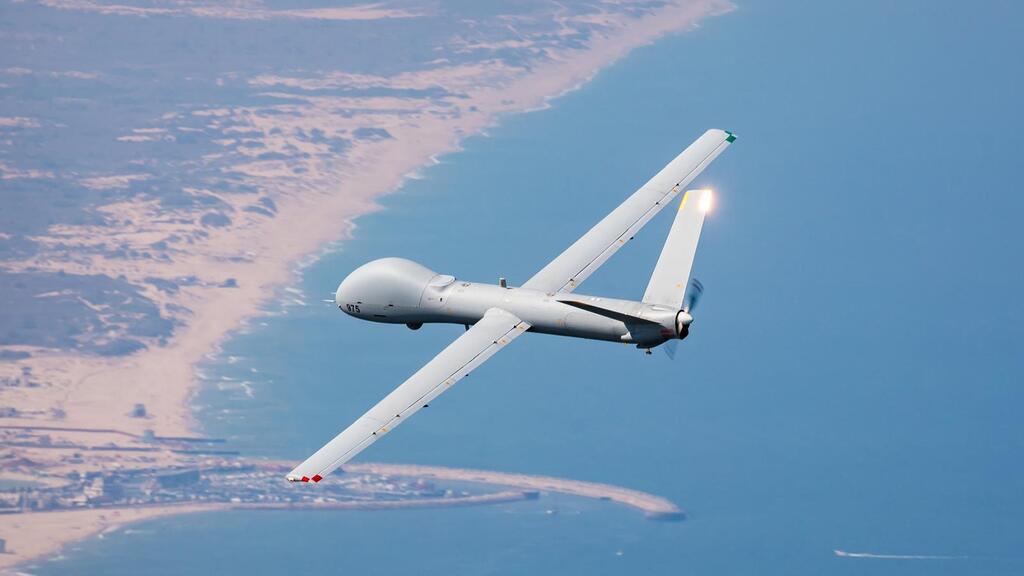
Hermes 900
(Photo: Elbit)
The new squadron will be the third in the Air Force to operate Israel Aerospace Industries platforms. Additional drone units operate the Heron TP, known in the Air Force as “Eitan,” as well as Elbit Systems’ Hermes 450 (“Zik”) and Hermes 900 (“Kochav”). The Air Force also has a squadron operating the Orbiter 4 system, known as “Nitzotz,” though it has not yet been deployed in operations over Iran.
During earlier operations against Iran, the Air Force deployed Eitan, Shoval and Kochav squadrons, and in more recent fighting also incorporated the Zik system after adapting it for long-range missions.
Looking ahead, the Air Force plans to establish another squadron within about two years based on Elbit Systems’ new Hermes 650 drone, which is expected to complement — and eventually replace — the aging Zik platform.
The Hermes 650, which resembles a small civilian aircraft, features a more powerful engine and greater payload capacity, allowing it to carry more weapons and advanced systems.
“The Hermes 650 will provide an important additional layer of capability in the strategic arena,” Col. K. said. “The fleet of remotely piloted aircraft will continue to grow in both size and operational scope in the coming years.”
She added that the fact the systems are developed and manufactured in Israel helps streamline their integration into IDF operations through close cooperation between the military, the Defense Ministry and defense industries.