

The U.S. Navy announced that one of its rare MQ-4C Triton drones disappeared from radar and crashed in the Persian Gulf region.
The incident occurred exactly a week ago, on April 9, after the temporary ceasefire with Iran took effect. The Navy said the circumstances of the crash are still under investigation, and it is not yet clear whether the loss was caused by an attack or a malfunction. The exact location of the crash has not been disclosed, citing “operational and security reasons.”
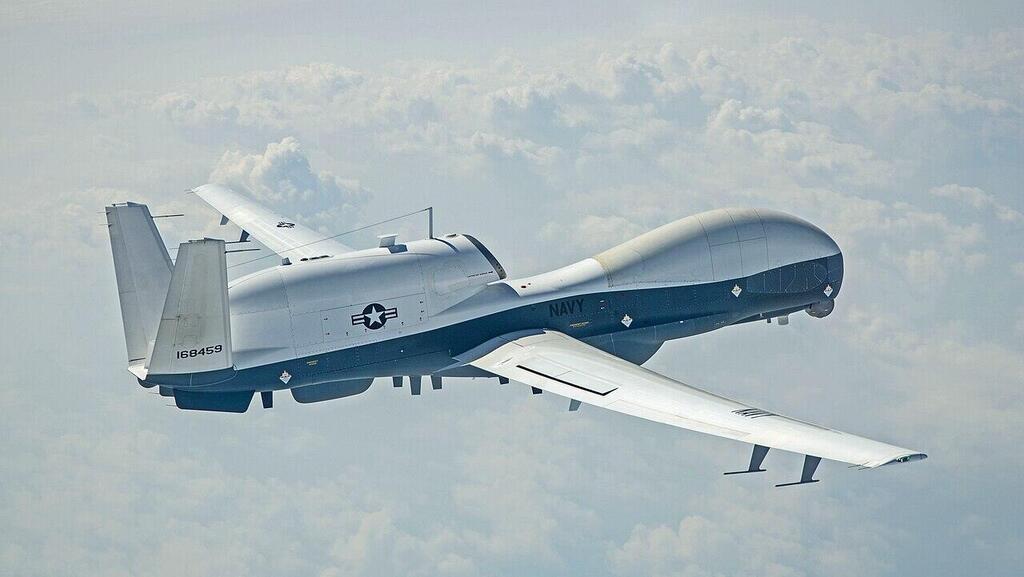
US Navy's MQ-4C Triton drone is the world’s most advanced unmanned aircraft for maritime intelligence gathering
CNN reported Thursday that an analysis of flight data from the FlightRadar24 tracking site shows the drone took off from Sigonella Air Base in Italy, a major U.S. Navy facility in Sicily that was recently reported to have faced temporary restrictions by Italy on its use in the war with Iran. According to the report, the drone reached the Strait of Hormuz, and after leaving the area it suddenly descended from an altitude of 15,240 meters to about 2,800 meters before disappearing from radar.
“Flight data shows the Triton transmitted code 7400 during the flight, indicating a loss of communication with ground control, followed by code 7700 — signaling an emergency — about 70 minutes later, when it descended to an altitude of 13,410 meters. It continued transmitting code 7700 until 10:12 (UTC), when it disappeared from radar at an altitude of 2,820 meters,” according to the CNN report.
The United States has lost several high-value drones during this war, and Iran scored a major success by downing an F-15 fighter jet. However, the Triton is an extremely rare and costly platform: only 20 units of this model have been produced, each with a price tag of about $240 million — more than twice the cost of an advanced F-35 stealth fighter jet.
The drone is manufactured by Northrop Grumman, which describes the Triton as the world’s most advanced unmanned aircraft for maritime intelligence gathering. Powered by a jet engine, it has a range of up to about 13,700 kilometers and can remain airborne for more than 24 consecutive hours.
First published: 13:22, 04.16.26