

A growing number of nations have formally recognized a Palestinian state, intensifying diplomatic pressure on Israel nearly two years into the war in Gaza.
France spearheaded the latest wave, with President Emmanuel Macron on Monday announcing recognition alongside Malta, Monaco, Luxembourg and San Marino at a French-Saudi conference on the sidelines of the UN General Assembly in New York.
French President Emmanuel Macron at the UN
(Video: UN WEB TV)


Belgium and Andorra also issued declarations of recognition, though both conditioned implementation on the release of Israeli hostages held by Hamas and the group’s removal from power in Gaza. The move follows announcements from the UK, Canada, Australia and Portugal just days earlier. In total, 153 of the UN’s 193 member states—around 80%—now officially recognize Palestine.
Recognition first surged in November 1988, when Yasser Arafat declared Palestinian independence in Algiers. Dozens of Arab, Asian and African states immediately extended recognition, followed over the years by much of the developing world.
South Africa, Brazil, Argentina, Chile and Sweden are among the later joiners. More recently, Barbados, Jamaica, Trinidad and Tobago, Ireland, Norway, Spain, Slovenia, Armenia and Mexico added their names.
Not all recognitions have endured. Hungary and the Czech Republic withdrew their recognition, while reports suggest Papua New Guinea’s 1994 recognition is no longer valid. Argentina, under pro-Israel President Javier Milei, has not revoked its recognition but opposed upgrading Palestine’s UN status in May 2024.
Gallery
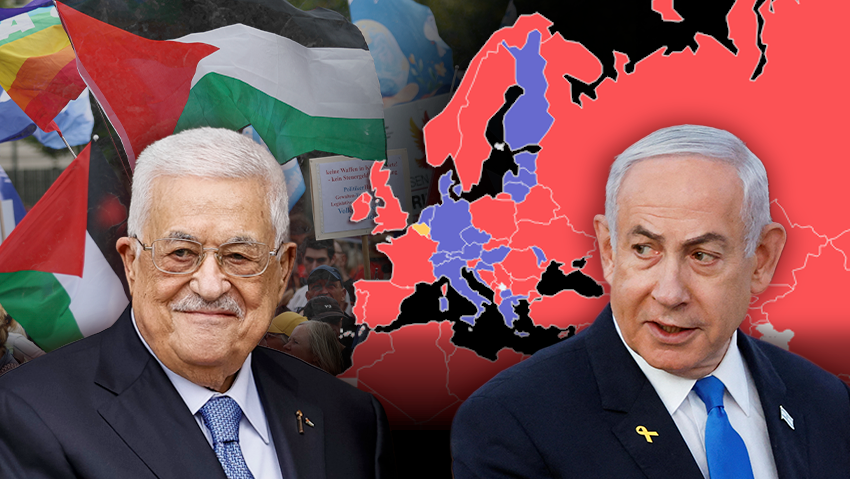
Large majority of UN member states now recognizes Palestinian state
(Photo: Maryam Majd/Getty Images, REUTERS/Amir Cohen, Pablo Blazquez Dominguez/Getty Images)
Macron defended his move at the UN, saying recognition was necessary to preserve chances for a two-state solution and to pressure Israel to halt the war in Gaza and settlement expansion in the West Bank.
“The worst could still happen—further civilian deaths, the expulsion of Gaza’s residents to Egypt, annexation of the West Bank, the killing of hostages held by Hamas,” Macron warned. He argued that recognition “is a defeat for Hamas and for those who fuel antisemitism and seek the destruction of Israel.”
British Prime Minister Keir Starmer, who announced his recognition last week, accused Israel of “cruelty” in Gaza and said the step was essential to maintain hopes for a future peace. He has also curbed defense exports to Israel and sanctioned far-right Israeli ministers Itamar Ben-Gvir and Bezalel Smotrich.
France and its partners insist recognition does not mean turning a blind eye to Hamas. Macron said Palestinian Authority President Mahmoud Abbas had committed to dismantling Hamas’s role in any future government, implementing deep governance reforms and combating incitement. “A French embassy in Palestine will open once the hostages are released,” he pledged.
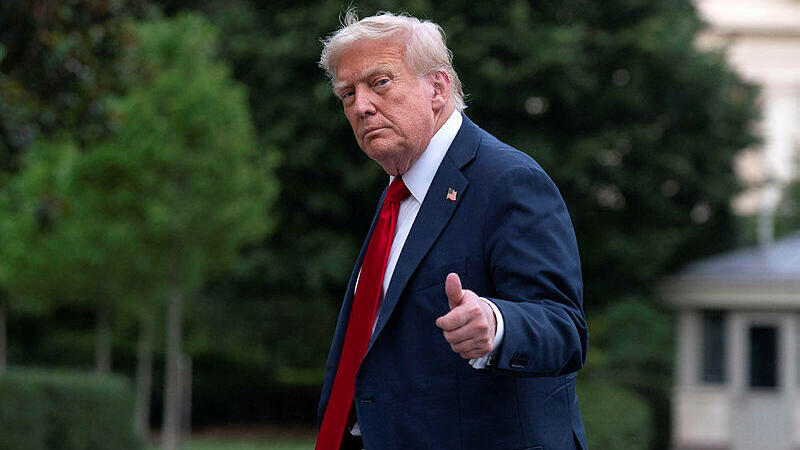
U.S. President Donald Trump
(Photo: AP Photo/Jose Luis Magana)
Still, the move remains largely symbolic. Recognition does not grant Palestine full UN membership, which requires Security Council approval—something the United States, under President Donald Trump, has vowed to block. Trump, who is set to address the General Assembly this week, denounced Macron’s initiative as “a reward for terror.”
Israel has yet to announce how it will respond. Smotrich and Ben-Gvir are urging annexation of West Bank territory, but Prime Minister Benjamin Netanyahu has shelved that option for now. “The response to this attempt to impose a terror state in the heart of our land will be given after my return from the U.S.,” Netanyahu said in a video statement.