


The Transportation Ministry is weighing the possibility of importing foreign bus drivers to ease a severe nationwide shortage, a move that has drawn strong opposition from drivers’ unions and labor organizations.
At a drivers’ union gathering last month, Transportation Minister Miri Regev said Israel faces “major challenges,” one of which is recruiting drivers. “If we don’t succeed in this mission, we’ll have to import drivers from abroad,” she said. What initially sounded far-fetched now appears to be under serious consideration.

Israel is short about 5,000 bus drivers, according to industry estimates, even as roughly 60,000 licensed drivers have left the field and are unwilling to return. On Nov. 4, the Knesset’s Special Committee on Foreign Workers is scheduled to discuss allocating a quota for foreign workers to serve as public transportation drivers. Representatives from the Interior Ministry, the Transportation Ministry, the Population and Immigration Authority, the National Road Safety Authority, drivers’ unions and bus companies are expected to attend.
The Forum of Competitive Public Transportation Companies, representing several major operators, has called for a thorough examination of the proposal. The group says the shortage is causing service disruptions, frequent cancellations and reliability issues that push commuters toward private cars. Forum members argue that drivers today have limited contact with passengers because ticket validation is mostly automated, and that employing foreign drivers would not harm service quality.
But many Israeli drivers have condemned the idea as disrespectful to their profession.
“Turning to foreign drivers is absurd,” said Omer Ben Yaakov, a driver with Dan South for nine years. “Being a bus driver means more than just driving — it’s saying good morning to passengers, answering questions. How can a driver from India or Thailand communicate with passengers in Israel?”
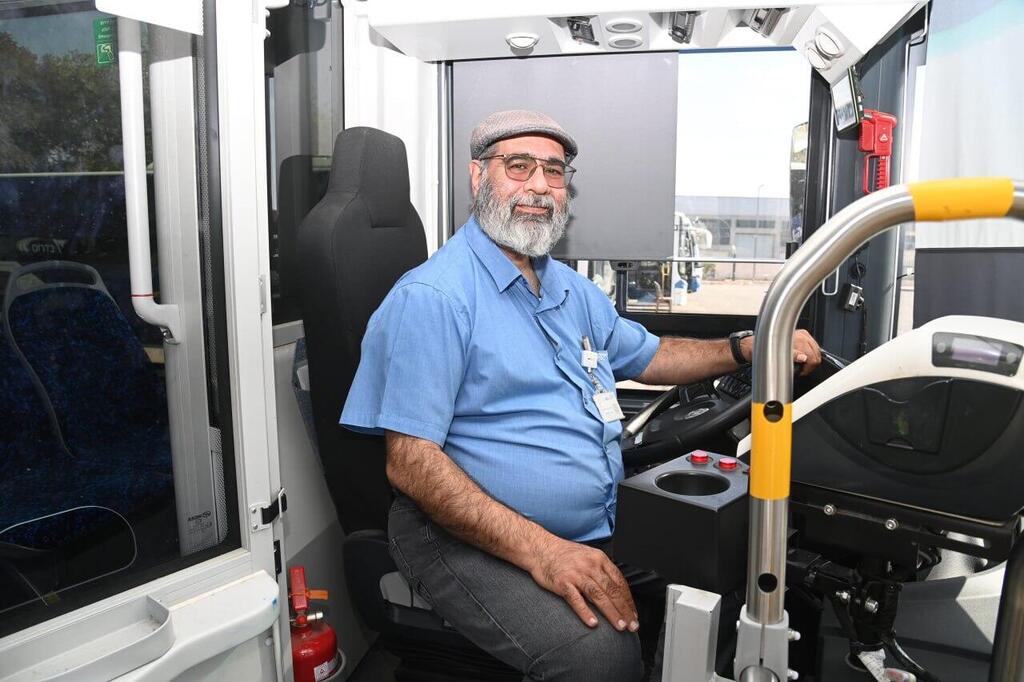
Ben Yaakov
(Photo: Herzl Yosef)
Ben Yaakov said that while many Israelis hold bus-driving licenses, few are willing to return because of difficult working conditions, including long hours, weekend and holiday shifts, and low pay. “If drivers were properly compensated and respected — if every kid couldn’t spit at or curse a driver — the situation would be different,” he said.
Majed Mabrouk, a Superbus driver in Jerusalem and member of the company’s workers’ committee, said poor wages, violence against drivers and a lack of job security are driving workers away. He said many drivers left during the COVID-19 pandemic and have not returned. “We earn about 54 shekels ($14) an hour, whether new or veteran, with no security and no career path,” he said. “Every tender resets us to zero. You sit behind the wheel 12 hours a day — is it any wonder people want to quit?”
Mabrouk said police rarely intervene when drivers face verbal or physical assaults. “They treat it as a dispute between citizens,” he said. “Instead of fixing this, the ministry talks about bringing in foreign drivers. That’s a quick but dangerous fix.”

Majed Mabrouk
Labor advocates have also criticized the proposal. “A good and reliable public transportation system cannot be built on temporary fixes,” said Yael Shechter-Sitman, head of public transportation policy at the watchdog group Lobby 99. “Importing workers is an easy and fast solution, but it’s risky. It doesn’t solve the root problem and harms the profession’s status.”
The Power to the Workers transportation union accused Regev of “crossing a red line,” saying the move would “destroy the profession of bus driving in Israel.” The union warned that foreign drivers would not be able to provide guidance to passengers and would have little incentive to improve service quality.
The union called on Regev to “recalculate her route” and focus instead on improving wages, job security and protections for local drivers.
The Transportation Ministry did not respond to a request for comment.