

Prime Minister Benjamin Netanyahu urged IDF Chief of Staff Maj. Gen. Eyal Zamir to “stop the army’s media briefings,” saying they “undermine unity and morale and are not legitimate in a democracy,” according to a report on Monday.
“Debates can happen behind closed doors, but outside, there must be a united front and an iron fist,” Netanyahu also said. Zamir did not respond.
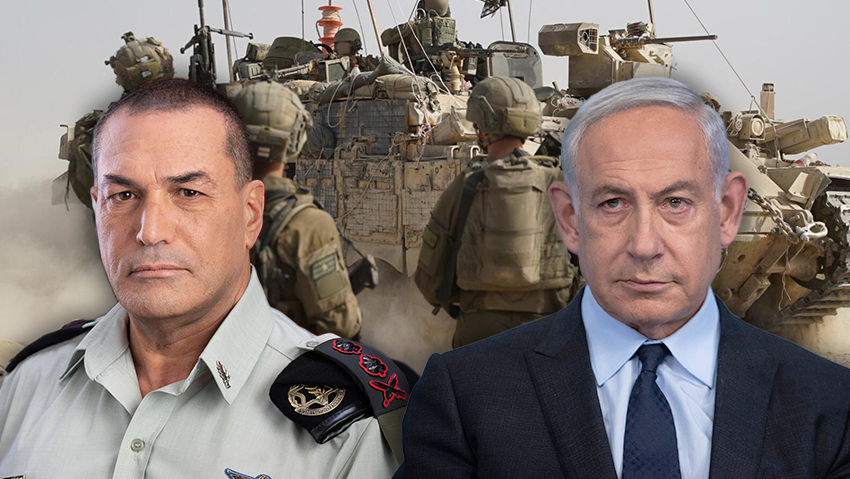
Later, however, Zamir presented a proposed deal with Hamas, despite Netanyahu’s objections to discussing it. He outlined the benefits of the plan and expressed support, though most ministers opposed it. Ministers Gideon Sa’ar and Gila Gamliel supported the proposal, while Netanyahu reiterated to opponents that “no vote is needed; it’s not on the table.”
The plan calls for the return of 10 living hostages and 18 bodies over 60 days, during which a ceasefire would be in effect and negotiations for the release of remaining hostages would continue, alongside the release of hundreds of Palestinian prisoners from Israeli prisons.
Netanyahu explained his opposition, saying Israel has a limited window with the Americans, and a withdrawal from areas captured during Operation Gideon's Chariots would come at a “high cost.” He also cited former U.S. President Trump: “Leave partial deals behind, go in full force and finish it.” Netanyahu agreed with comments from Bezalel Smotrich and Zeev Elkin that, if war resumes after 60 days, the agreement would not merely delay control of Gaza by two months but effectively by six, as the army would first have to return to previous lines.

Israeli teens protest for the release of the hostages
(Photo: Yair Sagi)
The discussion also included a rare clash between Zamir and Minister Orit Strock, who cited a weekly Torah portion: “The fearful man and the softhearted will return home and will not soften his brother’s heart as his own.”
Zamir interpreted this as a suggestion that the army is softhearted and hesitant, responding angrily: “I’ve made fateful decisions about the future of the Middle East.” Strock clarified she was referring to the second part of the verse and added that “moves like this terrify us,” implying the military should not yield to opposition to Gaza operations. Zamir emphasized: “If you want blind obedience, bring someone else,” and Netanyahu replied, “I don’t want blind obedience, but also not a breach of framework.”
Strock later tweeted about the cabinet clash: “Do not soften your brother’s heart—when going into battle, one must adopt the warrior’s heart, not weaken it. The Torah sees this effect as dangerous enough to exempt those who might demoralize others. I warned the prime minister and the cabinet about the softening effect in efforts to force a partial deal in Gaza. I did not intend to single anyone out but to highlight the effect of morale collapse before battle.”
If Zamir had not raised the issue, the cabinet would not have discussed Hamas’ official response to mediators. Retired Gen. Nitzan Alon, responsible for the IDF hostages command, also was not invited.
Hostage families: ‘Netanyahu prioritizes politics over hostages’
In response to reports of Netanyahu saying “the deal is not on the table,” the families’ organization for returning hostages accused the prime minister of “sacrificing hostages and soldiers for political survival.” The statement called Netanyahu the “father of selection methods” and “systematically sabotaging every agreement on the table.”
They said that “48 hostages have been held in Hamas tunnels for nearly two years and could have returned home or been buried properly if not for deliberate sabotage. A real proposal exists, approved by Hamas, which could lead to the release of the last hostage and end the war. Only the people can bring them all home.”