

Israel’s constitutional crisis began with a dispute over who controls the public body that regulates the country’s commercial television and radio broadcasters. It has now become a direct clash between the government and the High Court of Justice over whether the cabinet is bound by court rulings.
The government declared Sunday that it would not obey a High Court ruling concerning the Second Authority for Television and Radio, the regulator responsible for overseeing Israel’s commercial broadcasters. The ruling was an interim order, not a final judgment, freezing the government’s decision to appoint a new council to the authority and allowing the outgoing council to continue serving until the court rules on petitions against the appointments.
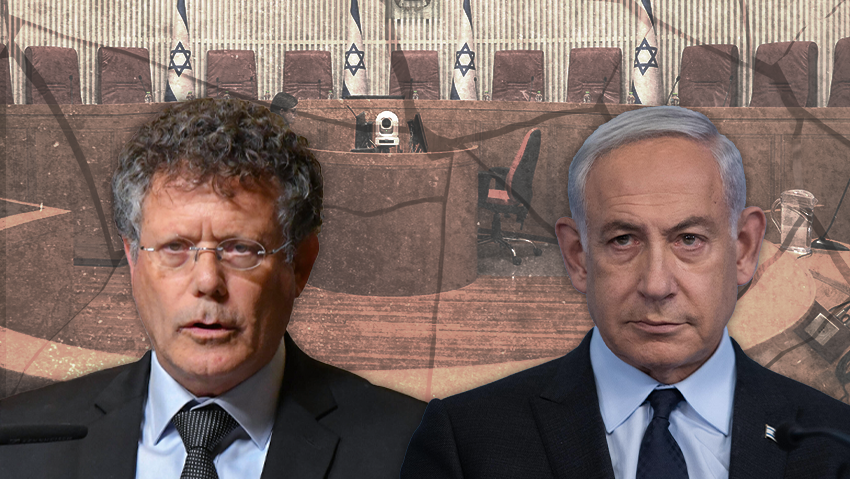
The High Court order was issued on June 17 by Chief Justice Yitzhak Amit and Justices Alex Stein and Ruth Ronen. The justices froze government decisions from March 24 and March 31, which approved the appointment of Dr. Yifat Ben-Chai Segev as chairwoman of the new council, along with additional council members.
The petitions were filed by several groups, including the Union of Journalists in Israel, Channel 12 News, the Movement for Quality Government in Israel, the Israel Press Council and an association dedicated to preserving legal values. Their central argument was that the government’s appointments were flawed by a rushed process, incomplete factual groundwork, concerns over conflicts of interest, political ties, possible bias toward regulated media outlets and insufficient representation for Israel’s Arab population.
According to the petitions, the appointments were intended to change the character of the Second Authority and increase government influence over media regulation.
Attorney General Gali Baharav-Miara effectively supported many of the petitioners’ claims in the state’s response to the court. She said the government decisions contained “flaws that go to the root of the process” and justified canceling them. The state asked that the matter be returned to the appointments review committee so it could reexamine claims against some of the candidates, including Ben-Chai Segev, attorney Kinneret Barashi and Dr. Haim Shine.
In its interim decision, the High Court accepted the need to freeze the situation until a final ruling. It suspended the government’s appointment decisions and ordered that the outgoing council continue operating. That prevented Ben-Chai Segev and the other members of the new council from taking office for now.
The most unusual part of the ruling concerned the resignation of several members of the outgoing council. The justices wrote that affidavits from Communications Minister Shlomo Karhi and from council members who resigned raised a “heavy suspicion” that the resignations were intended to thwart earlier court decisions and disrupt the court’s ability to examine the petitions.
The court also pointed to what it called a “puzzling proximity in time” between the resignations and developments in the legal proceedings. It noted that some members sought to resign from the outgoing council while also seeking to serve on the new council.

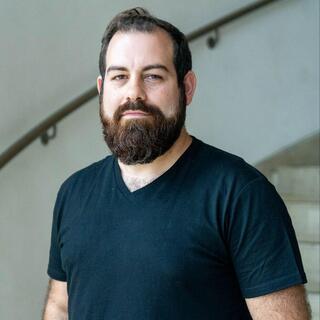
Communications Minister Shlomo Karhi
(Photo: Alex Kolomoisky)
Because of this, the court took an additional step: the council members who resigned would not, at this stage, be counted when determining whether the outgoing council had the quorum needed to function. The purpose was to prevent the council’s work from being paralyzed while the interim order remained in effect. According to the court, these were “unique and exceptional circumstances” that justified preserving the functional continuity of the existing council until a final ruling.
The government’s response was unprecedented. It announced that it would not honor the High Court ruling because, in the government’s view, the ruling contradicts the law. The cabinet said it would not recognize decisions made by the outgoing Second Authority council in its current composition.
In practical terms, the government’s declaration may have limited immediate effect. Decisions by the Second Authority council are not necessarily implemented directly by the government itself, but by professional and administrative bodies. That means the government’s statement may not, on its own, immediately block the council’s actions.
But the significance of the declaration goes far beyond this specific case. The government has openly stated that it will not respect a High Court order. Legal experts warn that this normalizes defiance of court rulings, even if the current case has limited practical implementation.
The concern is what happens when a similar refusal involves a ruling the government must actively implement. Then the question moves from legal theory to the daily operation of the state: whether ministries, regulators and public officials follow the court or the cabinet.
That is the heart of the constitutional crisis. What began as a dispute over a media regulator has become a test of whether court rulings remain binding on the government.