


Israel was plunged into a constitutional crisis on Sunday after the government unanimously declared it would not honor a High Court of Justice ruling concerning the Second Authority for Television and Radio, the regulator that oversees the country’s commercial television and radio broadcasters.
In an official statement, the government said the court had no authority to override the law. “You have no power to trample the law. A ruling that contradicts the law will not be recognized, and decisions made under it are void,” the statement said.

The cabinet effectively approved a proposal by Communications Minister Shlomo Karhi and Justice Minister Yariv Levin, declaring that the government would not recognize any decision, approval, appointment or action taken by the Second Authority council as long as, in the government’s view, it does not meet the explicit quorum requirements set by law.
Prime Minister Benjamin Netanyahu backed the decision in the cabinet vote, making the confrontation not only a move by Levin and Karhi but an official position of the government he leads. The step places Netanyahu’s coalition in direct defiance of an interim High Court order and turns the dispute over the media regulator into a broader test of the balance of power between the cabinet and the judiciary.
The decision also comes days after another major clash between Netanyahu’s coalition and the judiciary, when the High Court voided the election of Netanyahu’s former attorney Michael Rabello to the post of state comptroller. Together, the rulings have intensified the government’s confrontation with the court and sharpened warnings that Israel is moving from a legal dispute into a full constitutional crisis.
The decision could affect, among other matters, possible approval for the sale of Reshet 13, one of Israel’s major commercial television networks, to a group of high-tech entrepreneurs.
The government said its move followed a June 17 Supreme Court ruling that restored the previous government’s Second Authority council, even though the number of sitting members had dropped below what the government says is the legal minimum.
“The government determined that the rule of law binds all branches of government, including the court,” the statement said. “A ruling that directly contradicts the clear language of the law cannot grant authority that does not exist in law, and therefore the government will not recognize actions taken under it.”
The government also said it would reject any future claim by media-market actors that they had relied on decisions made by the council, or that actions taken under such decisions had already become irreversible.
Karhi attacked the High Court in unusually sharp terms. “High Court justices are not the Knesset, and intoxication with power does not give them authority to erase an explicit legal threshold just because it is inconvenient for them,” he said.
“The rule of law is not the rule of judges,” Karhi added. “Today the government made clear: when the High Court tramples the law, the state will not lend a hand. Two-thirds is a legal requirement, not a recommendation, and a council that does not meet the threshold set by the legislature does not exist. Its decisions are worth nothing.”
Levin also criticized the court, saying that “the rule of law means the law binds everyone, including the court.”
“In a democratic state, the Knesset legislates the law, and the court is required to apply it,” Levin said. “When a ruling stands in direct contradiction to the language of the law, it is not judicial review but a violation of the separation of powers. The government has a duty to insist that the law, and only the law, be the source of governing authority.”
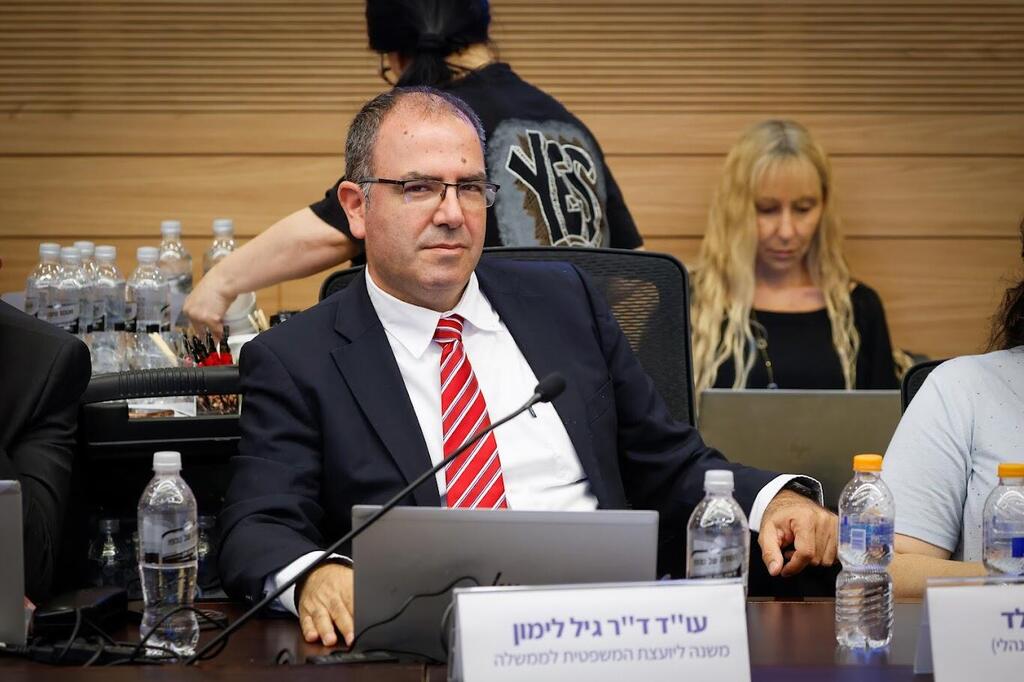
Deputy Attorney General Gil Limon
(Photo: Knesset)
The legal establishment strongly opposed the move. Gil Limon, deputy attorney general, warned during the cabinet meeting that the government was preparing to adopt a decision directly contradicting the legal advice it had received.
“As we speak, during the cabinet meeting, a proposed decision has been placed before the government that effectively says the government will ignore a High Court order regarding the Second Authority council,” Limon said.
He said the proposal stated that the government would not accept future claims based on reliance or irreversible action connected to decisions made by the council. “So this is how it will be done, very simply: whenever there is a legal opinion or ruling that the government does not like,” he said, warning that the result would be “to normalize systematic violation of the law.”
The Union of Journalists in Israel also denounced the government’s decision, saying it was aimed at blocking the sale of Reshet 13 to the high-tech group and represented an unprecedented assault on the Supreme Court.
“The government of Israel is dismantling the media and democracy,” the union said. “The government is announcing that it will not obey the rule of law, for foreign political considerations. This is an emergency: those who do not shout now will not be able to speak later.”
The High Court order at the center of the dispute was issued about three weeks ago. It froze the government’s decision to change the composition of the Second Authority council and ruled that the current council would continue serving until the court issues a final ruling on petitions filed against the move.
The ruling was issued by Chief Justice Yitzhak Amit, Justice Alex Stein and Justice Ruth Ronen in response to five petitions filed by the Union of Journalists, Channel 12 News, the Movement for Quality Government in Israel, the Israel Press Council and an association dedicated to preserving legal values.
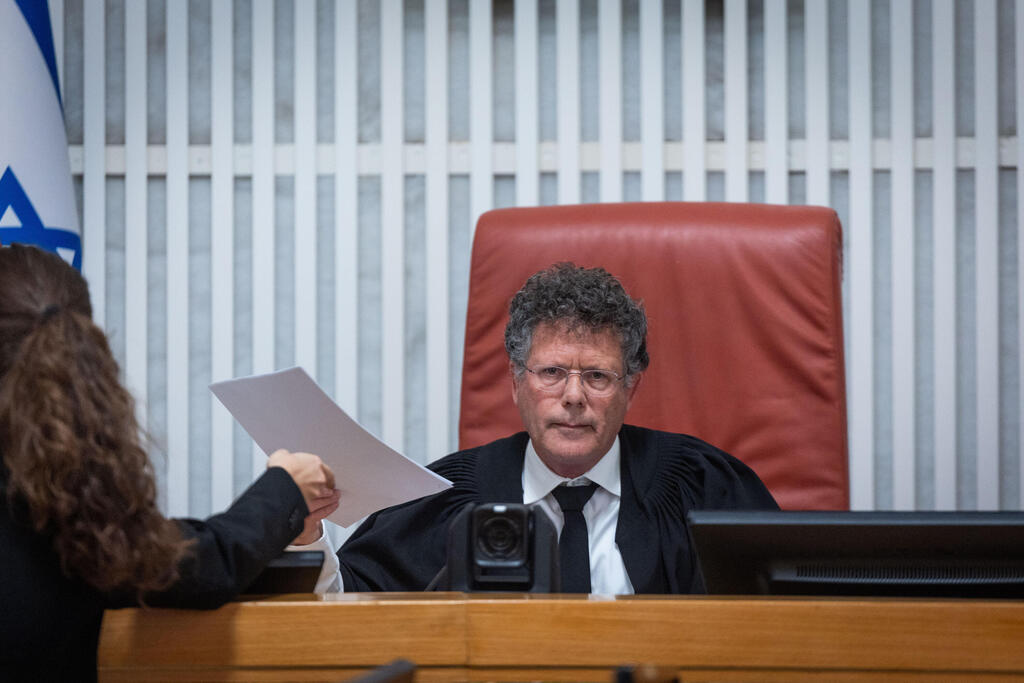
Chief Justice Yitzhak Amit
(Photo: Flash 90)
The court froze government decisions from March 24 and March 31 that dealt with appointing a new council to the Second Authority. The practical meaning was that the outgoing council would remain in place in its current composition and would not be replaced for now.
In their decision, the justices pointed to what they called a “puzzling proximity in time” between the resignations of several council members, requests by the communications minister and earlier High Court decisions. They also noted that most of the members who resigned from the current council asked to continue serving on the new one.
The court wrote that, on its face, this conduct did not align with council members’ duty of loyalty under the Second Authority Law. It therefore took the unusual step of ruling that the members who resigned would not, at this stage, be counted for purposes of determining the current council’s quorum.
The justices said the decision was necessary under “unique and exceptional circumstances” to prevent what they described as a deliberate attempt to obstruct and paralyze the council’s work during the interim order.
Sunday’s cabinet decision escalates the dispute from a fight over a media regulator into a direct confrontation between the government and the Supreme Court over who has the final authority to interpret and enforce the law.
Opposition leaders said the decision marked a dangerous escalation in the constitutional crisis and accused the government of trying to normalize disobedience to the court.
Yair Golan, chairman of The Democrats, said the government’s refusal to honor the High Court ruling was “the operational order ahead of Election Day.” He argued that the coalition was preparing the ground for future refusal to accept election results.

Yair Golan, chairman of The Democrats
(Photo: Alex Kolomoisky)
“This government knows it has no chance of winning an election, so it is waging war on the rule of law,” Golan said. “This is a criminal government that has lost all restraint.”
Golan said the government was trying to “practice and normalize disobedience to the court” so it could later refuse to accept the will of voters if defeated. “The liberal and democratic public is determined and strong, and will not allow this to happen,” he said. “Israel was founded as a democracy and will remain a democracy.”
Former IDF chief of staff Gadi Eisenkot, chairman of the Yashar party, said the government was “raising its hand against Israeli democracy.” He added: “Netanyahu is dividing Israel. Israel’s citizens deserve a government that unites the people, not one that works to divide it.”
Former prime minister Naftali Bennett, chairman of the Beyachad party, warned that refusing to obey court rulings would lead to chaos. “Disobedience to a court ruling brings anarchy to the streets and the dismantling of our state,” he said. “Soon we will fix everything. There will be one law for everyone.”
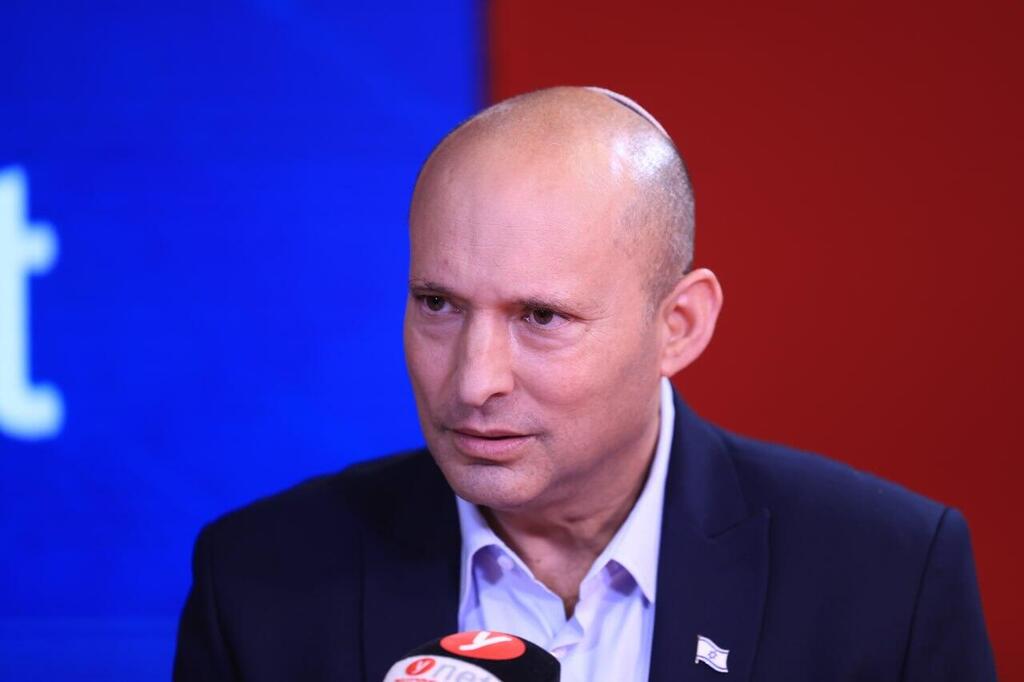
Former prime minister Naftali Bennett
(Photo: Avigail Uzi)
Opposition leader Yair Lapid wrote on X that “a government that does not accept a High Court ruling immediately becomes an illegal government whose rulings and decisions we will not accept.” He said the current members of the Second Authority council remain in office and that their decisions are binding.
Several opposition lawmakers urged the Second Authority council and public officials to ignore the government’s decision and continue acting according to the law and the High Court order. MK Gilad Kariv of The Democrats said a government that decides not to obey court rulings has “lost all legitimacy,” while MK Karin Elharrar of Yesh Atid said the government was no longer merely threatening to defy the court, but had formally decided to ignore a ruling it disliked.
“This is exactly what we warned about,” Elharrar said. “The government of Israel, led by the justice minister and communications minister, is officially deciding to ignore an inconvenient High Court ruling and is charging toward a constitutional crisis.”
First published: 15:28, 07.05.26