


U.S. President Donald Trump said Monday that he had planned to launch a U.S. military strike on Iran on Tuesday, but canceled it at the request of Gulf leaders as negotiations continue.
In a post on Truth Social, Trump said Tamim bin Hamad Al Thani, Saudi Crown Prince Mohammed bin Salman and UAE President Mohammed bin Zayed Al Nahyan asked him to postpone the planned attack because “serious negotiations are now taking place.”
US President Donald Trump Fox News interview
(Photo: From X)


Trump said the Gulf leaders believe an agreement can still be reached that would be acceptable to the United States and countries across the Middle East. He stressed that any deal must ensure that Iran does not obtain nuclear weapons.
“Based on my respect for the above-mentioned leaders, I have instructed Secretary of War, Pete Hegseth, the Chairman of the Joint Chiefs of Staff, General Daniel Caine, and the United States Military that we will NOT be doing the scheduled attack of Iran tomorrow,” Trump wrote. “but have further instructed them to be prepared to go forward with a full, large scale assault of Iran, on a moment’s notice, in the event that an acceptable Deal is not reached” he added.
About three hours later, Trump told reporters during a press conference on subsidized medications that the United States “prepared for what could be a significant set of attacks.”
Trump added that the UAE and other countries had asked Washington to postpone military action for “two or three days” because they believe the sides are close to an agreement.
Gallery
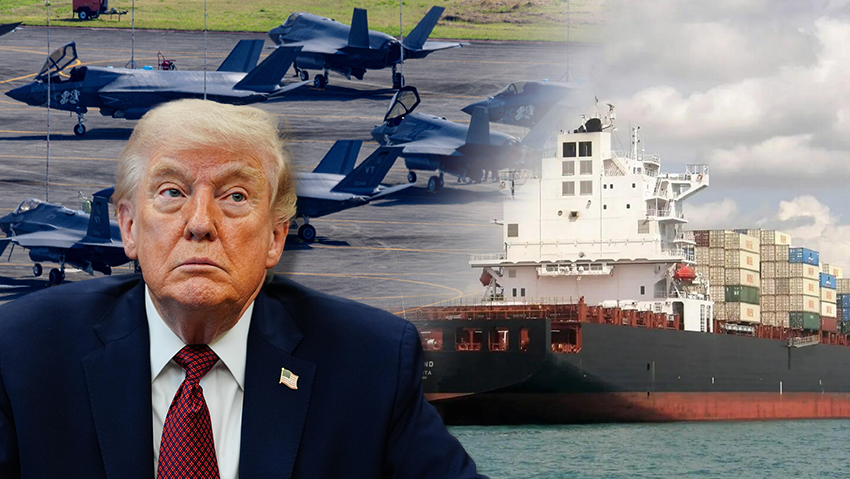
US President Donald Trump
(Photo: Hans Rosenkranz, Marinetraffic.com, U.S. Navy, AP Photo/Julia Demaree Nikhinson, REUTERS/Eva Marie Uzcategui)
U.S. President said Israel and other regional partners had been updated on the talks, calling the development “very positive,” while reiterating that “we cannot let Iran have a nuclear weapon.”
The announcement came as Israel’s security cabinet met Monday evening for a second consecutive day amid heightened tensions and close coordination with Washington. Despite Trump’s claim that the attack had been scheduled for Tuesday, Israeli officials believe it remains unclear whether military action was truly imminent, raising speculation that the statement may have been intended as strategic deception.
Some Israeli officials believe the move could also project weakness and reinforce Tehran’s assessment that Trump does not truly want renewed fighting and instead seeks a diplomatic achievement on the nuclear issue. Israeli assessments remain that Iran is unwilling to give up its nuclear program and instead seeks an end to the war and relief from economic pressure.
Israel’s defense establishment remains on high alert for the possibility of renewed fighting. In recent days, Israeli officials have held talks and coordinated with U.S. forces on several contingency plans, including a targeted American operation.
Israeli security officials said any military or diplomatic move would have to resolve the issue of Iran’s enriched uranium stockpile, which Tehran is currently refusing to transfer to the United States or another country. Officials warned that any operation failing to address the uranium issue would be considered a failure.
A broad air campaign against Iran would be highly complex and require at least several days of operations. Despite interest among some Western officials in a short and intense campaign, Israeli officials question whether such a timetable is realistic or whether the pace of the conflict could be controlled.
If fighting resumes, Israel and the United States would likely need to reestablish air superiority, a process involving multiple operations that could take days. Officials also said the element of surprise would need to change significantly following two previous opening strikes and as Iran prepares for the possibility of renewed confrontation.
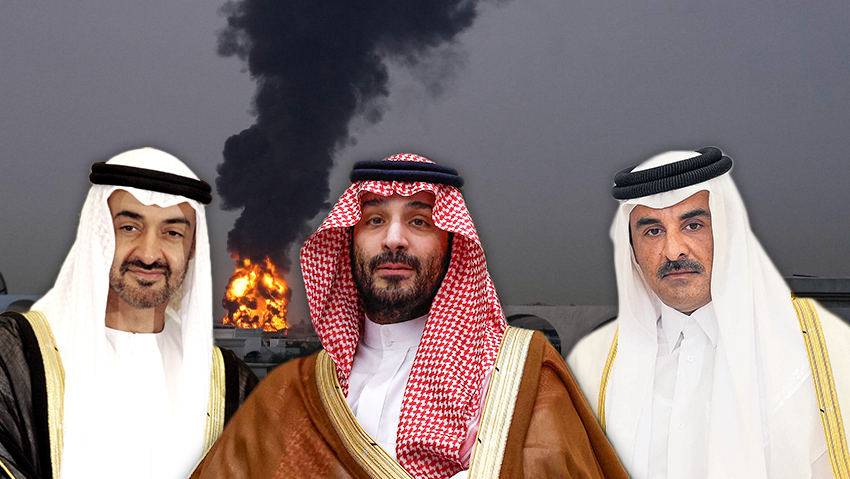
(Photo: Alex Brandon/AP, Evelyn Hockstein/POOL/AFP)
Meanwhile, the IDF would also need to prepare for escalation on the northern front. Israeli officials believe that if the ceasefire with Tehran collapses, fighting in southern Lebanon would intensify directly, including expanded Israeli strikes and increased Hezbollah fire toward Israeli communities.
In the event of war with Iran, Israel’s Northern Command would likely have to operate with more limited Israeli Air Force and military intelligence capabilities, potentially affecting battlefield operations.
“Ultimately, it must be remembered that enriched uranium is the core of the event, and it must be dismantled militarily, diplomatically or by any other means,” an Israeli security official said.
Iranian President Masoud Pezeshkian wrote on X that “dialogue does not mean surrender”
“The Islamic Republic enters dialogue with dignity, authority and in defense of the nation’s rights, and will not retreat in any way from the legal rights of the people and the state,” he wrote. “We will serve the people and defend Iran’s interests and honor with all our strength, until the end of our lives.”
Iran’s Tasnim News Agency claimed Trump was attempting to gain leverage through political and military pressure after “failing in war,” while arguing that his threats were also driving up oil prices and increasing pressure on the United States and its allies.
The agency also warned that even if Trump chooses military action, “he will achieve nothing,” adding that Iran is prepared to strike the United States and its allies “more forcefully,” particularly Israel.
Earlier Monday, a Pakistani official told Reuters that Pakistan had delivered a “revised proposal” from Iran to the United States aimed at ending the conflict.
“We don’t have much time,” the official said when asked whether there was still enough time to bridge the gaps between the sides, amid Trump’s warnings that his patience is running out.
Israeli officials monitoring the negotiations reportedly believe Iran’s latest response to Trump was effectively “humiliating” and insufficient for further progress, leaving the military option increasingly on the table.
First published: 22:11, 05.18.26