

Iranian state media reported Sunday afternoon that the Islamic Republic launched three new satellites into space from Russia, another sign of expanding ties between the two countries, both under heavy U.S. sanctions. Iran said the satellites are intended to assist Iranian scientists in agriculture, natural resources and environmental research.
In recent years, Iran has relied increasingly on its ally Moscow to launch satellites. Since Russia’s invasion of Ukraine in 2022 and the sanctions imposed on Moscow, military cooperation between the two has expanded significantly. Earlier this year, the countries signed a strategic cooperation agreement. During the war against Kyiv, Iran supplied Russia with large numbers of drones for attacks on Ukraine. In return, Moscow agreed to build four new nuclear reactors in Iran for electricity production, and has reportedly considered providing critical know-how to Iran’s military nuclear program as well.
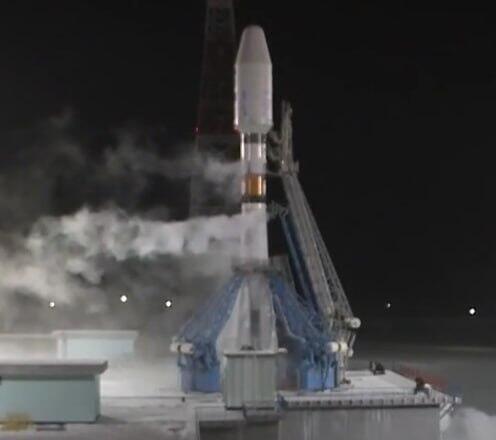
Iran launches three satellites from Russia
Iran’s ambassador to Russia, Kazem Jalali, told Iranian state television Sunday afternoon that the satellites launched that day were sent into space “despite all the sanctions and threats.” He added, “We are working together with Russia in many fields. Some are visible, and others we do not want to speak about openly.” According to the Iranian state news agency IRNA, the satellites were placed in low Earth orbit.
Tal Inbar, an Israeli expert on space and missile issues and former head of the Center for Space and UAV Research, said earlier Sunday in an interview with ynet that the satellites launched several hours after the interview have no military value. He said their quality is relatively poor and they are not designed to collect intelligence on Israel or other locations or to enable missile precision.
“Yes, the Iranian satellites should be monitored, but at least for now Iran’s level in the space field is not one that should raise excessive concern on our side,” he said.
At the same time, Inbar noted that Iran has had a Russian-built satellite in orbit for three years that does have security value. “A satellite like that passing over the Middle East, including over Israel, can certainly provide the Iranians with high-quality intelligence, and that can, of course, support their missile program,” he said.