


With crippling international sanctions on Iran reinstated, Israeli officials say they are detecting growing unease within the country’s leadership, a nervousness that began even before the snapback decision and has been accompanied by persistent suspicion toward Israel.
Security officials in Israel warn that Tehran appears increasingly anxious, raising fears of a “miscalculation” that could escalate into conflict. They believe the Iranian regime’s agitation is likely to intensify under renewed sanctions, prompting Israel to raise its level of readiness.
Missile tests in Iran


Over the weekend, the United Nations snapback mechanism was activated, reinstating sanctions and restrictions that had been suspended under the 2015 nuclear agreement. The measure allows sanctions to return quickly without a new Security Council vote. The decision is partly attributed to the perceived success of Israel’s recent Operation Rising Lion, which Israeli officials say bolstered support for the move.
The Security Council rejected a Russia–China proposal to delay the sanctions’ return, clearing the way for implementation.
The renewed sanctions include an arms embargo, a ban on uranium enrichment and reprocessing, and a ban on launching ballistic missiles capable of carrying nuclear warheads or engaging in related activities. They also prohibit the transfer of ballistic missile technology, freeze Iranian assets worldwide and impose travel bans on Iranian officials and companies. In addition, countries are authorized to inspect Iranian aircraft and ships for prohibited goods.
Last week, reports surfaced that Iran conducted an intercontinental missile test and has begun rebuilding its missile force, which was heavily damaged in the war. Analysts say the effort is apparently receiving assistance from China, though Iran still lacks critical components such as planetary mixers needed to produce solid fuel. Several facilities previously hit by Israeli airstrikes also remain degraded.
Iran has framed its missile industry rebuilding as a “legitimate” step unrelated to its nuclear program and insists it should not be subject to international monitoring agreements.
Israeli assessment officials say the Israeli strike campaign shook Iran’s opposition and public but failed to topple the regime. Tehran experienced mass evacuations on an unprecedented scale, but no clear alternative to the government has emerged. “We must not be confused,” a senior Israeli official said. “Iran is still a power.”
“We won this confrontation,” another senior Israeli assessment official said, “but there is a chance of another confrontation — so we must prepare. Do not be afraid, but also do not be complacent. Take them seriously, because they still have enough missiles and the nuclear program was not completely destroyed. The nuclear issue remains unstable. Khamenei could decide tomorrow morning to ‘race for the bomb’ at any cost and act covertly.”
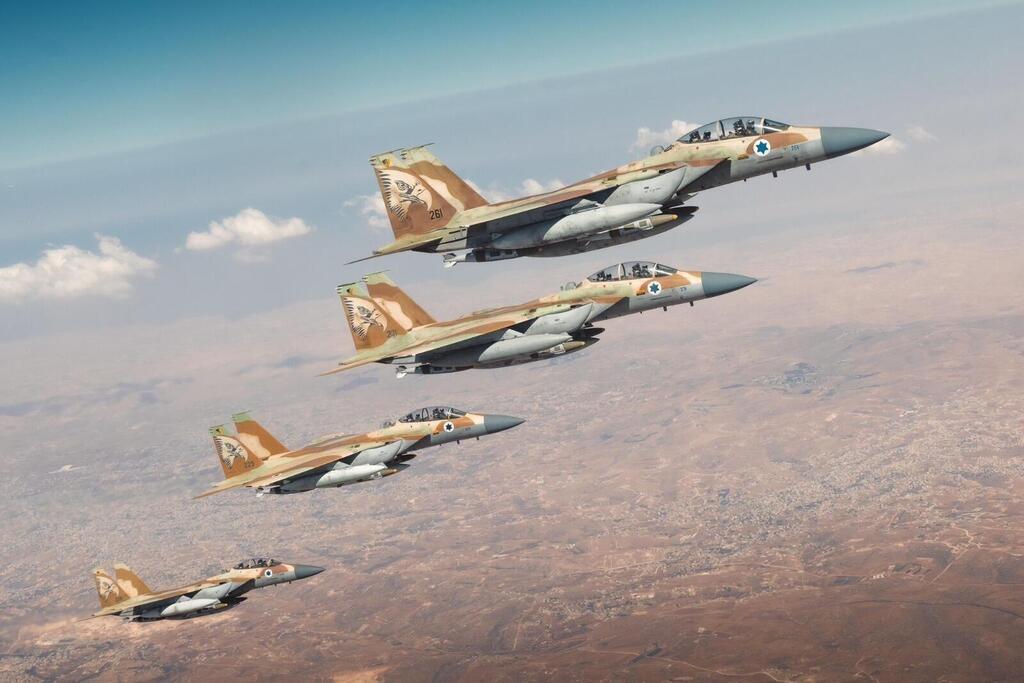
F-15s during Operation Rising Lion
(Photo: IDF)
When asked what was achieved on the nuclear front, the official replied: “We struck the program hard and pushed them away from a nuclear weapon, but they can still break out to a bomb within a year. I hope we will know about it. Our intelligence is good, but never perfect. The farther we get from the operation, the more they will restore capabilities. They still have nuclear material, so the urgency is to reach a monitoring agreement — even if such an agreement entails political costs, such as strengthening the regime.”
Since the war with Iran, Israeli officials say both sides have been engaged in a learning process. Iranian leaders are analyzing how deeply Israeli intelligence penetrated their defenses, pointing to the assassinations of nuclear scientists, the killing of Islamic Revolutionary Guard Corps commanders, the neutralization of air defense systems and the destruction of much of their missile and launcher forces.
Israeli military officials view Iran’s ballistic missile program as an existential threat on par with its nuclear program because of the size of Tehran’s arsenal. Israel’s current strategy is multi-layered: intelligence-gathering to detect restoration efforts, diplomatic pressure on China and Russia alongside the United States to block Iranian assistance, and technological acceleration of missile-defense systems, including the Arrow interceptor and laser-based defenses.
The war has also shaped public opinion inside Israel, where there is now wide recognition that Iran’s missile arsenal constitutes an existential threat requiring major investment in defenses. Beyond the battlefield, Israeli officials point to three main achievements from Operation Rising Lion:
- Restoring Iran to the center of global diplomacy by raising awareness of its noncompliance with nuclear agreements, which led to activation of the snapback sanctions.
- Disrupting Iran’s short-term nuclear plans by slowing its path toward a weapon.
- Strengthening Israeli deterrence by demonstrating the country’s ability to act swiftly and precisely against strategic threats.