

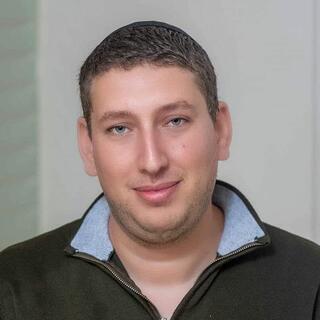
An emotional scene unfolded Sunday in the ultra-Orthodox city of Bnei Brak as former hostage Bar Kupershtein visited to thank residents for their prayers during his captivity in Gaza and following his release.
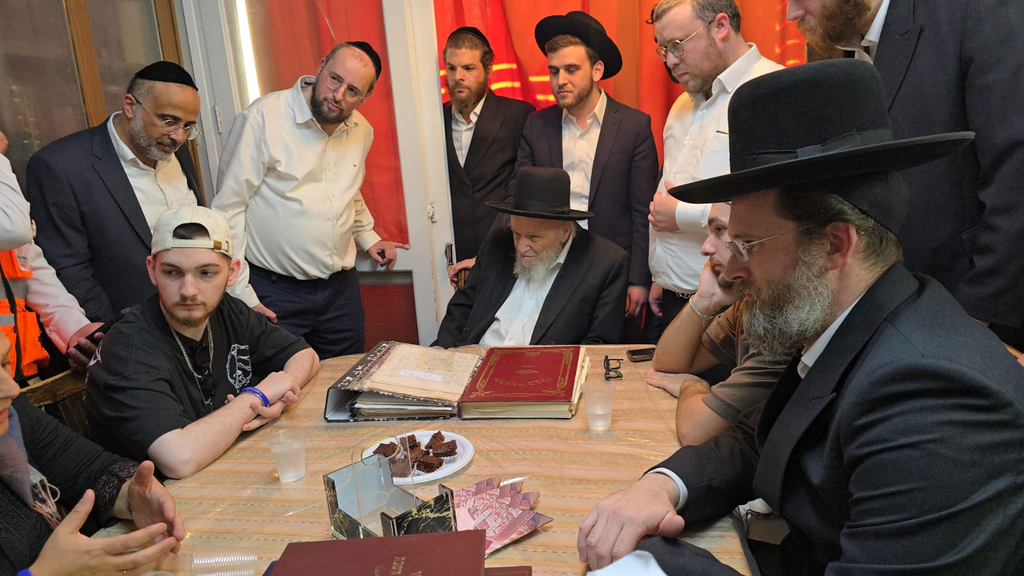
Kupershtein, who was held by Hamas terrorists for nearly two years, was welcomed with cheers and applause by crowds of residents who accompanied his vehicle through the streets and gathered outside City Hall, where he met with members of the city council. Later in the day, he visited Rabbi Moshe Hillel Hirsch, head of the Slabodka Yeshiva and one of the most senior leaders of the Lithuanian (non-Hasidic) ultra-Orthodox community. Rabbi Hirsch listened as Kupershtein described the hardships he endured in captivity, expressed emotion at his release, and blessed him for continued strength and recovery.
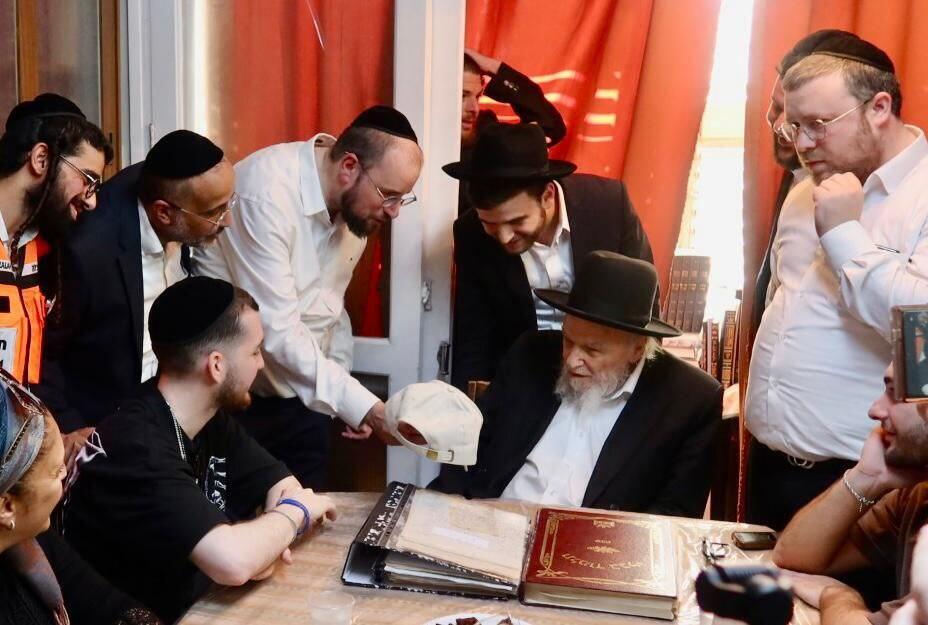
Kupershtein told the rabbi that his time in captivity deepened his connection to faith. “I was traditional — I made kiddush and did some things — but I didn’t observe Shabbat or wear tzitzit,” he said. “These two years made me realize how important it is. My faith grew stronger. You understand from that place how much it matters.”
His mother, Julie Kupershtein, told Rabbi Hirsch, “Thank God, we merited prayers for Bar and for all the hostages.” Accompanying the visit was Haredi journalist Israel Cohen, who showed the rabbi the inscription on Bar’s hat: “It says, ‘Always, always, always in the hands of the Creator of the world.’” Julie shared a chilling moment from her son’s captivity. “The terrorists — may their names be erased — came and said, ‘Choose which three we should kill out of the six of you.’ They said, ‘There are six people; we’re killing three. You choose who dies.’ And Bar sat aside and said, ‘I’m in the hands of the Creator of the world.’ That’s exactly the phrase I taught all of Israel to say — ‘Always in the hands of the Creator of the world.’”
Kupershtein described the psychological warfare that the Hamas terrorists used on the hostages. “They held a kind of lottery and used psychological warfare on us. They wanted us to record a video — emotional, begging for our lives. They loaded their weapons and pointed them at us. It was real. In the end, they made a video and later told us it was fake, just to scare us. It was during the previous ceasefire, about six months ago.” When asked if the hostages knew what was happening outside Gaza, he replied, “More or less. We saw Al Jazeera.” Rabbi Hirsch asked if he understood Arabic, and Kupershtein answered, “We learned. Two years there — you learn.”
(Photo: Shuki Lerer)
Julie added that the captives maintained their religious observance even under dire conditions. “When Bar came back, he told us they managed to keep Shabbat in captivity. They made kiddush over a cup of water, sang Shalom Aleichem, and did havdalah with a flashlight instead of a candle and medicine with a mint smell instead of spices. They didn’t give up on the mitzvot, and I think that faith is what kept them sane.” Rabbi Hirsch also blessed Bar’s father, who had worked on regaining his speech during his son’s captivity and was present to greet him.
Cohen, who has accompanied hostage families since the start of the war and serves as a liaison between them and ultra-Orthodox leaders, said the visit stirred deep emotions. “It was incredibly moving to see Bar walk into the city council meeting and receive a standing ovation,” Cohen said. “Many Bnei Brak children followed him in the United Hatzalah ambulance he rode in. His father once volunteered with the organization, so it felt like closing a special circle. The whole city embraced him, expressing what residents have felt over the past two years as they prayed for everyone’s return.”
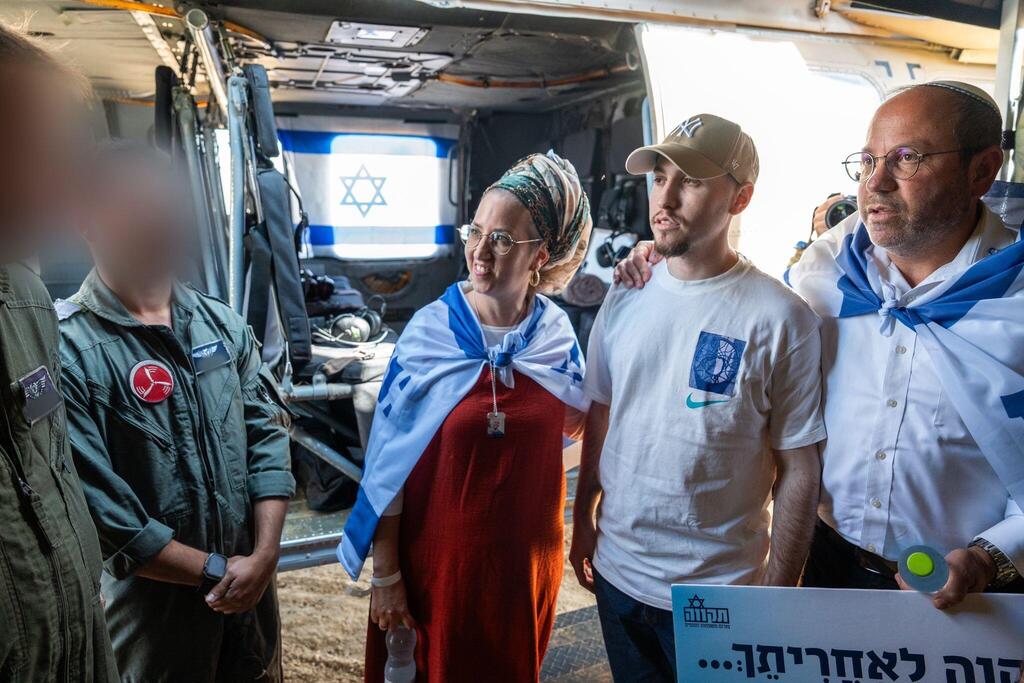
Eitan Mor and his parents
(Photo: IDF)
On the same day, four other former captives — Segev Kalfon, Guy Gilboa Dalal, Evyatar David, and Eitan Mor — were also released and returned home. Mor, who was kidnapped by Hamas terrorists from the Nova music festival on Oct. 7, where he worked as a security guard, spoke Friday with Eliyahu and Avishag Leibman, parents of Elyakim Leibman, who was murdered in the Hamas attack. During their conversation, Mor recounted the chaos and horror of that day. “People started coming toward us, and then they began shooting very close,” Mor said. “We lay on the ground, and I heard people terrified, girls crying. We thought it was the IDF coming — that we were being rescued. We had no idea what was happening.”
He described how dozens of festivalgoers hid in a small valley near the forest. “I thought, I’ll call my dad — then remembered it was a holiday and he didn’t have his phone,” he said. “I called my cousin Eli on video and told him, ‘Call the army! What’s going on here?!’ My friend wasn’t answering, and then I got a message from Elyakim: ‘I’m in the tent with the wounded.’” Mor said he went to find his friend. “I told my friend Rom Breslavsky, who was also kidnapped and released in the latest deal, ‘I’m going to Elyakim — I have to see him.’ Elyakim had rescued many festivalgoers and went back toward the ambulance to help. That’s where he was killed.”