

The Israel Medical Association is facing mounting pressure from international and local medical figures to join calls for the release of Dr. Hussam Abu Safiya, the former director of Kamal Adwan Hospital in Gaza, who has been held in Israel for more than a year and a half.
“Regardless of his actions, we protest for Dr. Hussam Abu Safiya’s basic right to humane detention conditions supervised by medical officials. Even Eichmann received proper detention and health conditions in Israel,” said Prof. Nadav Davidovitch, director of the Center for Health Innovation Research and Social Impact at Bar-Ilan University and head of health policy at the Taub Center.
According to Davidovitch, who also chairs the public health forum of the Israel Medical Association, the appeal by Israeli health organizations and professional societies is rooted in the ability to hold a substantive discussion, “especially after October 7.”
“This case is a reminder that issues of medical ethics in wartime spaces require a separation between the person and the acts attributed to him, a separation that is very difficult to make these days,” he said.
Physicians for Human Rights-Israel is leading the local campaign as international support grows for calls to release the Gaza doctor held in Israel. More than 970 people from 41 countries on six continents have signed an international petition calling for immediate action to save Abu Safiya’s life.
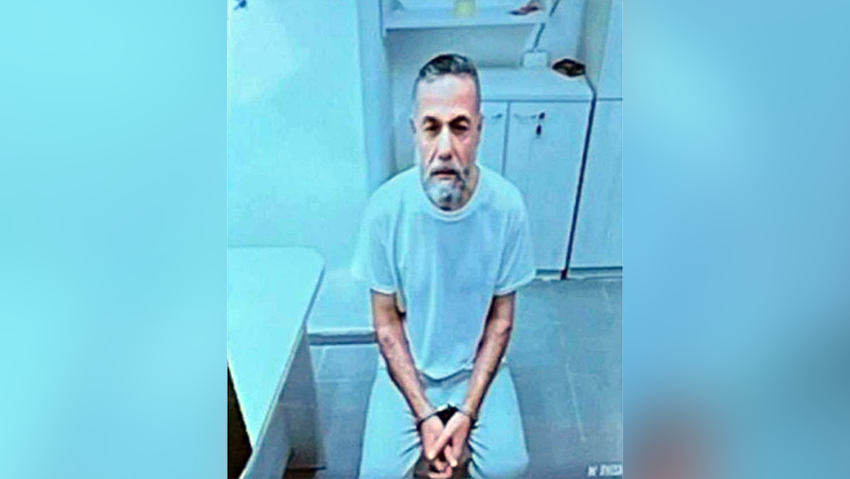
Abu Safiya, a pediatrician and neonatologist, was director of Kamal Adwan Hospital in northern Gaza. He was arrested by Israel in December 2024 and has been held for more than a year and a half. He is also described by Israel as a Hamas member.
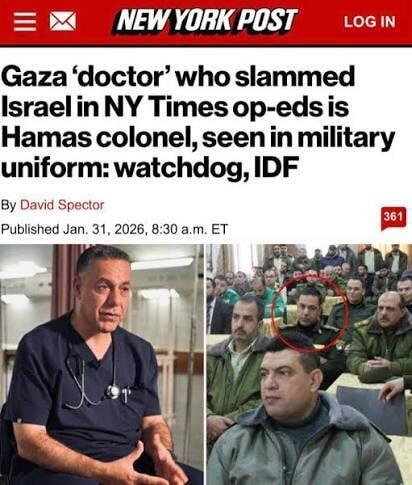
He was arrested during an Israeli raid on the hospital, which Israel says served as an incubator for Hamas military activity, on the basis of serious security suspicions. Israeli officials claim Abu Safiya was presented for years as a pediatrician and hospital director but was in practice involved in Hamas organizational activity, including participation in official events where he was documented alongside senior members of the group while wearing a Hamas uniform.
The suspicions against him are considered so serious, Israeli officials say, that his name has not been included in various lists of Palestinian prisoners proposed for release deals. Inside the hospital, the IDF said it found numerous weapons, including rifles, pistols, military equipment, ammunition, money and intelligence material.
The petition, together with the list of signatories, is being sent to the president of the World Medical Association, the president of the American Medical Association and the heads of other leading medical associations. It expresses deep concern over Abu Safiya’s health and detention conditions, and calls on medical associations and the global medical community to use their full professional and moral weight to secure his release.
Among the signatories are more than 400 physicians and PhD holders, including specialists in pediatrics, surgery, emergency medicine, oncology, psychiatry, intensive care and public health. More than 60 professors have also signed, including senior researchers and clinicians from leading universities and hospitals, among them Harvard, Yale, Columbia, Cambridge and McGill, as well as senior faculty from leading Israeli institutions including Sheba Medical Center, Tel Aviv University, the Hebrew University and the Technion. Dozens of nurses, psychologists, social workers and other health professionals have also joined.
About 600 of the signatories cited membership in professional associations, including the American Medical Association, the American Academy of Pediatrics, the Israel Medical Association, royal colleges in Britain and Canada, and Physicians for Human Rights. The signatures came from the United States, Israel, Canada, Britain, Australia, France, Jordan, Uruguay, India, Brazil, South Africa and many other countries.
In addition, more than 2,500 people signed a petition circulated on the issue by the Israeli Academia for Equality. A letter was also sent to Israel Medical Association chairman Prof. Zion Hagay, signed by hundreds of doctors demanding his intervention on Abu Safiya’s behalf.
Abu Safiya was arrested in December 2024 and taken to Israel. Even before his arrest, he had drawn sympathy after his son was killed during the war and he himself was wounded. Throughout his long administrative detention, Physicians for Human Rights and other doctors, not formally affiliated with any health association, have protested both his detention and its conditions.
He was brought to Israel and held at the Sde Teiman detention facility, where, according to reports, his health deteriorated. In January last year, he was transferred to Ofer Prison and spent a long period in isolation. Because he has not been charged and no indictment has been filed against him, two Israeli courts have had to extend his administrative detention. Amnesty International, the World Health Organization, UN officials and physicians’ rights groups have voiced outrage over what they see as the injustice done to him and called for his release.
Dr. Michal Feldon, a pediatric rheumatologist and activist who has described IDF actions in Gaza as genocide, has also joined the campaign on behalf of Abu Safiya, whom she called “the Janusz Korczak of our time.”
In an interview with ynet, she explained why she was focusing on Abu Safiya rather than on 13 other medical staff members held in Israel.
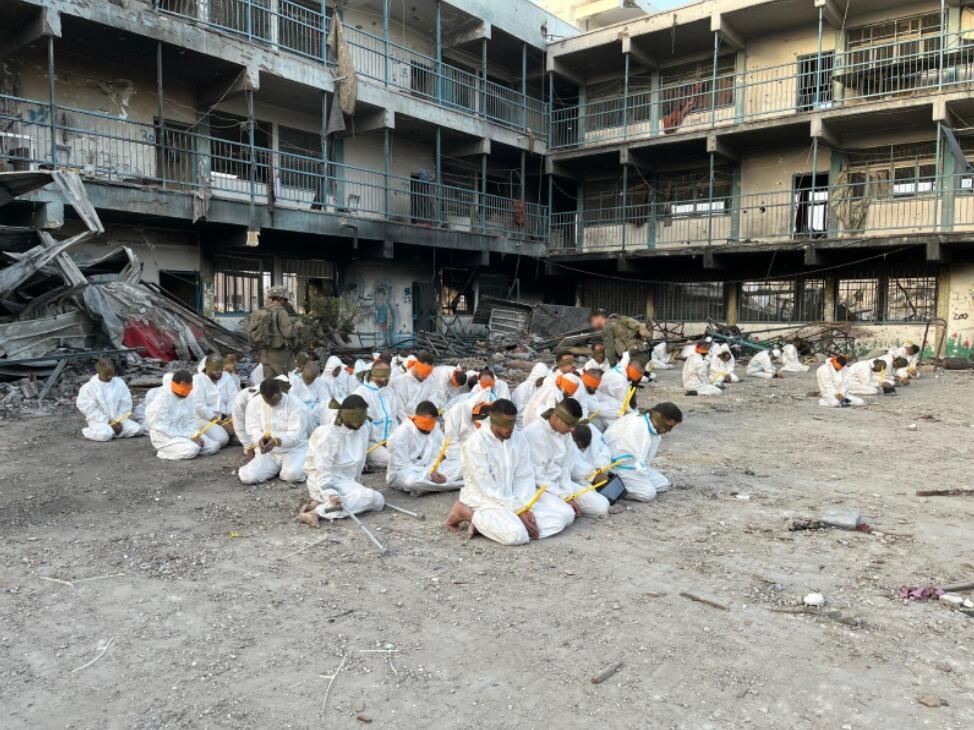
Terrorists arrested at Kamal Adwan Hospital in Gaza
(Photo: IDF)
“Even an ordinary Hamas fighter, as you call him, is there without trial or indictment, and most of the detainees are probably innocent,” she said. “But of course the attitude toward the doctor is different. Factually, the world does not fight for 9,000 administrative detainees, but it does fight for specific people. I don’t think it is connected to his being a doctor, but to who he is and his life story.”
She and colleagues at Physicians for Human Rights sent a letter to the Israel Medical Association chairman, signed by hundreds of doctors demanding the association’s intervention for Abu Safiya.
“We recognize the importance of behind-the-scenes work, and we are aware that both the Israel Medical Association and the Health Ministry are trying to help in this case,” the letter said. “However, it is unacceptable that there is no clear and public call by the Israel Medical Association, at least for immediate medical evaluation and medical treatment.”
The letter was accompanied by a petition by hundreds of medical professionals from Israel and around the world, demanding that Abu Safiya be examined by an independent doctor and released from detention.
Asked whether the campaign to improve Abu Safiya’s conditions stems from the fact that he is a colleague, Davidovitch said Physicians for Human Rights and other health organizations act out of a universal medical approach.
“The mobilization on his behalf does not stem from his being a ‘colleague,’ but from the principle that every person, and especially a medical staff member, has the right to protection under international humanitarian law, with the assumption being that a doctor is protected by virtue of his role and not by virtue of his identity,” he said. “Health is a basic right that is not revoked even when a person is behind bars.”
Asked about the dissonance between the serious suspicions against Abu Safiya and his role as a doctor and hospital director, Davidovitch said the public views the case through a clear security-political lens, while doctors view it through professional ethics.
“The dissonance between the ‘devoted treating physician’ who chose to remain in a place of danger in order to save lives and political or military involvement highlights a fateful distinction: whether the medical space preserves its independence from military interference,” he said. “There are also essential ethical dilemmas around the exploitation of medical facilities as a shield, and even when that happens, we must not cause widespread destruction of medical infrastructure, as happened in Gaza.”
Physicians for Human Rights has recently intensified its campaign.
“New information received from Dr. Abu Safiya’s lawyer points to a severe deterioration in his condition, to the point of real danger to his life,” the organization said. “We demand that he be transferred immediately from the facility and that an urgent visit by a judge be allowed in order to closely assess his condition before it is too late.”
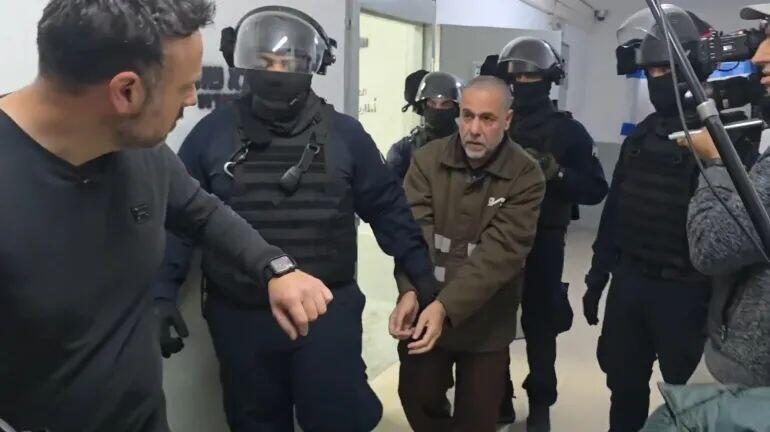
According to an affidavit filed by the lawyer after visiting Abu Safiya on July 2, and as revealed by Physicians for Human Rights, he was shackled by his hands and feet and accompanied by masked prison guards. Fresh and serious bruises were visible on his head, around his eyes, on his ears and on his neck. He had difficulty breathing and speaking continuously.
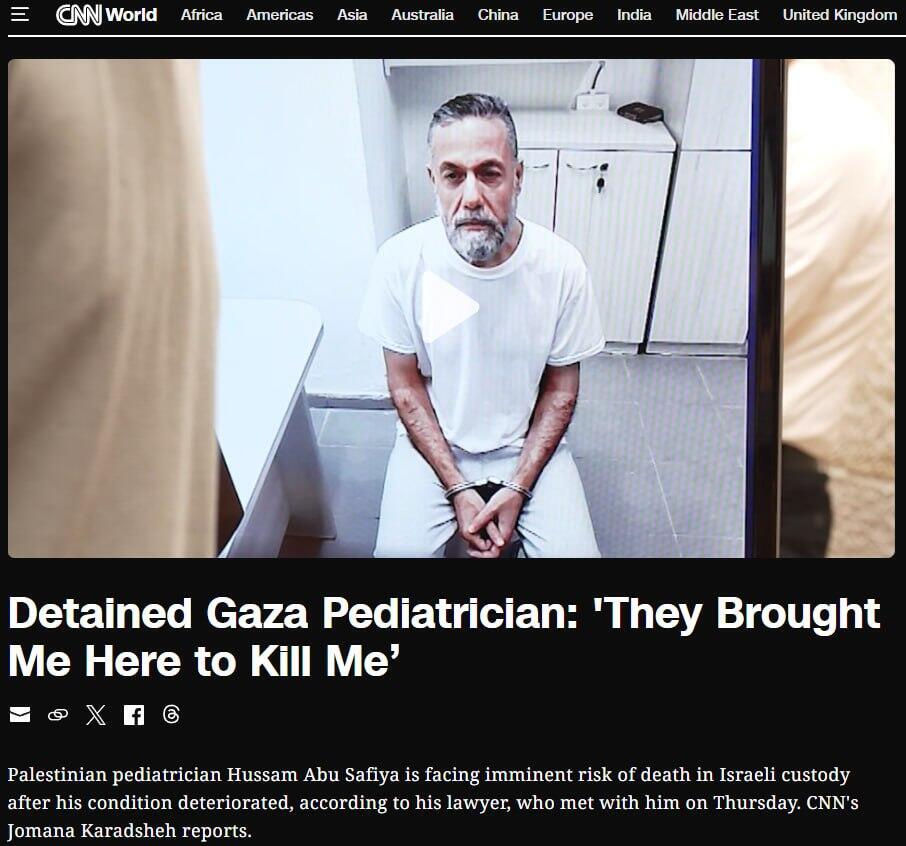
At the end of the visit, he told his lawyer: “They brought me here to kill me. I cannot imagine that I am alive. I see the end. This is the end, and this is the last time you will see me.”
Asked whether calling for medical care for every person, including prisoners, is legitimate but calling for Abu Safiya’s release crosses a line into a legal matter, Davidovitch said he was aware of the deep antagonism the campaign has stirred in Israeli society, “which is still in trauma.”
“But our role in health associations and in academia is to deal with facts, even when they run counter to the prevailing national narrative,” he said. “As for Dr. Abu Safiya, the main focus of our struggle is his health condition, but also the principled problem of a person being held in prison without an indictment. If an indictment is filed against him and his guilt is proven, he must bear whatever punishment the court imposes.”
A response from the Israel Medical Association has not yet been received.
The Israel Prison Service rejected the claims about Abu Safiya’s detention conditions.
“The claims described are untrue, lack any factual basis and are part of a smear campaign against the State of Israel and its legal institutions around the world,” the IPS said. “The Israel Prison Service acts in accordance with the provisions of the law and under constant judicial review. All inmates held by the Prison Service are held in accordance with the law and receive the rights and treatment required by law.”