

Dr. Hussam Abu Safiya, director of Kamal Adwan Hospital in northern Gaza, has been detained in Israel for the past year and a half. Leading international media outlets have been carrying a campaign calling for his release, portraying him as emaciated and exhausted, while Israel has largely remained silent.
In the past, reports and documentation published in Israel alleged that Abu Safiya was also affiliated with Hamas. A photograph showing him wearing a Hamas uniform was made public, but it was published only by the New York Post in January. Since then, the Israel Prison Service spokesperson has largely been left alone to respond to mounting international criticism.
Gallery
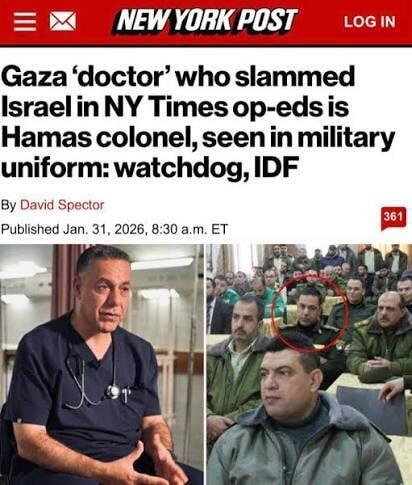
A photograph showing him wearing a Hamas uniform was made public, but it was published only by the New York Post
International campaign
While Israeli officials have remained silent, Abu Safiya's attorney, Nasser Odeh, has been speaking extensively to the international media. The Palestinian Prisoner's Society, a Palestinian organization that says it provides assistance to Palestinian prisoners held in Israeli prisons, said information provided by Odeh "indicates that the Israeli authorities are escalating their direct abuse of Abu Safiya through harsh detention conditions and systematic torture intended to physically and psychologically exhaust him."
The organization also claimed that his transfer to Rakefet Prison, where Hamas terrorists involved in the October 7 massacre and Hezbollah operatives are being held, was part of "an attempt to harm him." Those allegations have been widely echoed internationally, along with claims that the wing at Nitzan Prison where he had previously been held "has been linked to numerous testimonies of severe torture and starvation, representing an especially dangerous escalation."
On Saturday, Arab media outlets also began reporting that Abu Safiya had been placed in solitary confinement.
Underthe headline, "Detained Gaza doctor almost unrecognisable after injuries in Israeli jail, lawyer says," Britain's The Guardian published a lengthy report on the case two days ago. The newspaper quoted Odeh as saying Abu Safiya's "life is in real danger" after being held for 18 months without charges or trial.
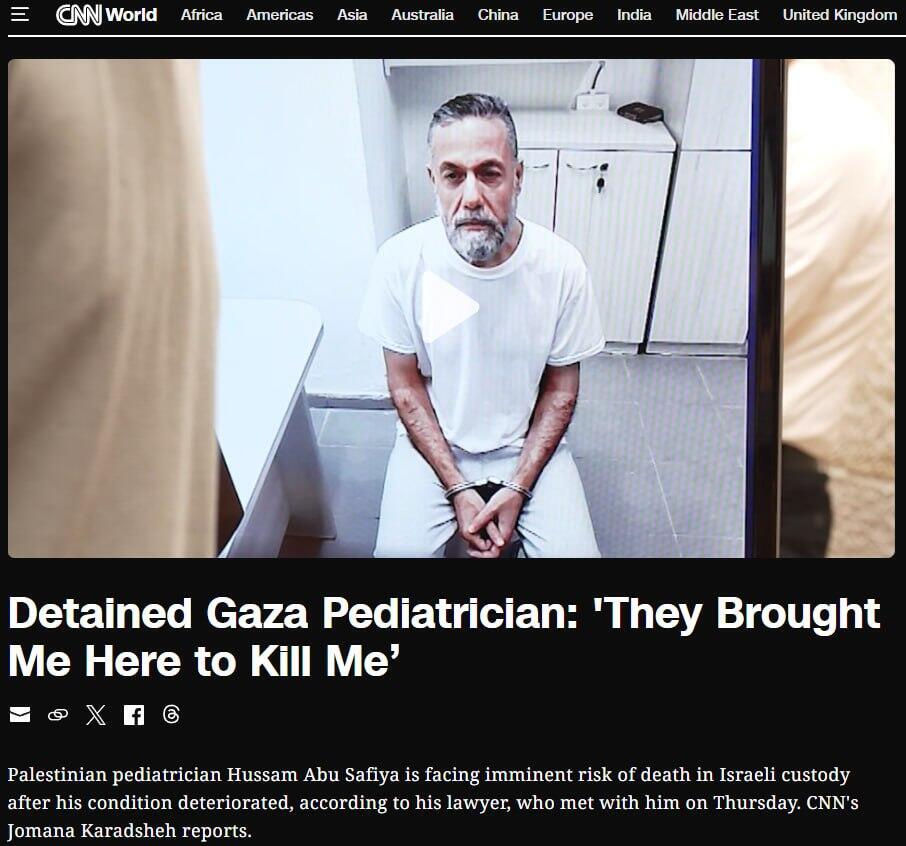
"They brought me here to kill me." Calls for Abu Safiya's release on CNN
The report said Abu Safiya met with his lawyer on July 2 after being transferred in late June to the underground Rakefet Prison, which it described as notorious. According to Odeh, Abu Safiya "was exhausted and unable to breathe, in a difficult physical, psychological, and mental state."
In a joint statement with Physicians for Human Rights Israel and other organizations calling for his release, Abu Safiya was quoted as saying: "They brought me here to kill me. I don’t see myself surviving. This is the end."
The Guardian also highlighted claims by Physicians for Human Rights Israel that Abu Safiya's detention is a "part of a broader pattern of Israeli attacks on healthcare across occupied Palestine," in the organization's words. The report also detailed additional cases in which Palestinians were allegedly harmed as a result of Israeli policies.
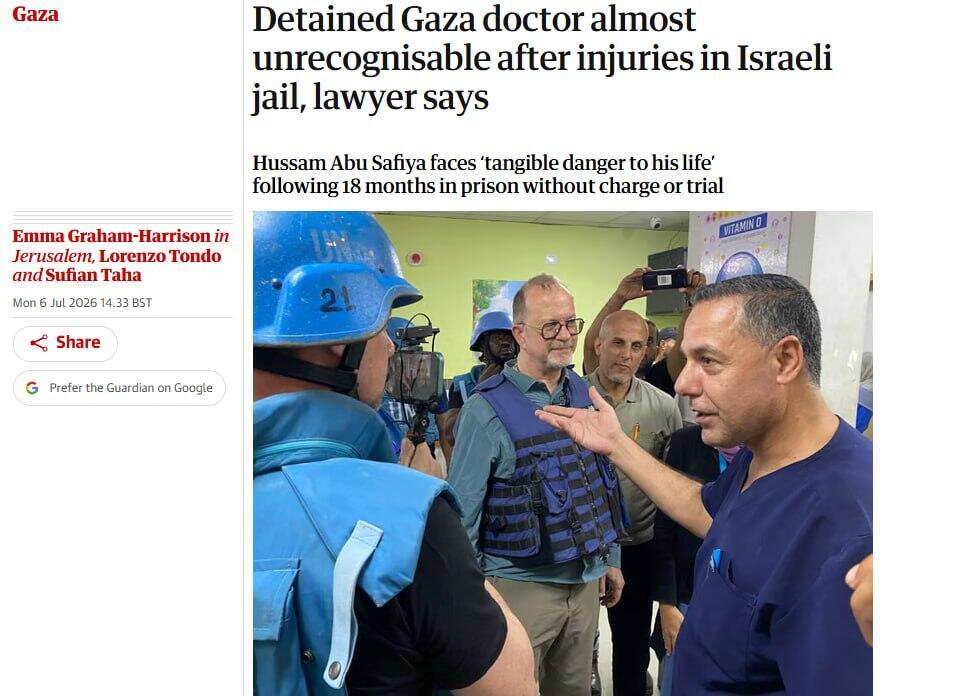
The Guardian published a lengthy report on the case two days ago
"Abu Safiya had become the face of health workers struggling to treat patients throughout the war in Gaza before his detention," The Guardian wrote. "He is being held indefinitely, along with thousands of other Palestinian civilians, in prisons that Israeli rights groups say have become torture camps."
Odeh said Abu Safiya was transferred from Ktzi'ot Prison at the end of May and placed in solitary confinement without explanation. According to the report, Abu Safiya described being assaulted by prison guards using hammers and clubs shortly after appearing by video at a hearing on his appeal to Israel's Supreme Court against his continued detention. He was then transferred to Rakafet on June 24, where, Odeh said, his condition deteriorated sharply.
"I have visited Dr Abu Safiya several times since his detention, but the individual I encountered during this latest visit was not the same person I had previously met," Odeh was quoted as saying. "His physical and psychological state, the severe injuries visible on his body, and his personal testimony leave no room for doubt: his life is in immediate danger."
According to Odeh, Abu Safiya appeared frightened, distressed and afraid to speak freely. The report added that Abu Safiya told his attorney he is beaten daily in prison and has lost consciousness several times as a result.
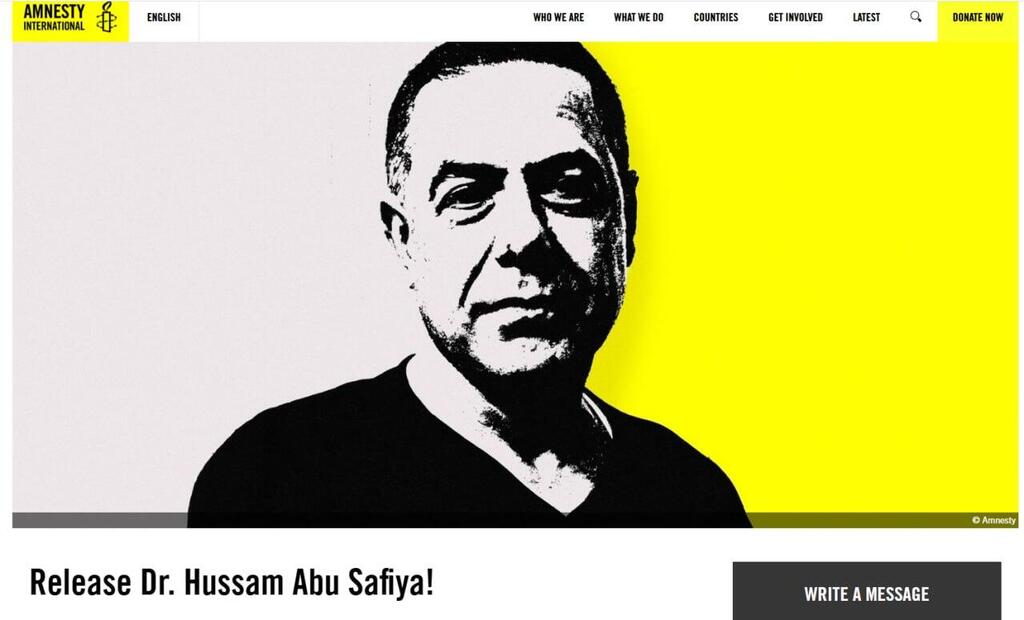
Amnesty's campaign for the release of Abu Safiya
The Guardian described Rakefet as a facility "where prisoners never see daylight." It said the prison was built in the 1980s to house organized crime leaders but was later closed after being deemed inhumane. According to the report, it was reopened on the orders of National Security Minister Itamar Ben Gvir. Other Palestinian prisoners held there have reportedly described suffocating conditions and breathing difficulties inside overcrowded, poorly ventilated cells.
Israel's response
Against those allegations, Israel has largely remained silent. The Israel Prison Service spokesperson said the claims made by Odeh were "false and entirely without factual basis."
About a month ago, Abu Safiya appeared by video during a court hearing, and footage of the proceeding also sparked international attention. He was seen in handcuffs speaking remotely during the hearing, images that quickly drew widespread international coverage.
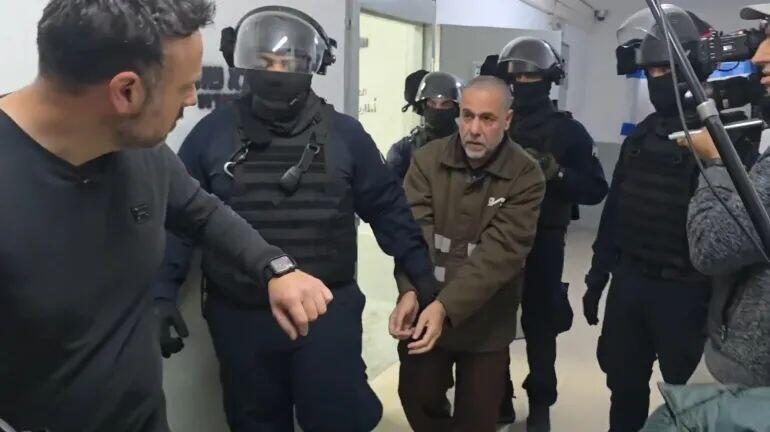
Abu Safiya remains in Israeli custody as the investigation continues
Abu Safiya was arrested during an IDF raid on the hospital in December 2024. Israel has said armed Hamas operatives were operating from the hospital during the fighting and that the facility was suspected of being used for military purposes.
Israeli officials have alleged that although Abu Safiya was publicly presented as a pediatrician and hospital director, he was also involved in Hamas organizational activity, including participating in official Hamas events and appearing alongside senior members of the group.
Abu Safiya remains in Israeli custody as the investigation continues. They also say his name has not been included in previous prisoner release deals because of the seriousness of the allegations against him.
Meanwhile, social media has been flooded with posts portraying Abu Safiya as a leading medical figure who worked for years in northern Gaza, particularly during the recent fighting, when hospitals in the area were under immense strain. Influencers in Gaza have claimed that "his only crime was refusing to abandon his patients," portraying him as a pediatrician who continued working under extremely difficult conditions despite the personal risk.