


The Trump administration is moving ahead with a major arms sale to Israel worth about $660 million, including more than 27,000 bombs, in a deal that contains an unusual detail: the munitions are produced by a company owned by a Turkish defense manufacturer.
The sale, announced late Friday by the U.S. State Department, includes thousands of MK-80 series bombs and related equipment. Secretary of State Marco Rubio declared that the war with Iran constitutes an “emergency requiring immediate sale,” allowing the administration to bypass the congressional review process normally required for arms exports.
Gallery
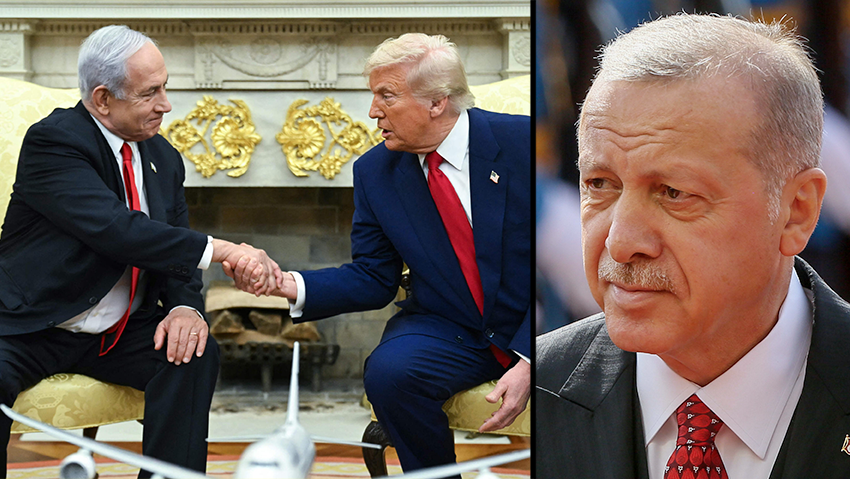
Benjamin Netanyahu, Donald Trump, Recep Tayyip Erdogan
(Photo: Saul Loeb/ AFP, Roberto Schmidt/ AFP)
The emergency designation enables the administration to sidestep Section 36(b) of the Arms Export Control Act, which mandates congressional oversight for major foreign weapons sales.
Under the deal, Israel will receive more than 20,000 bombs with a total value of about $660 million. According to the official breakdown, the package includes 12,000 BLU-110A/B bombs, each weighing about half a ton, valued at approximately $151.8 million. Israel will also receive 10,000 bombs weighing roughly 250 kilograms, 5,000 small-diameter bombs, as well as technical, logistical and support services.
Israel is expected to finance the purchase in part using the $3.8 billion in annual U.S. military aid it receives.
The transaction marks the first time since Trump began his second term that the administration has formally invoked emergency powers to bypass Congress in order to expedite a weapons sale to Israel. The administration has already pushed through several military aid packages by bypassing informal review procedures on Capitol Hill, but had until now avoided declaring an official emergency.
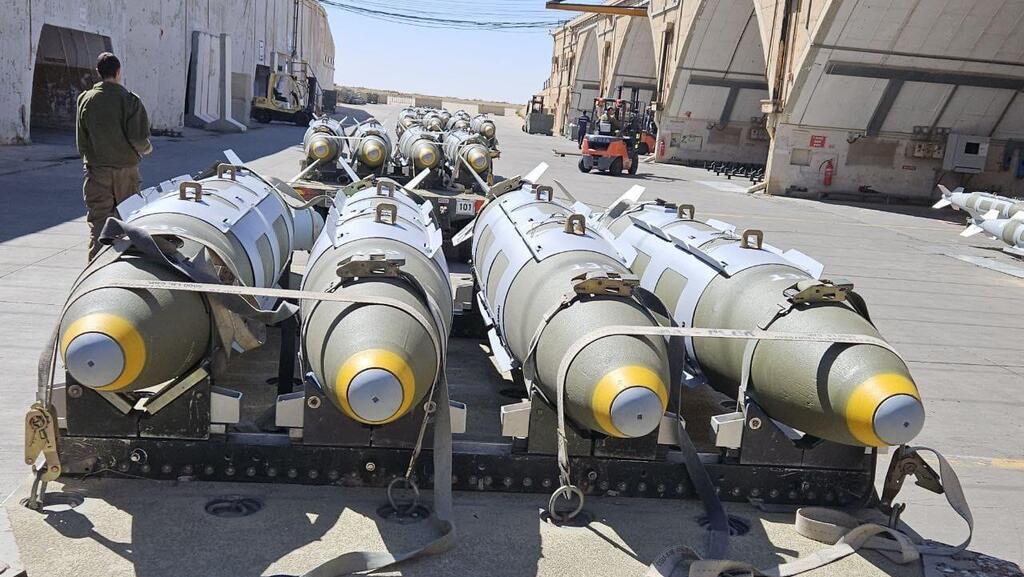
JDAM bombs at an Israeli Air Force base
(Photo: Yoav Zitun)
Earlier this year, the State Department bypassed congressional review to approve four weapons packages for Israel worth $6.5 billion, including Apache attack helicopters and armored vehicles after months of delays in congressional committees.
The emergency authority is rarely used but not unprecedented. The Biden administration invoked the same provision twice in 2023 to send tank shells and artillery ammunition to Israel shortly after the October 7 attacks, and also used it in 2022 to speed arms deliveries to Ukraine following Russia’s invasion.
Trump himself used the authority during his first term in 2019 in a controversial move to approve $8.1 billion in weapons sales to Saudi Arabia and the United Arab Emirates, citing tensions with Iran.
The MK-80 bombs in the current package had been under informal review in Congress but had not yet received approval from the relevant committees before the administration moved forward with the emergency declaration.
The move has drawn sharp criticism from lawmakers who say it undermines congressional oversight.
“The use of emergency authority creates a fundamental contradiction at the heart of the administration’s justification for this war,” said Rep. Gregory Meeks of New York, the top Democrat on the House Foreign Affairs Committee. “The Trump administration has repeatedly insisted it is fully prepared for war with Iran, yet the rush to bypass Congress tells a very different story.”
At the end of the State Department notice, documents revealed that the prime contractor for the project is Repkon USA, based in Garland, Texas.
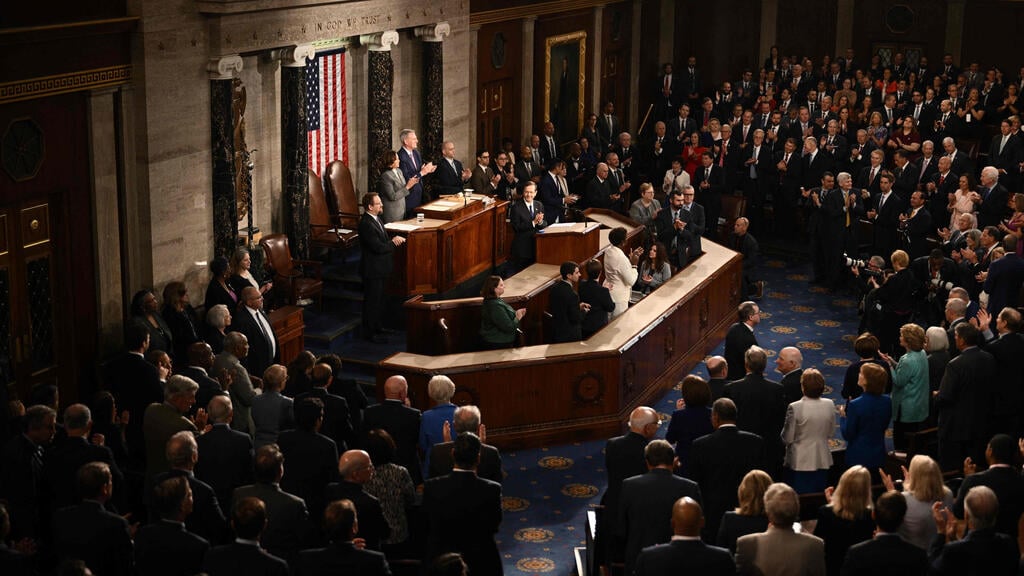
US Congress
(Photo: Brendan Smialowski/ AFP)
However, the company is not American-owned. Repkon USA is a subsidiary of the Turkish arms manufacturer Repkon.
In March 2025, the Turkish company purchased the Garland production facility from U.S. defense giant General Dynamics. The factory is the only facility in the United States capable of producing bomb bodies for the MK-80 series, which serve as the core component for JDAM precision-guidance kits widely used by the U.S. military and the Israeli Air Force.
The Turkish ownership has raised concerns among some American defense analysts and policymakers.
Jim Fein, a researcher at the conservative Heritage Foundation, criticized the Committee on Foreign Investment in the United States (CFIUS) for approving the acquisition last year, effectively allowing a foreign-owned company to control production of a key component in the U.S. military supply chain.
Analysts warn the arrangement could create a potential vulnerability in the supply chain for both U.S. and allied forces.
Although Turkey remains a NATO member and relations between Trump and Turkish President Recep Tayyip Erdoğan have warmed, Ankara has increasingly pursued policies that clash with U.S. interests.
Turkey purchased Russia’s S-400 air defense system, which led to its removal from the F-35 fighter jet program and the imposition of U.S. sanctions in 2020. Ankara has also conducted operations against Kurdish forces in Syria that are backed by the United States and has repeatedly threatened Greece.
Most notably for Israel, Turkey has strongly supported Hamas since the October 7 attacks and has imposed a diplomatic and economic boycott on Israel.
Despite that stance, a Turkish-linked company is now effectively supplying heavy bombs to the Israeli military through its American subsidiary.
Security experts say Repkon maintains close ties with the Turkish government through contracts and regulatory approvals, raising the possibility that Ankara could exert indirect pressure on production if geopolitical tensions escalate.
Even without an outright refusal to manufacture weapons — a move that could provoke a major confrontation with Washington — analysts say Turkey could influence the supply chain through production delays, labor disputes or technical issues that slow deliveries during a crisis.
Repkon is also involved in other U.S. ammunition production programs and recently won a contract to build an explosives manufacturing facility in Kentucky.
The State Department defended the sale, saying the weapons would contribute to U.S. national security by strengthening a key regional ally.
In its official statement, the department said the sale “will support the foreign policy and national security of the United States by helping improve the security of a strategic regional partner that is an important force for political stability and economic progress in the Middle East.”
U.S. officials added that the bombs would enhance Israel’s ability to confront threats, strengthen homeland defense and serve as a significant deterrent.
At the same time, the prominent role of a Turkish-owned company in producing key components for the weapons highlights the increasingly complex web of alliances and competing interests in the Middle East — where, in some cases, Israel’s ability to fight depends on weapons manufactured by one of its most vocal critics.