

A week after the devastating flood disaster that struck Nepal and Tibet, following the collapse of a massive glacier in the Himalayas, a race against time continues to rescue the thousands still listed as missing, many of whom are likely already dead.
Glacier collapse in the Himalayas claimed to have led to flooding in Nepal and Tibet


In Nepal, rescue efforts are focused on hundreds of workers at hydroelectric projects in the area, with hopes that some may have survived inside tunnels dug as part of those projects. The tunnels were also flooded, but they are enormous, in some cases large enough for trucks to pass through. On Tuesday evening, the BBC published new testimony from several workers who escaped from them as the disaster unfolded last Wednesday.
The British broadcaster spoke with Pemba Dundu Tamang, who said he was leading a team of about 30 workers at the time, coating one of the tunnels with concrete. He said the first thing he felt was a sudden gust of wind so powerful that it sent plywood sheets flying and shifted heavy machinery.
“I ran toward the tunnel entrance,” he said. “The water was chasing me and I was running ahead of it.”
Gallery
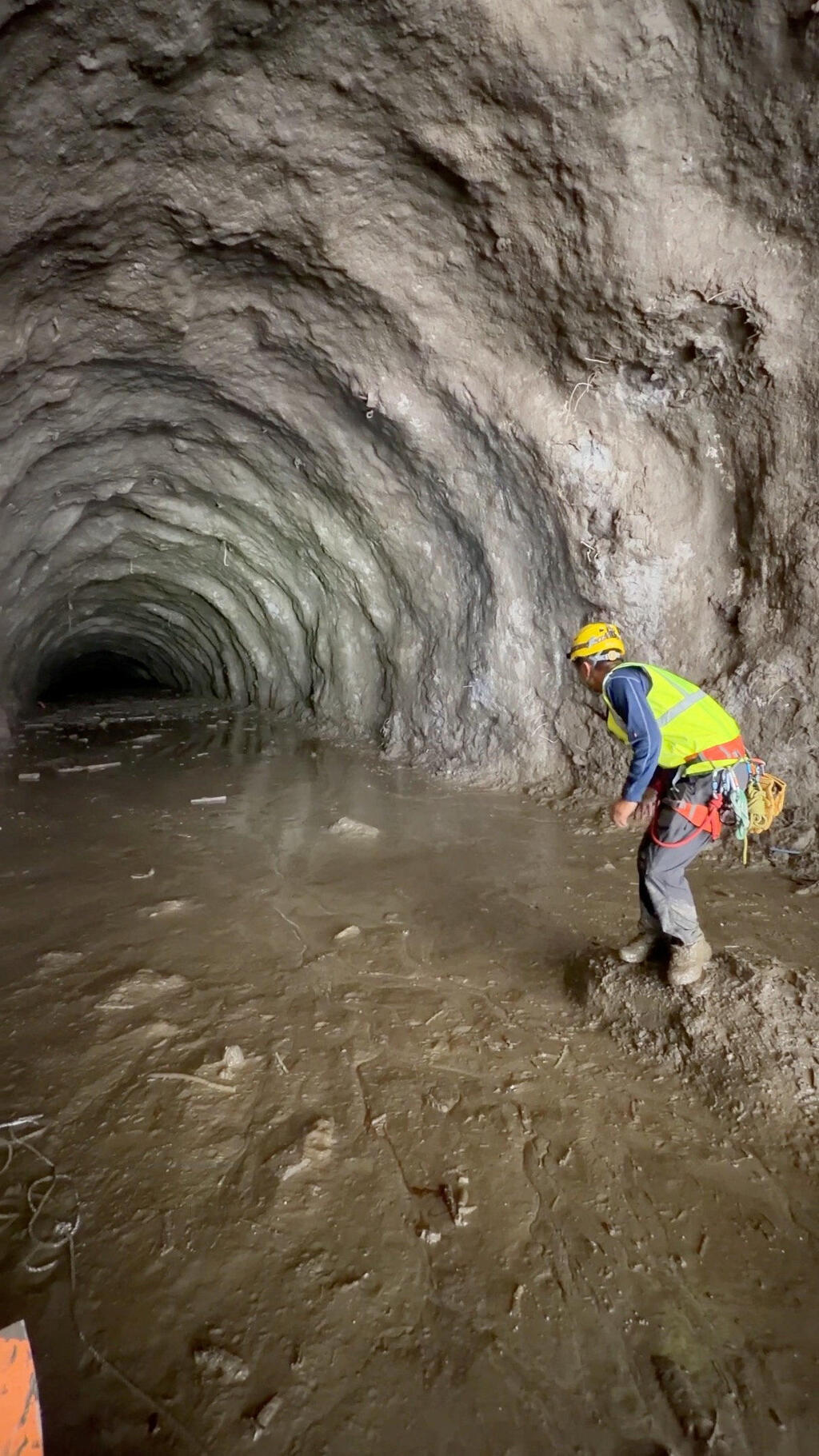
Tunnels that a truck can pass through, but that doesn't guarantee a flow of oxygen(
(Photo: Ashish Gurung/via Reuters)
Tamang said he ran for about 20 minutes to escape the powerful surge, which continued to chase him uphill. “I was almost unconscious from the shock. I couldn’t think clearly.”
His friend, Itha Gala, said the powerful gust nearly blew them away as they ran with all their strength. Tamang eventually found shelter with several others in a nearby village, where they stayed for two days until the army arrived to rescue them. He estimates that about 50 to 60 workers managed to escape the tunnel with him.
More than 99% of Nepal’s electricity is generated by hydroelectric power plants, and Tamang and Gala say they helped build the Trishuli 3B hydropower project. The plant, which had been due to open next year, was designed to reuse water from an upstream hydroelectric station on the Trishuli River to generate additional power for Nepal’s national grid.
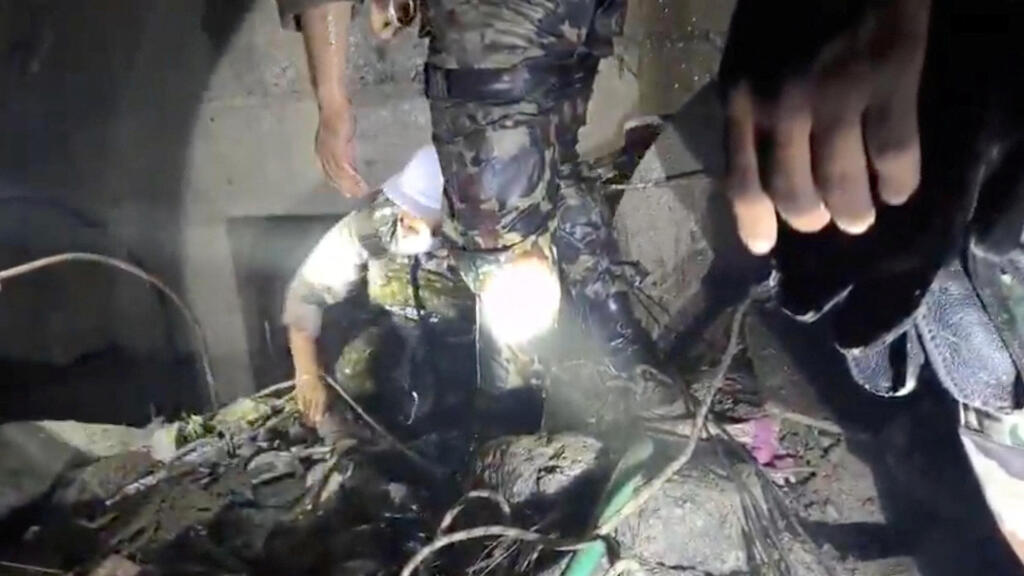
Trying to break through into one of the tunnels. It is unclear if contact was made with the trapped men
(Photo: Naveen Srivastava via X/via Reuters)
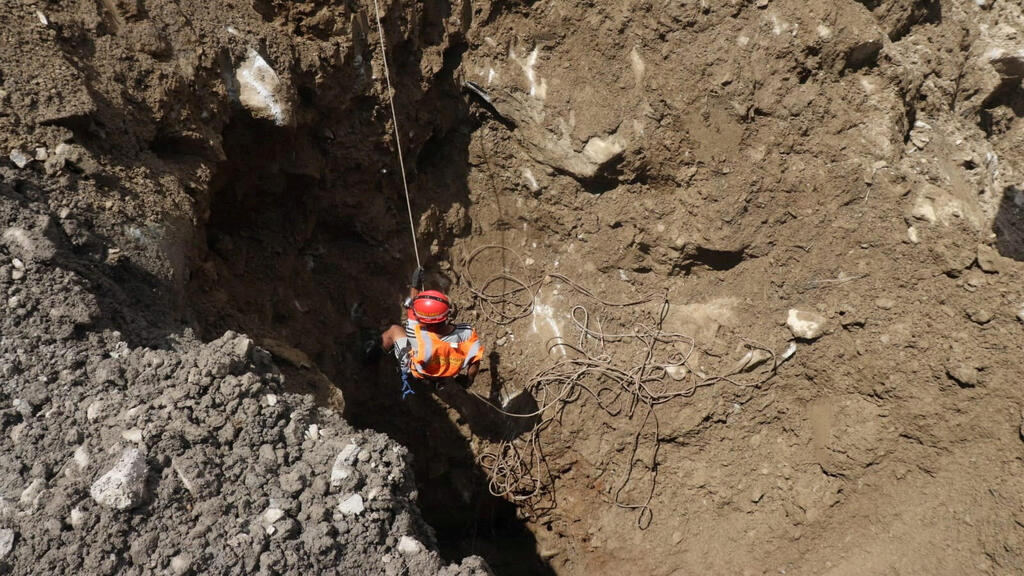
(Photo: Nepal Army/Handout via Reuters)
Several crews were working at the site, and Tamang said the team operating the large tunnel-lining machine was the last to leave. But shortly afterward, he realized the scale of the disaster that had struck the region — and his family.
“I could see the place where my house was supposed to be. There was nothing left. Then I understood that everything was gone.”
Tamang lost six relatives — his mother, older brother, sister-in-law and their three children. His wife, son and one nephew survived.
“I feel like life has no meaning now. Surviving feels miserable. I don’t know where to eat or where to go,” he told the BBC. “The dead are at rest. Those of us who survived are the ones suffering.”
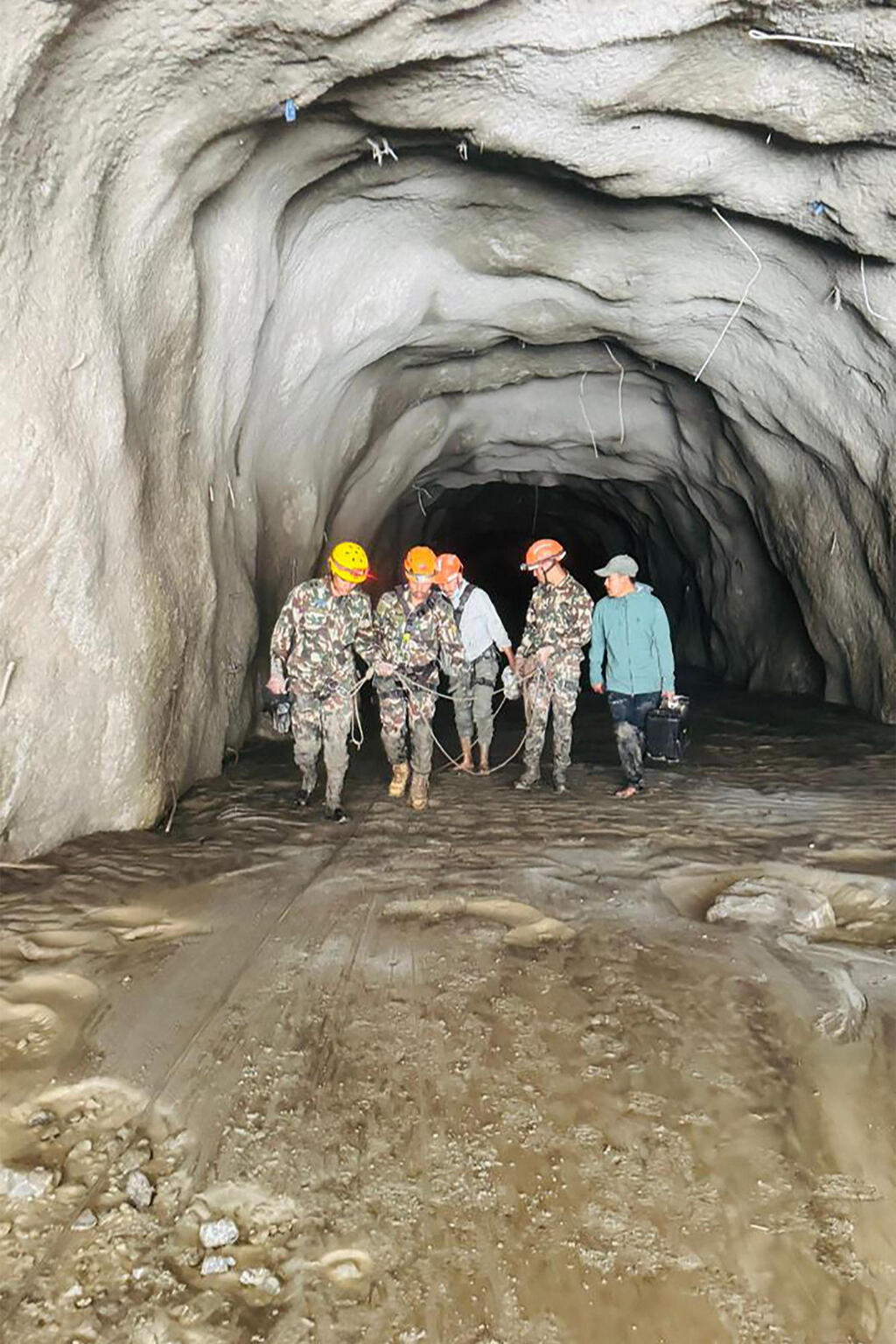
Rescue operations in an attempt to locate people trapped in tunnels under hydroelectric power stations in Nepal affected by flood disaster
(Photo: Handout / Prime Minister Secretariat, Nepal / AFP)
Gala, who lost eight family members, including his mother and eldest daughter, said he does not know why he survived. “Maybe it wasn’t my fate to die.”
Tamang is deeply worried about the future consequences of the disaster, including the possibility that the hydroelectric projects that provide his livelihood will be shut down amid claims that the tunnels were not adequately prepared for flooding.
“If this continues, we’ll go hungry. Sometimes I feel it would have been better not to survive,” he said in despair.
Nepalese authorities, assisted by teams from India and China, are continuing intensive efforts to reach the many tunnels in the area and try to locate workers who may still be alive.
Of more than 4,500 people still missing in the disaster overall, about 900 are believed to be workers from hydroelectric projects, and at least 639 of them are thought to be trapped inside tunnels. The tunnel network stretches for more than four kilometers, and Nepal has released photos and video showing rescue crews using heavy machinery to dig through and remove mud and rocks, as well as soldiers shining flashlights into a large pit excavated in an effort to locate an entrance to one of the tunnels.
Drones sent into tunnels: ‘Only mud and debris’
Not long after last week’s massive flood, some workers at the hydroelectric facilities managed to call for help, and several who escaped reported that many of their colleagues were still inside the tunnels.
It remains unclear, however, whether rescuers have managed to establish any contact with those trapped since the initial calls for help, and the passage of time is increasing fears that they may have suffocated.
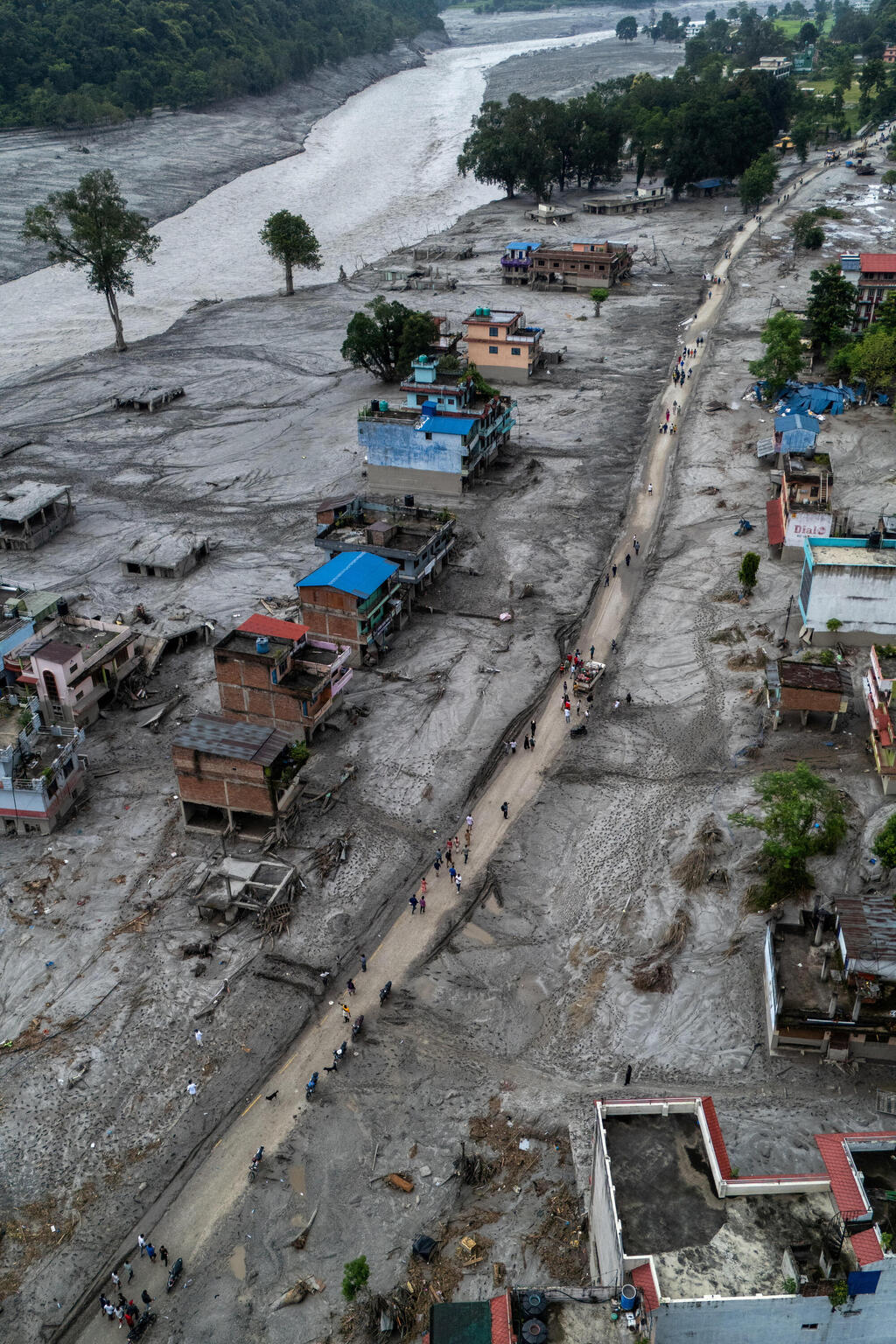
(Photo: Athit Perawongmetha/Reuters)
Drone operator Manish Maharjan is also assisting in the operation. In an interview with AP, he said the rescue effort is especially difficult because the tunnels “filled with mud like toothpaste inside a tube. There is no space or empty room left inside.”
Maharjan, who is also a filmmaker, joined the Nepalese army’s rescue effort the day after the disaster and has since flown drones over the mountainous terrain, where access is extremely difficult. In the current operation, he said, he has sent thermal drones into the tunnels.
“I can only fly drones in long, straight tunnels,” he explained. “Once there are bends, turns or zigzags, it becomes much harder to operate the drone and carry out an effective search.”
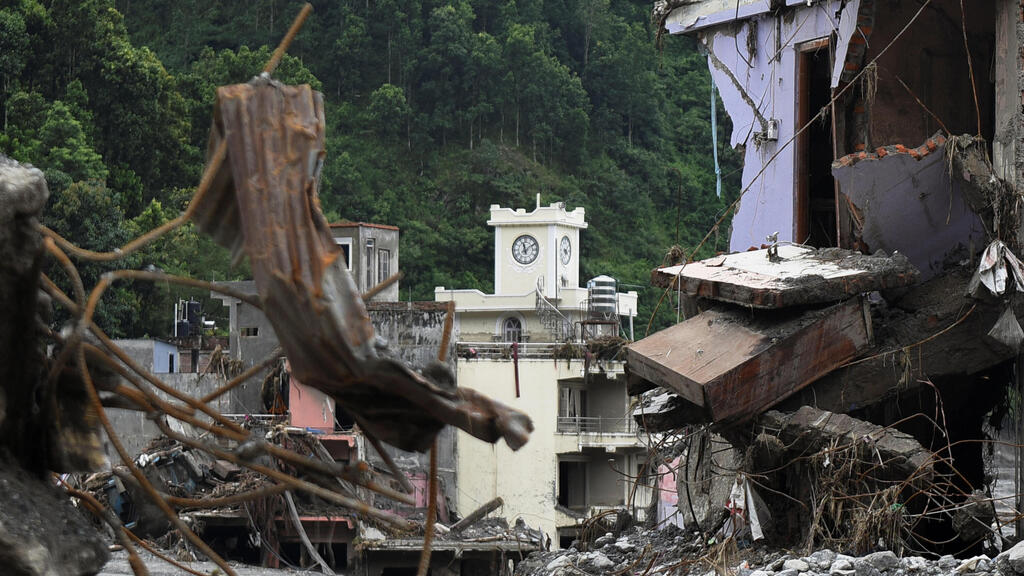
In the wake of the Nepal flood disaster
(Photo: Reuters/Stringer, Angad Dhakal)
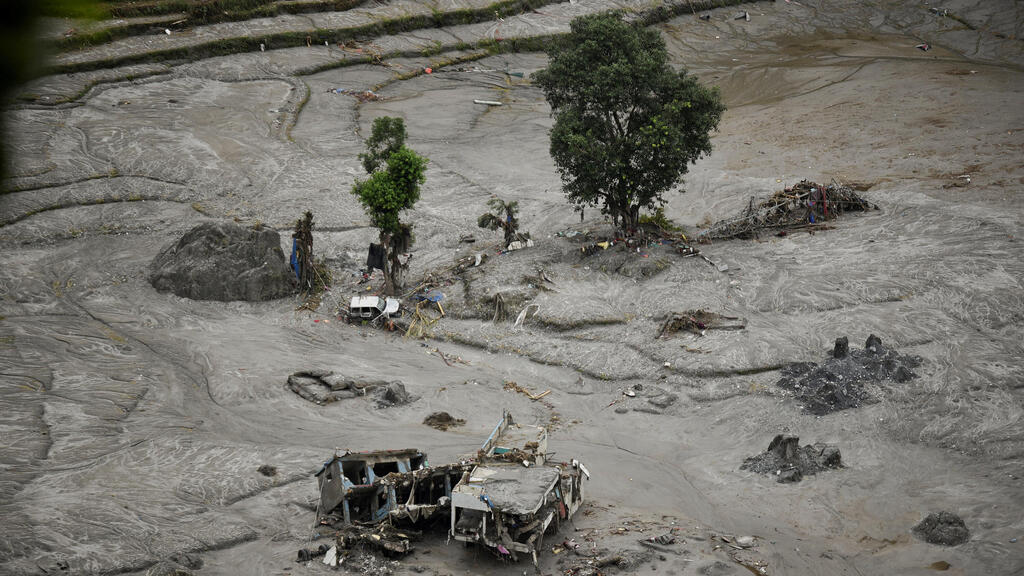
(Photo: Reuters/Stringer, Angad Dhakal)
He said that on Monday he managed to fly a drone all the way to the end of one tunnel but found no sign of life.
“We checked again and again, but the tunnel was full of mud and debris. When I saw that, I could only imagine the force of the flood.”
Hydroelectric projects have boomed in Nepal since the beginning of the century, when the mountainous country sought to harness its Himalayan water resources to deal with chronic domestic electricity shortages and take advantage of the possibility of selling power to its southern neighbor, India.
Such hydroelectric projects in Nepal’s mountains require tunnels to channel water through the steep terrain, allowing developers to exploit the sharp differences in elevation between Himalayan rivers and power plants to generate electricity.
Surviving a week underground
For those trapped in the tunnels by the flood, survival depends on many factors, including access to oxygen, food and water. Experts say the first 72 hours are critical because, after that, without access to clean water, the chances of survival fall dramatically. Those 72 hours had already passed by Saturday.
Jennifer Horney, a disaster epidemiologist at the University of Delaware, said an important question is whether the tunnels had emergency procedures in place for a power outage or natural disaster.
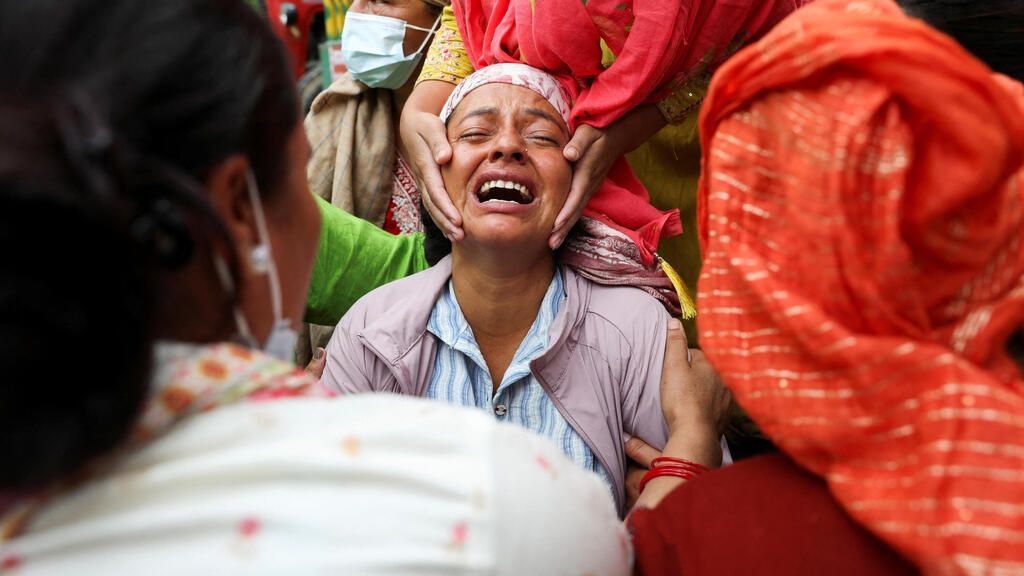
Woman whose family member was killed in disaster sobs at cremation site
(Photo: Adnan Abidi/Reuters)

(Photo: Prakash Mathema/ AFP)
If they did, she said, workers may have been trained on the locations of emergency exits. But she noted that the force of the flooding may mean that layers of mud covered those exits, complicating rescue plans.
It is also unclear whether any emergency supplies, including drinking water, had been stored in the tunnels in advance.
“There simply would not be any way to survive much beyond three days without safe drinking water,” Horney explained.
Access to breathable air is another key to survival. At least one expert said some workers may have access to oxygen, but six days after the flooding, fears of suffocation are growing.
“These tunnels are large enough for trucks to drive through,” said Jakob Steiner, an earth scientist at the University of Graz in Austria who is working from Dhaka, Bangladesh. “From what we understand, they have managed to get oxygen to some of those trapped inside and are now trying to rescue them. Still, it is a race against time, because people need food and water.”
Beyond that, the psychological effects of isolation could also take a heavy toll if any of those trapped remain alive, while the climate inside the tunnels may play a role as well. If conditions are hot and humid, people could become dehydrated more quickly.
Those rescued may be extremely weak, meaning supportive treatment would be important for both the physical and psychological effects.
It was a ‘tsunami from the sky,’ but there were warning signs
Thomas Chandler, director of the National Center for Disaster Preparedness at Columbia University, notes that rescuing people alive from a tunnel like those where large numbers of workers are now trapped is not unprecedented, even if it is uncommon.
He points to the 2023 incident in India, when a Himalayan landslide trapped dozens of Indian workers inside a tunnel. Forty-one workers were rescued after being trapped for 17 days. At the time, food, water and oxygen were supplied to them through pipes until they could be freed.
Massive flood sweeps away residents and vehicles
(צילום: רויטרס)
The flood disaster occurred last Wednesday morning, when a huge section of a glacier in the mountains near the Nepal-Tibet border broke away, plunged into a lake and triggered a massive avalanche of ice, rocks, water and mud that raced down rivers at more than 180 kilometers per hour, destroying villages, towns and the Gyirong border crossing between Nepal and Tibet.
Dramatic images from the area showed crowds trying to flee the surge, which some described as a “tsunami from the sky,” but many had no chance.
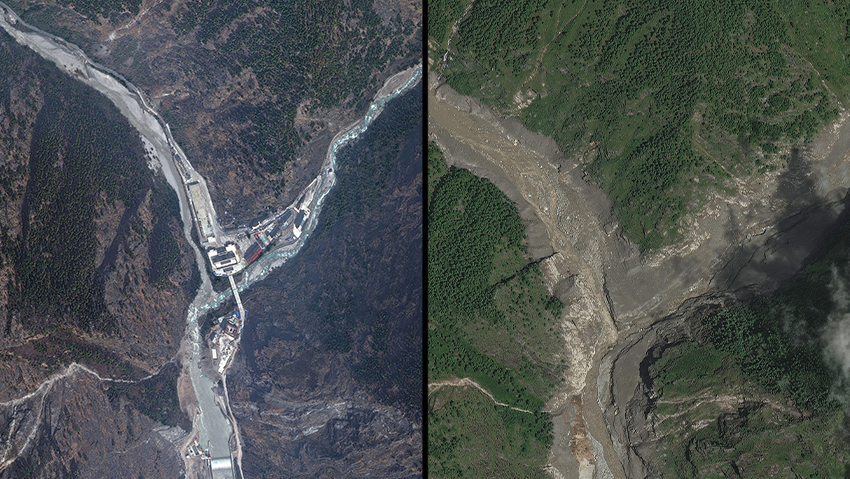
Before and after the disaster, in satellite photograph
(Photo: Vantor/Handout via Reuters)
Nepal said Tuesday that the death toll in its territory had reached 987. Together with the official death toll of 16 in China, where Tibet is located, the official number of victims has now surpassed 1,000.
Nearly 4,500 people are still listed as missing: 3,925 in Nepal, including 592 foreign nationals, and 546 in China, including 261 foreigners, many of them Nepalese. The missing include large numbers of Indians, Americans and Australians, as well as citizens of more than 30 other countries, including two Israelis: a 60-year-old man believed to have been visiting Hindu holy sites when the disaster struck, and a 41-year-old woman with dual Israeli-Belarusian citizenship who does not live in Israel.
Large numbers of Indians and members of the Indian diaspora around the world were caught in the flood because they had traveled to visit Hindu holy sites along the Nepal-Tibet border, including Mount Kailash.
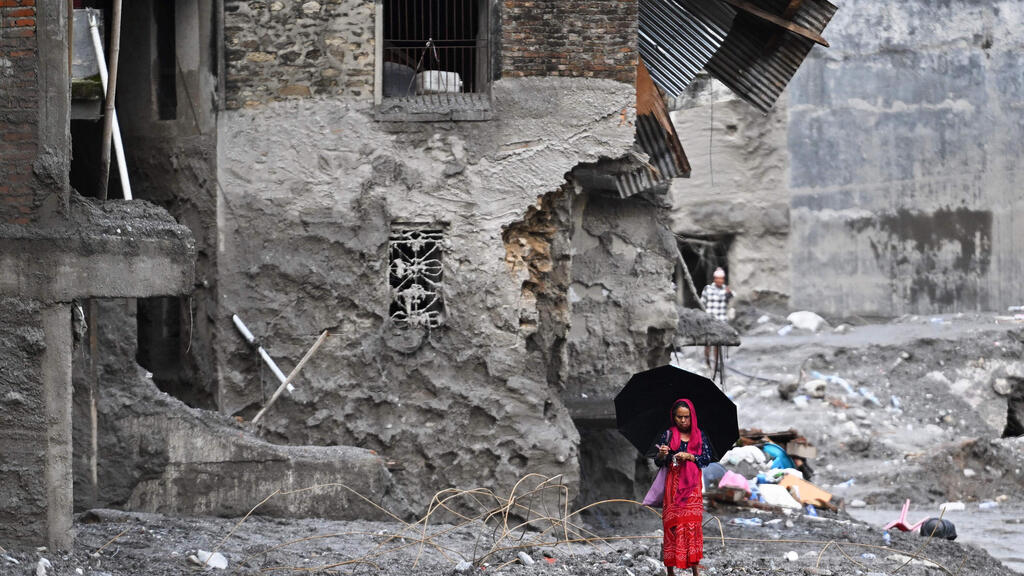
Nepalese return to their destroyed homes to search for the few valuables that may have survived
(Photo: Arun Sankar / AFP)
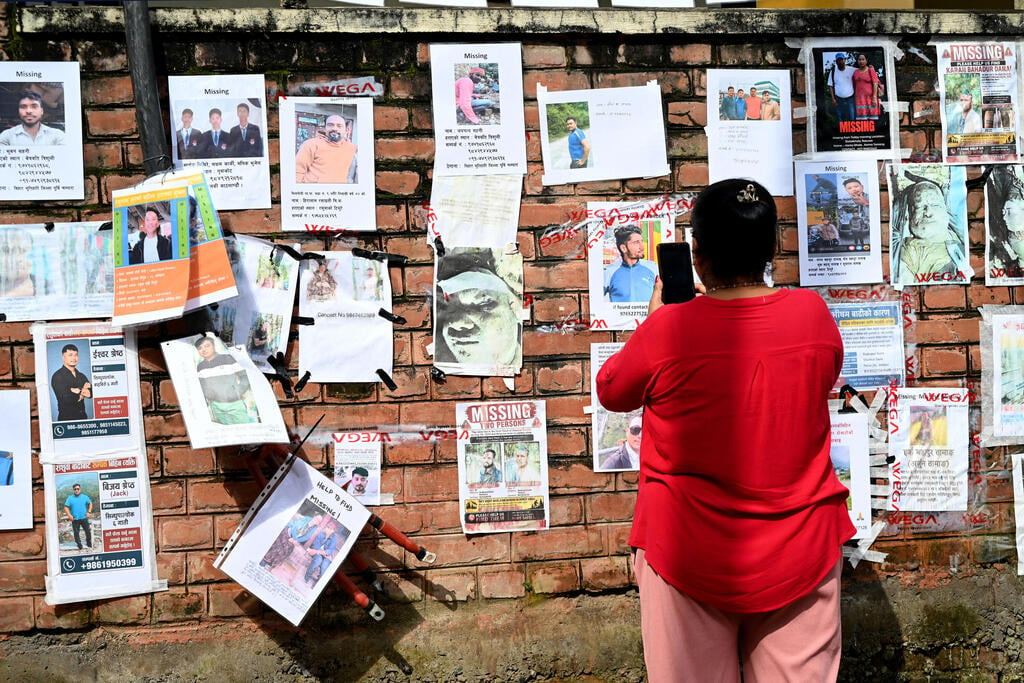
A woman looks at photos of the dead and missing hanging on a wall at a hospital in Kathmandu
(Photo: Monika Malla/Reuters)
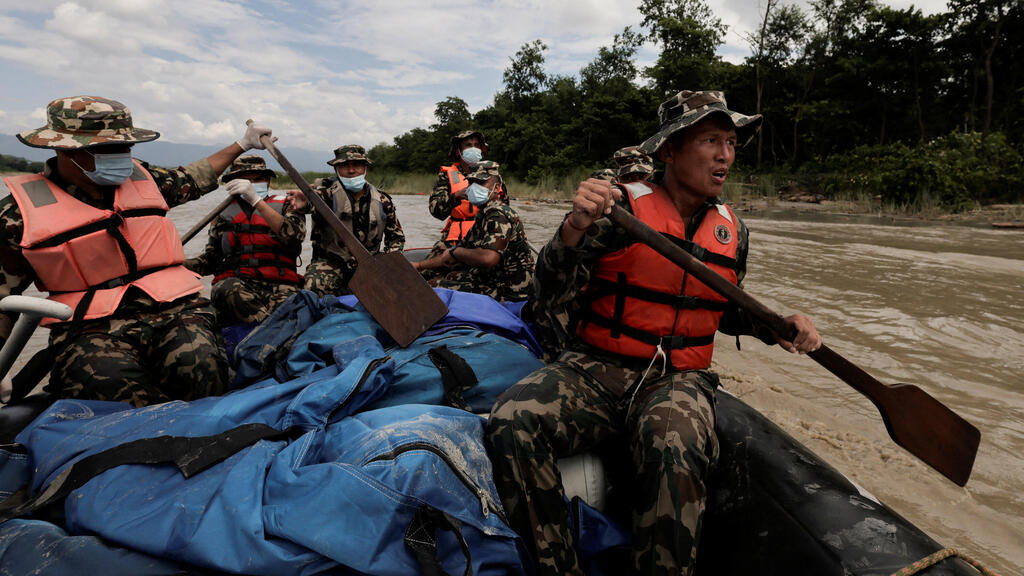
Rescue team returns to land with bodies found in Nepal river
(Photo: Navesh Chitrakar/Reuters)
Around the world, the disaster is being seen as further and particularly severe evidence of the consequences of climate change. At the same time, questions are being raised over whether it could have been prevented, or at least whether authorities could have been better prepared for the effects of global warming, which is accelerating the melting of glaciers in the Himalayas.
A report published Tuesday evening by scientists from the Asian Mountain Academic Alliance, the U.S.-based Stimson Center and China’s Institute of Mountain Hazards and Environment found, in hindsight, that there were signs of increasing instability in the glacier that collapsed in the days before the disaster, and that better early-warning systems might have saved lives.
According to the experts, satellite images show that the glacier surface was moving faster, meltwater had turned brown and a crack had begun forming in the surrounding rock. They said all of these may have been signs that the mountainside was becoming increasingly unstable.
They noted that with an effective warning system, many lives could likely have been saved in more distant areas, where at least 10 hours passed before the flood arrived.
Meanwhile, Tamang, the worker who escaped from tunnels that became a death trap, is holding out hope that despite the time that has passed, his colleagues left behind are still alive.
“There are probably still some survivors inside. I would be happy if they could rescue them quickly,” he told the BBC. “I know many people who are still trapped there.”