

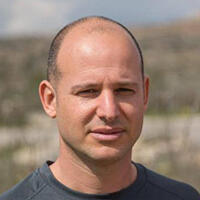
Former chief military prosecutor Zana Modzgvrishvili has been appointed to lead the prosecution of Hamas Nukhba terrorists accused of participating in the October 7, 2023, massacre, in what is expected to become one of the most complex and sensitive legal undertakings in the country's history.
The proceedings are expected to involve hundreds of suspects who infiltrated southern Israel during the Hamas-led attack, along with an extraordinary volume of evidence, witness testimony, victims' accounts and investigative materials.
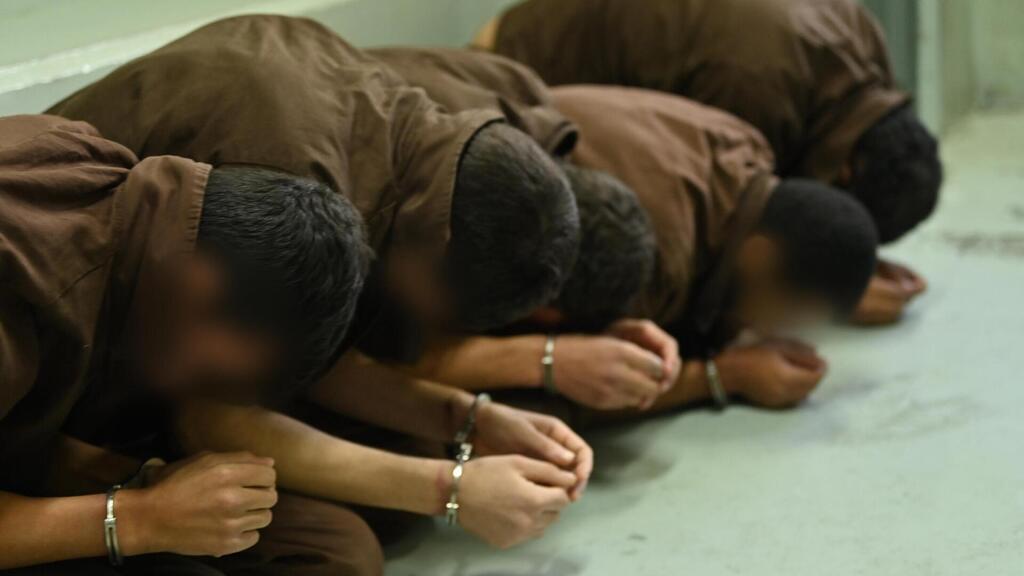
Nukhba, Arabic for "elite," refers to Hamas' commando units, whose members played a central role in the October 7 assault on Israeli communities and military installations near the Gaza border.
The prosecution effort will be led by Modzgvrishvili, a veteran military attorney who served in the IDF for 22 years and held several senior positions in the Military Advocate General's Corps, including four years as chief military prosecutor.
After leaving the military in 2013, she was appointed to a Justice Ministry position responsible for examining complaints against interrogators from the Shin Bet domestic security agency.
More recently, she returned to military reserve duty and served as a prosecutor in the case against Aviad Frija, an Israeli soldier accused of causing the death of Yuval Castleman.
Castleman, an Israeli civilian, was shot after helping stop a terrorist attack at Jerusalem's Givat Shaul Junction in November 2023.
Modzgvrishvili will now be employed as a civilian IDF employee and oversee the extensive prosecution apparatus established to bring the October 7 suspects to trial.
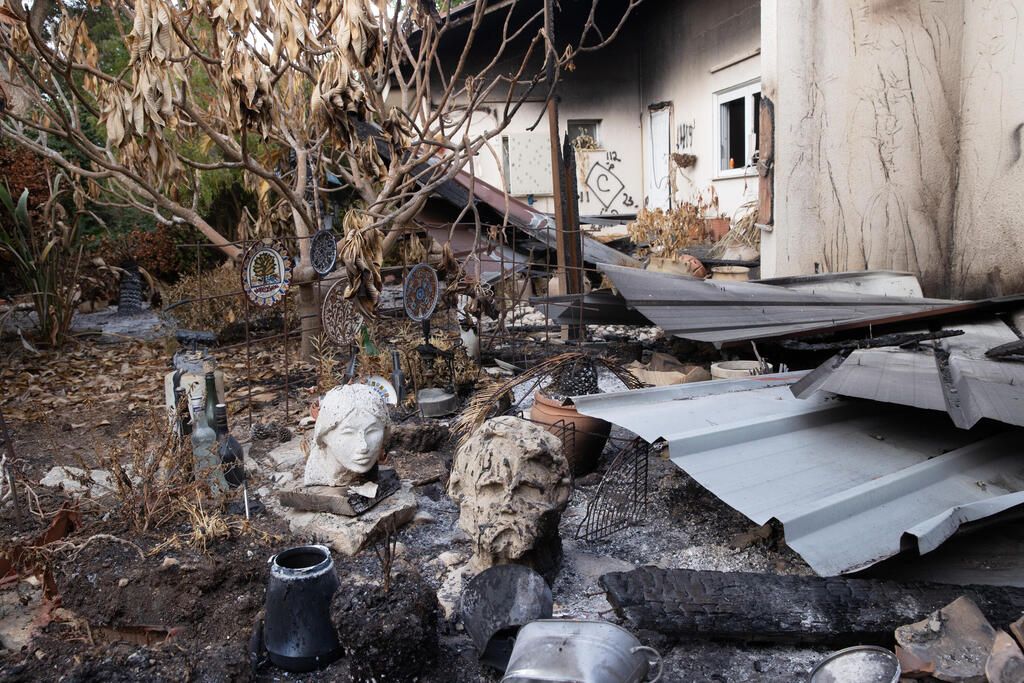
Kibbutz Nir Oz, near the Gaza border, was ravaged by Hamas terrorists during the October 7 attack
(Photo: Alex Kolomoisky)
The assignment carries significant implications both domestically and internationally. In Israel, the proceedings will unfold under intense scrutiny from bereaved families and a public still grappling with the trauma of the massacre. International legal observers are also expected to closely monitor the trials.
More than 400 suspects to face charges, with death penalty possible
The legal framework for the proceedings was established in May, when the Knesset approved legislation governing the prosecution of Nukhba operatives in its second and third readings by a vote of 93-0.
The law lays the groundwork for trials of a scale not seen in Israel since the prosecution of Nazi war criminal Adolf Eichmann, who was tried in Jerusalem in 1961 and executed the following year.
The legislation was initiated by Constitution, Law and Justice Committee Chairman Simcha Rothman of the Religious Zionist Party and lawmaker Yulia Malinovsky of Yisrael Beytenu.
It was developed through an unusual collaboration between Justice Minister Yariv Levin and Attorney General Gali Baharav-Miara, who have frequently been at odds over major legal and constitutional issues.
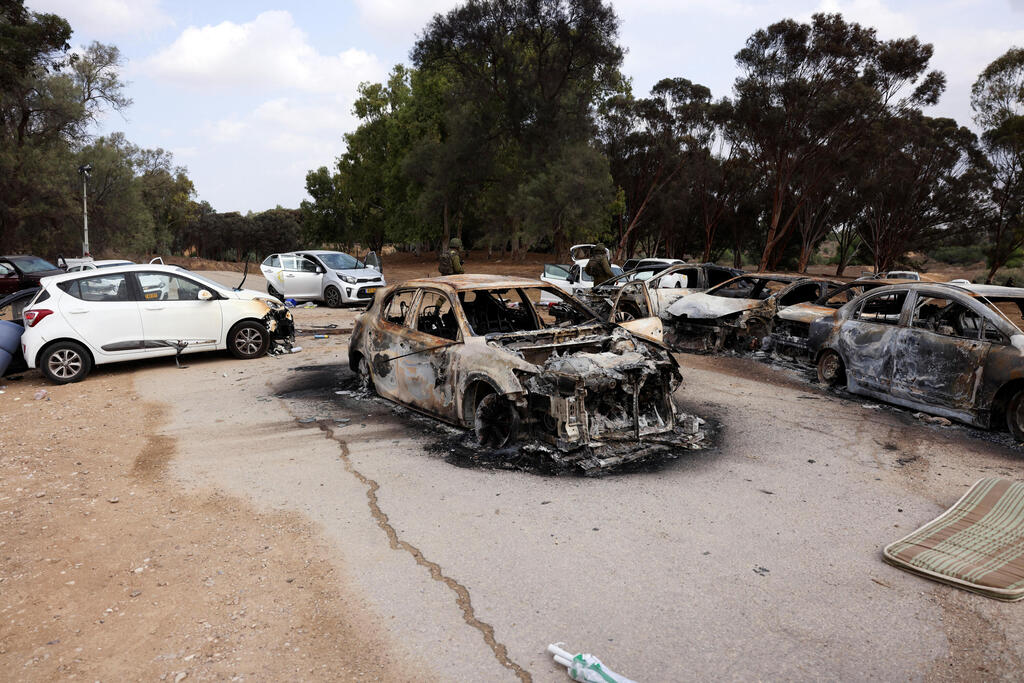
Burned out vehicles in the Gaza border region after the Oct. 7 attack
(Photo: REUTERS/Ronen Zvulun)
The law classifies acts committed by the attackers between Oct. 7 and Oct. 10, 2023, as crimes against the Jewish people, crimes against humanity and war crimes.
The offenses include murder, rape, kidnapping and looting.
Its provisions also extend to crimes committed after those dates against hostages held in the Gaza Strip, including those who were killed in captivity.
One of the law's most consequential provisions authorizes courts to impose the death penalty not only for murders committed during the October 7 attack, in which 1,164 civilians and soldiers were killed, but also for other serious offenses, including rape, under existing legislation such as the Prevention and Punishment of the Crime of Genocide Law and Counter-Terrorism Law.
Capital punishment is exceptionally rare in Israel. Eichmann remains the only person executed by the Israeli state following a civilian criminal conviction.
Under the new legislation, defendants sentenced to death, or indicted on offenses carrying a possible death sentence, would be ineligible for release under future prisoner exchange agreements.
Special military court to hear cases
The law provides for the establishment of a special military court in Jerusalem to hear the cases.
Indictments are expected against more than 400 suspects, although the final number will depend on the continuing investigative work of the Shin Bet and IDF in Gaza.
Rather than conducting a single mass trial, authorities plan to organize the proceedings according to the locations where the alleged crimes occurred.
Separate trials could focus on the October 7 attacks at Kibbutz Be'eri, Kibbutz Nir Oz and the Nova music festival, where hundreds of people were killed.
Each judicial panel will consist of three judges. At least one member must be either a president of a military court or a district court judge holding the rank of president or vice president who is called up for reserve duty to serve on the panel.
Convicted defendants will receive an automatic appeal, with a retired Supreme Court justice presiding over the appellate panel.
The structure is intended to accommodate an exceptionally large number of defendants while providing a formal mechanism for reviewing convictions and sentences.
Massive evidence collection, remote court appearances
Following the law's approval, prosecutors, led by the Southern District Attorney's Office, are expected to file indictments based on the extensive evidence collected since the massacre.
The evidence includes forensic findings from attack sites, transcripts of interrogations of detained Nukhba operatives and hundreds of videos documenting the atrocities.
A substantial portion of the material was gathered during combat operations by Israeli soldiers and Shin Bet personnel inside the Gaza Strip.
The collection and presentation of evidence will be among the most demanding aspects of the proceedings, given the number of suspects, victims and locations involved.
In most hearings, defendants will not be physically present in the courtroom. Instead, they will participate remotely through technological systems from detention facilities.
Families of those killed and other victims will be able to follow proceedings from a separate courtroom or through digital broadcasts.
The arrangements are designed to accommodate the scale and sensitivity of the trials while allowing families access to proceedings involving the deaths of their relatives.
First indictment could come in 2027
Despite the legislation's passage, the first indictments may still be months away.
During a special session of the Knesset's Constitution, Law and Justice Committee on Oct. 7, 2026, marking the third anniversary of the massacre, officials raised the possibility that the first indictment could be filed during the first half of 2027.
The timeline reflects the scale of the investigative and legal preparations required to prosecute hundreds of suspects for crimes committed across multiple locations over several days.
The proceedings will also require courts to address complex questions of criminal responsibility, evidence and sentencing in cases involving some of the deadliest attacks in Israel's history.