


Recovering highly enriched uranium believed to be buried beneath the rubble of Iran’s nuclear facility in Isfahan would be extremely difficult and likely unrealistic, according to an Israeli security expert.
The assessment comes after a report this week in The New York Times said U.S. intelligence believes Iran may still be able to access a stockpile of highly enriched uranium buried at the site following U.S. strikes on the facility in June last year.
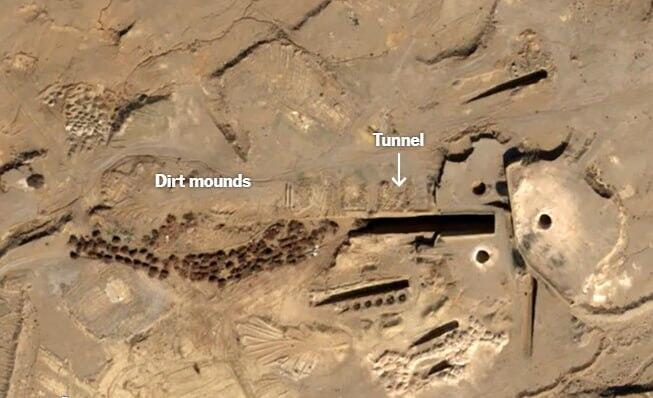
When asked Saturday whether the United States might consider sending ground forces to retrieve the uranium stockpile, U.S. President Donald Trump said it was “something we could do later.”
But Dr. Eyal Pinko, a specialist in strategy, cyber and intelligence at the Begin-Sadat Center for Strategic Studies at Bar-Ilan University, said such an operation would be extremely difficult.
“This is an operational fantasy that has no basis in reality,” Pinko said.
The buried material in Isfahan is believed to be part — and likely most — of about 440.9 kilograms (972 pounds) of uranium enriched to 60%, a level that significantly shortens the time needed to reach 90% enrichment, the level typically associated with nuclear weapons.
Western intelligence agencies remain uncertain about the precise location and condition of the uranium since the strikes during Operation Rising Lion last year.
Pinko said retrieving the material would depend not only on whether access to the site is physically possible, but also on safety concerns.
“Once uranium reaches high enrichment levels it becomes dangerous because it emits radiation that can cause illness,” he said. “It is normally stored in special metal containers and facilities designed to prevent radiation leakage.”
He said underground storage facilities at the site were likely buried when structures above them collapsed during the bombing, leaving uncertainty about whether any entry points remain or whether radiation levels would make access impossible.
A ground operation would also present major military challenges, he said, because the site lies deep inside Iran and is likely guarded by the Islamic Revolutionary Guard Corps.
“To extract the uranium, dozens of soldiers would need to be deployed to seize the site,” Pinko said. “You would need evacuation areas for casualties and equipment to remove the material, and then teams would have to enter deep underground under very complex safety conditions.”
While technically possible, he said, such an operation would be extremely risky.
“Can israel land forces in the heart of Iran? It’s possible,” he said. “Is it wise? I’m not sure.”
Pinko said a more practical approach would be continued monitoring of the site through satellite imagery and intelligence collection, followed by additional strikes if Iranian activity is detected.
“Sending troops into such uncertainty is not realistic,” he said. “Until someone actually enters the site, it is very difficult to assess radiation levels. If the material leaked or fractured, it could be extremely dangerous.”
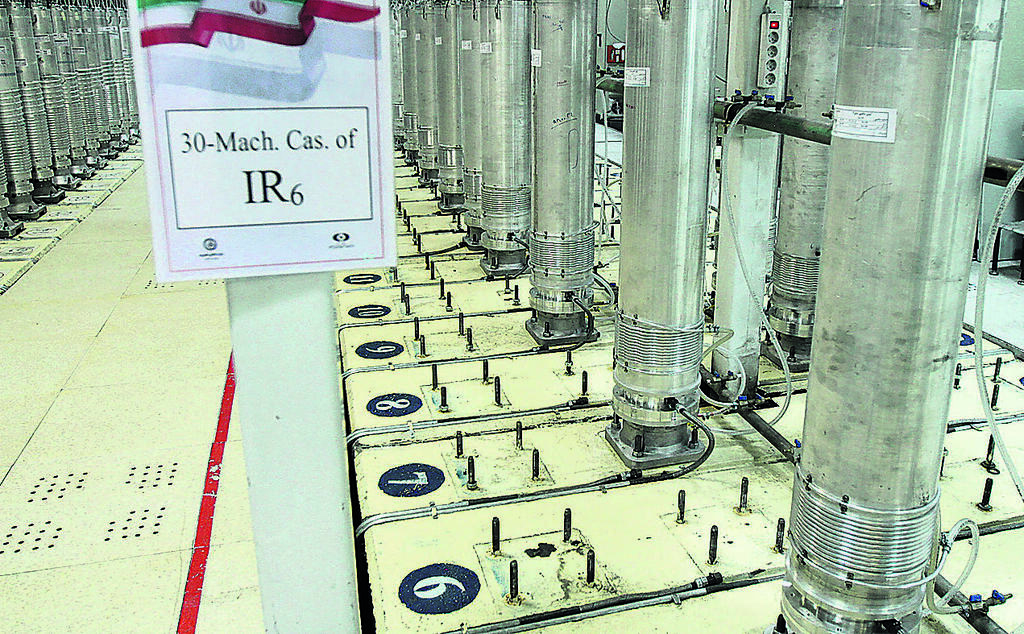
Centrifuges at Natanz
(Photo: AP)
Another theoretical option would be removing the uranium through an international arrangement involving a third party, similar to the removal of Syria’s chemical weapons stockpile.
However, Pinko said such a scenario would still require forces on the ground.
“In theory a foreign force could do it, perhaps a British unit on behalf of the United States,” he said. “But in practical terms I don’t see it happening.”
He added that Iran could potentially agree to hand over the material voluntarily under sufficient pressure, depending on the outcome of negotiations with Washington.
Pinko also said it remains possible Iran maintains undisclosed nuclear facilities where uranium enrichment continues.
Over the years, intelligence agencies in israel, the United States and elsewhere have repeatedly uncovered previously unknown Iranian nuclear sites, he said.
However, Pinko suggested Iran may face difficulties restoring its nuclear program after a series of setbacks, including the killing of several nuclear scientists in recent years.
Iran had previously relied in part on cooperation with countries such as Russia, North Korea and China, he said, raising the question of whether external assistance could help restore lost expertise.
“They accumulated significant knowledge through those relationships,” Pinko said. “But many nuclear scientists were eliminated last year, and a lot of knowledge may have been lost.”