

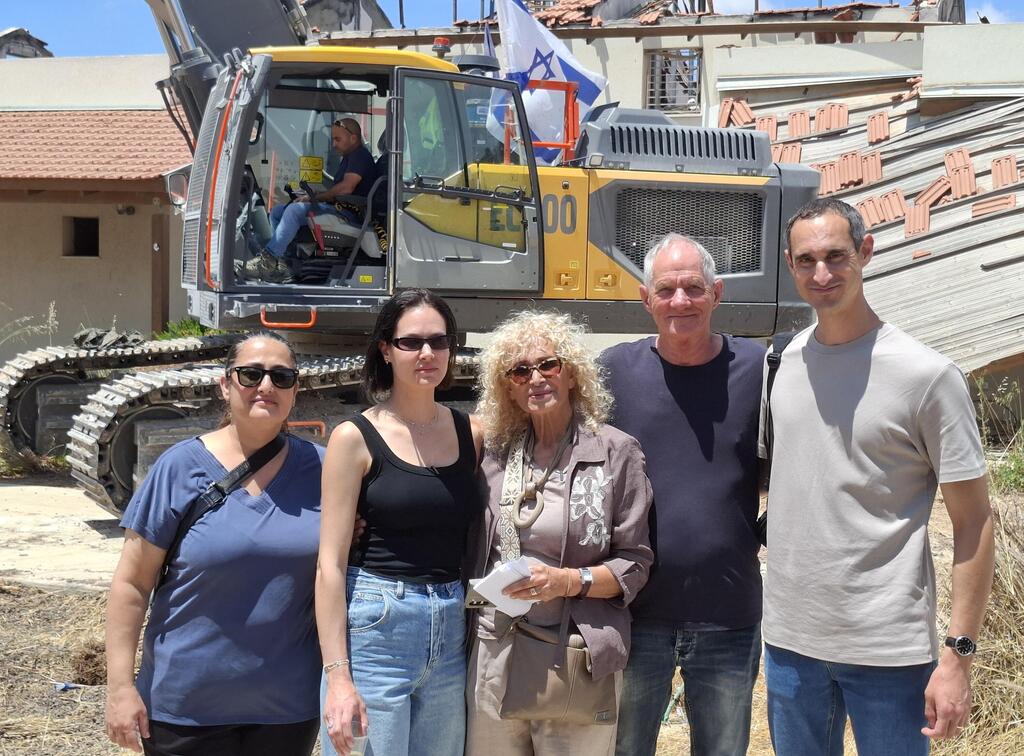
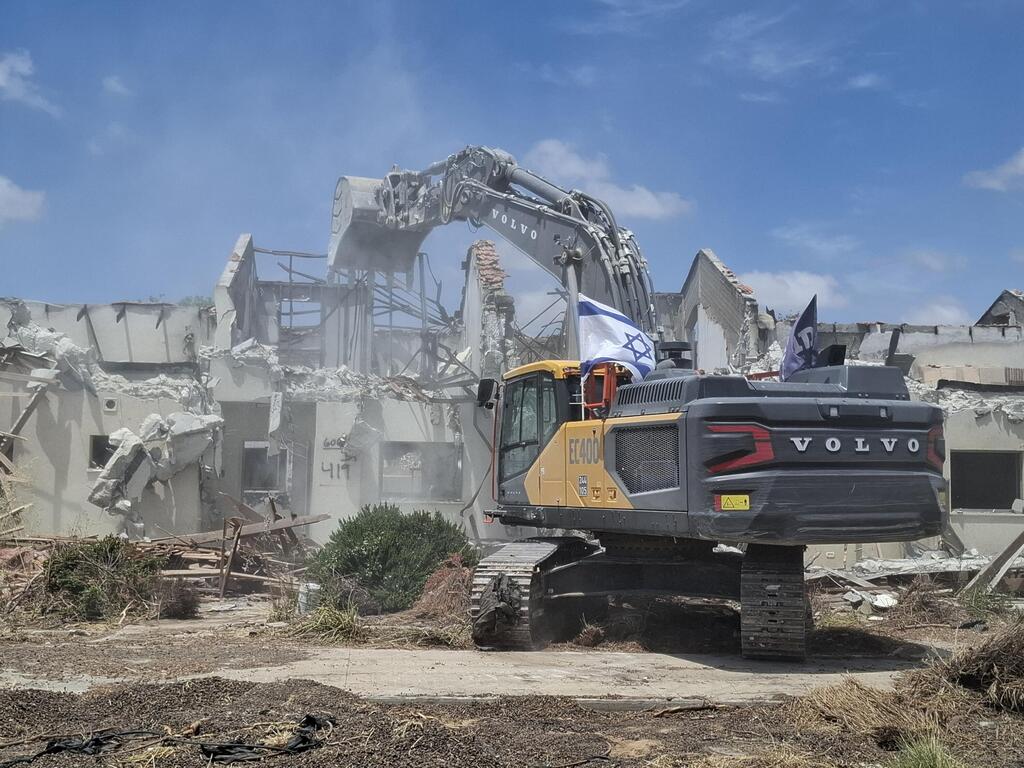
Two and a half years after the massacre, the Fricker family stood before the bulldozer that would destroy their home in Kibbutz Be’eri. To the sounds of violin music and prayers of thanksgiving, and with a reenactment of their dramatic rescue from the window of their burning safe room, Rachel Fricker refused to give up. “It’s OK to destroy. It’s OK to rise up and rebuild. As long as we are all alive,” she said.
The afternoon in Be’eri’s new Kerem neighborhood was unlike any other. Just before the bulldozer demolished their home, Rachel and Erwin Fricker stood with their loved ones outside the house where they had lived for 5.5 years before the massacre and said goodbye in an intimate ceremony.
(Photo: Rafael Hatuka)
Rachel, who has lived on the kibbutz for 38 years, stood tall and dignified, radiating optimism despite the immense loss she has endured since the October 7 massacre, when her home was turned into a command center for Nukhba terrorists before it caught fire.
“Thank you that my loved ones and I are here. Thank you that I can close a circle. On this difficult day, alongside the commemoration and the pain of loss, I chose to read the Thanksgiving Psalm from Psalms, to give thanks for this day and for October 7 and to recite Birkat Hagomel,” said Rachel, whose love story with Erwin is a microcosm of Israel: she is the daughter of a Yemenite family from Ramat Gan, while he is an immigrant from Switzerland who came to volunteer.
In the background, the sounds of “Vehi She’amda” were heard. Violinist Hila Ben-Tovim said: “The Fricker family, which survived here, is the ‘Vehi She’amda’ of our generation.”
(Photo: Rafael Hatuka)
During the fighting, terrorists set the house on fire while the family members were trapped in a smoke-filled safe room. After more than 12 hours, the couple, their children Nofar and Ofir, their daughter-in-law Sapir, who was 41 weeks pregnant, and a next-door neighbor were rescued through the safe room window.
Rachel recalls: “Inside the safe room, there was a silence that stood in stark contrast to the noise of the war. I was calm and at peace. There was no water. There was no electricity. I kept reciting Psalms and speaking to God inwardly. From outside, there were voices in Arabic, ‘Allahu Akbar,’ and the dragging of weapons, gunfire and, at some point, intense fighting, with our soldiers battling terrorists on the roof.
“My daughter-in-law could not feel her fetus and kept saying, ‘We will not get out of here alive. We will die.’ My daughter Nofar reassured me and gave me hope: ‘Don’t worry. We will get out of here alive.’ My husband and son held the handle of the safe room door as if that could help. God knows why they didn’t break in. I call it protection from above. It’s not the first time I’ve been in conversation with God, and He always answers me.”
A day and a half after the rescue, Arbel, their first granddaughter, was born. “It is a form of survival, and the great wisdom is to see the ray of light,” Rachel says.
(Photo: Rafael Hatuka)
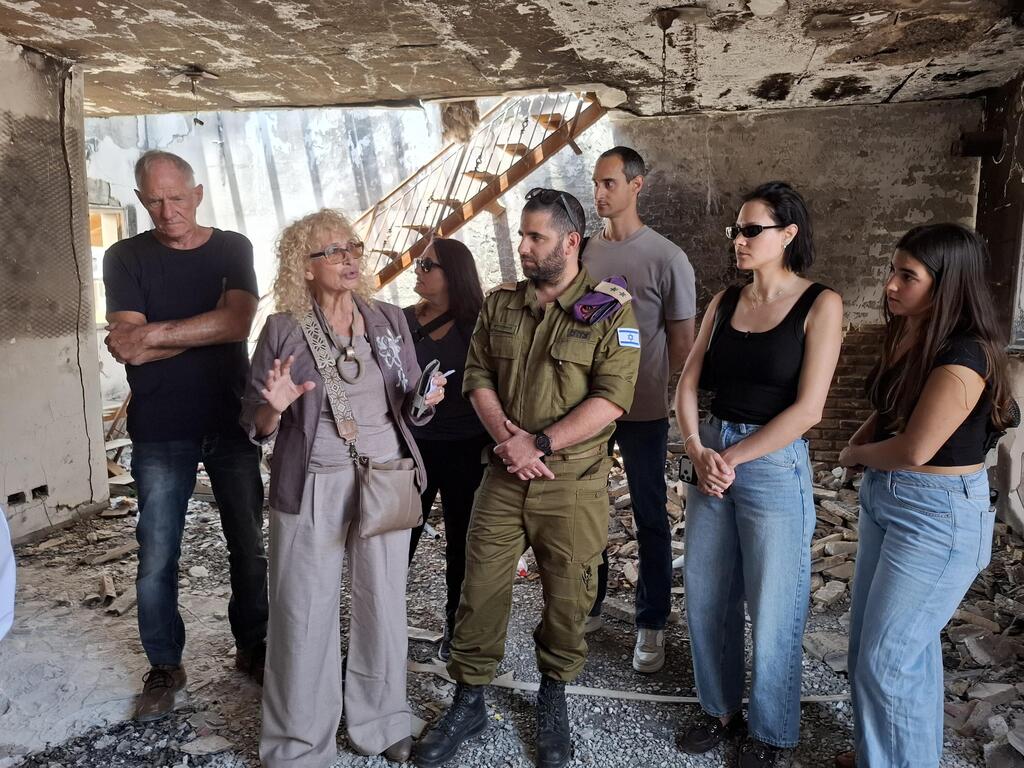
The ceremony was attended by Lt. Col. Daniel Luria, who commanded the incident and rescued them to a protected house. Standing in the heart of the burned home, he recalled: “We arrived in the Kerem neighborhood with the understanding that it had been cut off. Fighting had begun, houses were on fire and we pushed forward because the safety of civilians outweighed the safety of our forces.
“I received explicit instructions from Daniel to get to the Fricker family’s house quickly. The house was on fire, and it was impossible to enter from any direction. We went up to the safe room window and knocked, shouting, ‘Open now. The house is on fire.’ It took some time for them to trust us and open it. We took everyone out, and along the path, barefoot, they were brought to the protected house. From there, in an armored jeep, the Kalmanzon brothers — the late Elhanan and Menachem — took them out of the kibbutz under live fire.” Elhanan was killed shortly afterward.
Rachel says the jeep made its way through bodies, and there was no room for her husband. Nofar did not want to get in, and Elhanan promised her: “Don’t worry. I’ll make sure your father gets out.” He reassured her on the way and said: “You’ll see, your boy or girl will still run here on the kibbutz lawn.”
“Nofar took his murder very hard and collapsed ‘from 100 to zero,’ but recently she came back to herself and began studying,” Rachel says. “Today, she helped demolish the house. She climbed onto the loader and, a moment later, took command and took over the controls.”
During the ceremony, an astonishing detail was revealed. “Only today did we all realize that Elhanan and Daniel are relatives. It’s crazy. How could God send me two rescuers who have such a connection between them?” Rachel said. She is now knitting purple socks for Daniel’s 1-year-old daughter, after he said, “Purple is Golani.”
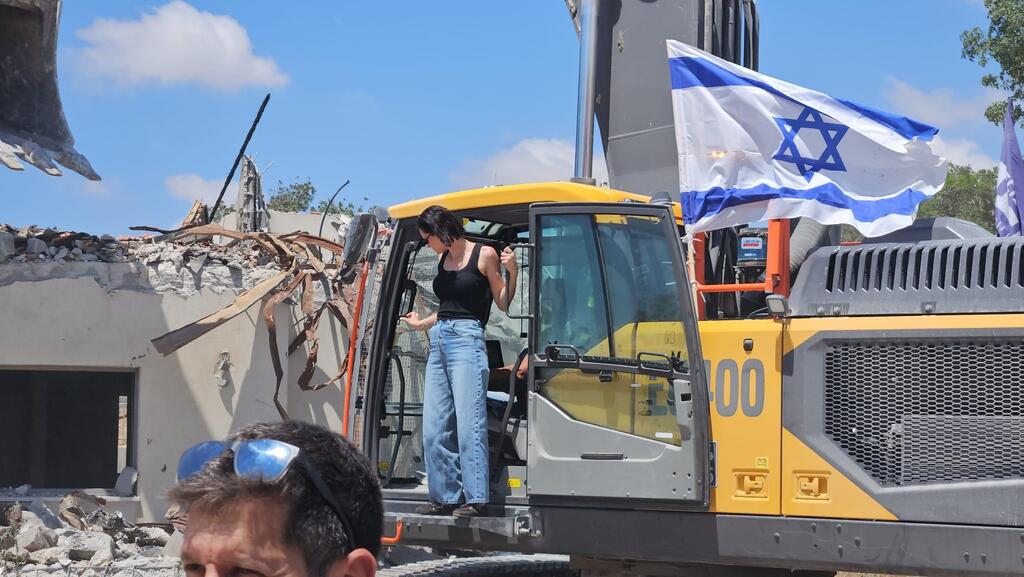
(Photo: Rafael Hatuka)
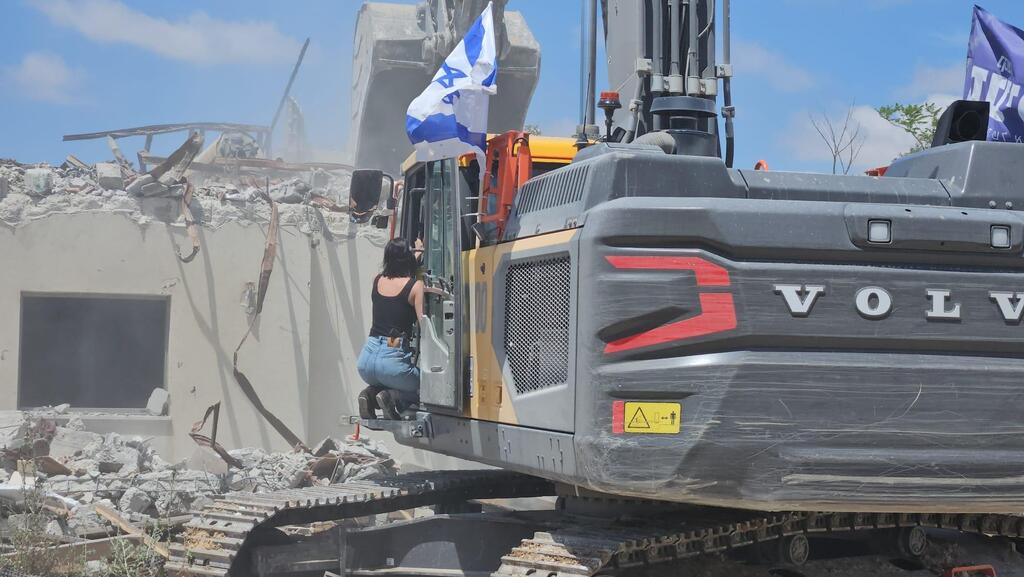
(Photo: Rafael Hatuka)
Of the 42 houses in the blood-soaked Kerem neighborhood, only one building will remain as a memorial. “When they destroyed our house, something was erased inside me, inside my soul, and it burns. The feeling is that I have nowhere else to go,” Rachel says, exhausted. Today, the couple is living temporarily in Kibbutz Hatzerim, and they expect to return to Be’eri in August 2027. “In times like these, it is good to be close to the community. It gives strength, a stable support network and not just comfort.”
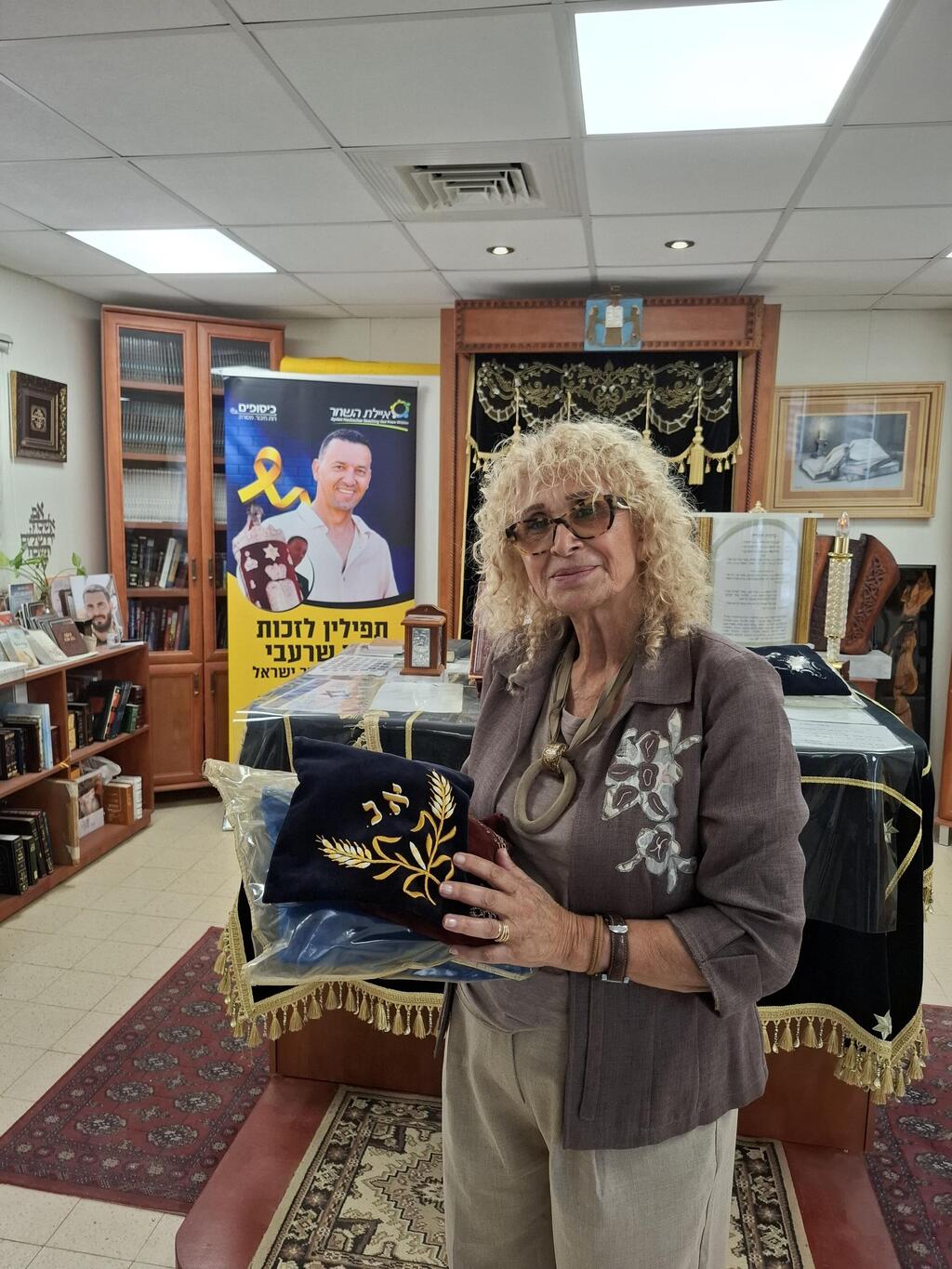
Despite the fragments, Rachel is looking ahead. She is continuing the vision of the late Yossi Sharabi, who was kidnapped and murdered in Gaza, to build a new, spacious and accessible synagogue in Be’eri. She has returned to work on the National Insurance Institute’s appeals committee and the kibbutz rehabilitation committee, lectures around the country and is taking part in a book and film about her life.
“To say I have the strength for this? It’s a bit tiring, but I think documentation is important for the next generation. What can I tell or show our Arbel when she grows up? In the meantime, I live in two parallel realities — hope and looking forward, alongside pain and longing for my closest friends, 45 of whom were murdered,” she says.
“Everyone shouted, ‘Where is the army?’ And I just thought, ‘How lucky they didn’t come into our house.’ Even so, 33 IDF soldiers, police officers and members of the emergency squad lost their lives here on the kibbutz. We are not allowed to die with the dead. Otherwise, Hamas will win.”
At the end of the event, after everyone had dispersed, Rachel stayed at the Ahavat Yisrael synagogue she founded in Be’eri to pack refreshments for the soldiers and wash the floor.
“Tomorrow is a new day. May it be clean for those who are expected to come,” she said with a smile, concluding with relief: “As the loader tore down the pergola, then the roof and finally the safe room — which was the hardest part — the noise from the work reminded me of the shouting and chaos of October 7. But I realized that it is OK to destroy, OK to rise up and rebuild. As long as we are all outside. We are all alive.”
Not far from the enlarged photo of Yossi Sharabi were tefillin and a tallit wrapped in blue velvet, brought by Rachel’s cousin Rafael Hatuka as a donation from a Rosh Ha’ayin resident. Rafael described the day as “a mixture of emotions and feelings.”
“It was sad, happy, embracing, loving. It was a closing of a circle for all of us,” he said.
First published: 16:20, 06.01.26