


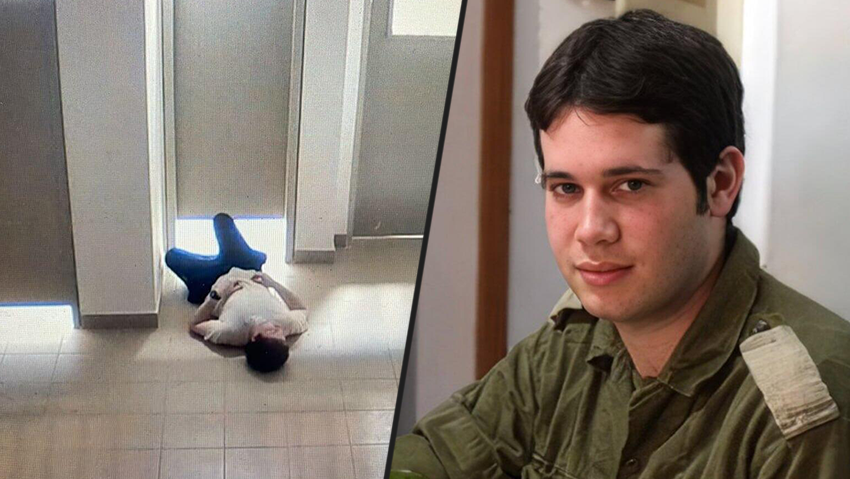
Footage broadcast by Kan 11 last week showing Capt. Tomer Eiges convulsing before his death at Military Prison 10 has renewed scrutiny of conditions at the facility and the treatment of soldiers held there.
Since the video aired, ynet spoke with former and current inmates who served sentences at the military prison, most for relatively minor offenses. Several described instances of humiliation, threats or dismissive treatment by guards, who are themselves soldiers.
Capt. Tomer Eiges seen convulsing before his death at Military Prison 10
(Video: Kan 11)


Day-to-day supervision of inmates is carried out by young soldiers ages 18 to 21, overseen by officers, some in mandatory service and others career personnel. Military prison guards undergo training at Bahad 13, the Military Police training base, but often arrive at the prison just months after enlistment and, according to former inmates, may lack the mental preparedness required for the responsibility.
Some former prisoners described certain guards as confused, unmotivated or unaware of the gravity of their role.
The prison includes a separate wing for officers and military police, where conditions are somewhat better, as well as other wings that house soldiers according to the severity of their offenses, including an isolation unit. Still, former inmates said soldiers convicted of serious offenses are at times held in the same cell as those jailed for far lesser violations, some of them noncriminal.
The role of a military guard is meant to resemble that of a soldier-commander to the inmates, many of whom are otherwise normative soldiers sentenced for disciplinary or operational violations. Unlike in civilian life, some soldiers are jailed for offenses that might result in a warning or minor disciplinary action outside the military, including cannabis use, absence without leave, insubordination or minor altercations.
According to testimonies, conditions in certain prison companies resemble those of a harsh civilian jail.
Many guards act appropriately and humanely, and no one expects prison to be a pleasant experience. But in such a system, a single failure can have grave consequences.
That was the case on the eve of the Jewish holiday of Shavuot, when Eiges — until recently an intelligence officer identified publicly only as “Capt. T. from Military Intelligence” — collapsed and convulsed in his cell. According to the footage aired by Kan 11, no one reviewed security camera feeds or responded promptly to shouts from his cellmates as he struggled.
Even after guards arrived, the video appears to show confusion about how to respond. For an extended period, they did not touch Eiges or evacuate him on a stretcher. The call to the Magen David Adom emergency medical service was reportedly delayed, and he received initial medical treatment only after it was too late.
‘His eyes were screaming’
One of the soldiers interviewed, identified as T., said he spent a total of six months in military prison in 2020 and 2021 — during periods when Eiges was held in Prison 6 and Prison 10. T. described what he called “inappropriate treatment, to put it mildly,” by prison guards.
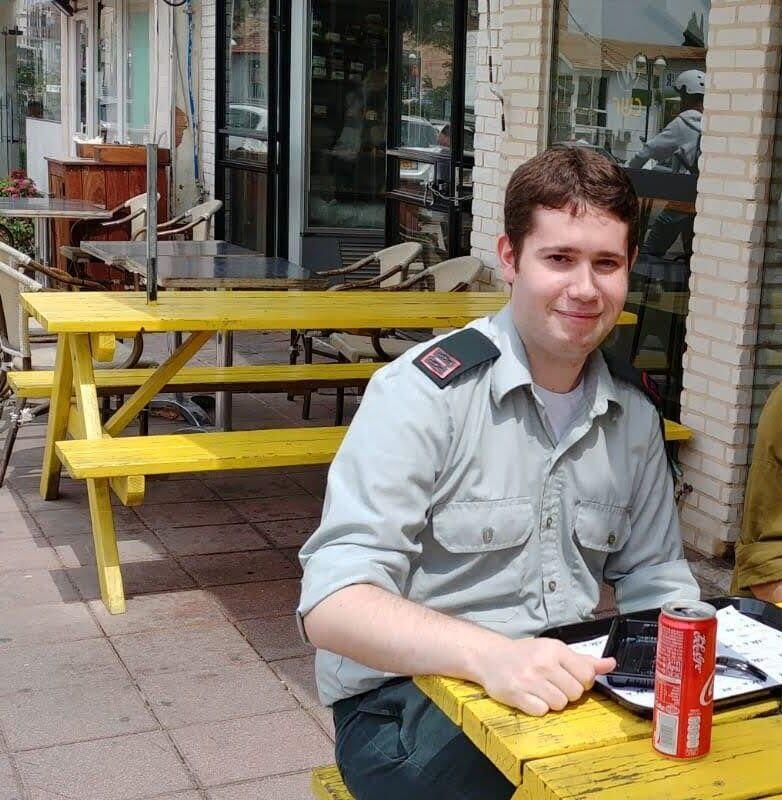
'His eyes were a little scary, unhealthy. He had a look of death. Like he’d been torn apart inside. His eyes were screaming. He suffered a lot and you could see it'
“They treat you like you’re an animal,” he said. “The tone of voice, the facial expressions, the commands, the humiliations. These aren’t people who committed rape, pedophilia or murder. In most cases, it’s some kid who was absent without leave for 20 days. I lost 10 kilograms in one month there. The food was awful. Inedible.”
T. said he also witnessed the guards’ treatment of Eiges. “In Prison 6, I remember they told us he had AIDS. He was in isolation and you couldn’t see him,” he said.
“Later, in Prison 10, I saw him a few times in the dining hall or during roll calls and heard them call his name. He wasn’t that isolated. Everyone had access to him. Anyone could go sit next to him on a bench. In Prison 6, they spoke to him like he was an animal. I was in prison when he started fainting. They ignored him, like he was air. No one cared.”
During one encounter, T. and Eiges briefly spoke. “After roll call, we went into the dining hall with him. He sat with everyone, but at the end, closest to the commanders. He didn’t talk much,” T. recalled.
“I sat at his table and asked him for something and he asked me for something too. I knew who he was, that he was Prisoner X and that he was special. I asked him a question and he looked at me. His eyes were a little scary, unhealthy. He had a look of death. Like he’d been torn apart inside. His eyes were screaming. He suffered a lot and you could see it.”
T. said he was shocked when he saw the footage of Eiges dying in the military prison. “How can something like this happen?” he asked. “I would steal a lighter and light a cigarette — and the guards would show up within two minutes. They would arrive quickly. They ignored him on a level worse than a boycott.”
In another incident, T. said he was speaking with his mother on the phone when a guard entered and ordered him to end the call. “I wanted to finish the call calmly so I wouldn’t worry my mom — and he screamed at me,” T. recalled.
“So I slammed the phone down and he got angry and threw me into solitary, and there they humiliated me badly. For two hours they made me stand at attention and at ease, and for two hours say ‘Yes, commander,’ while three guards watched me. They put me in a cell with walls smeared with feces and blood. It was unbearably hot and I was drenched in sweat.”
He described “constant yelling,” saying, “They treat you like a rag.” If someone did not listen or obey, he said, “they would line him up in front of the company, shout at him to take his things and throw him into solitary. In Prison 4 and Prison 6, solitary is a cell with a stone bed. In Prison 10, it’s a room about one meter by one and a half meters. You can barely move.”
According to T., “The light is on 24/7 and you’re not allowed to sleep during the day, only from 10 p.m. It’s real abuse of human beings. If you fall asleep, they wake you by screaming and punish you.”
The IDF said in a statement: “Abuse of inmates during their stay in military prison is contrary to the law and IDF regulations and is strictly prohibited. The detention facility is continuously monitored and under commanders’ supervision. Concrete complaints regarding inappropriate conduct by prison staff or inadequate conditions are reviewed by the relevant authorities and addressed accordingly. In cases where suspicion arises of irregular conduct or a criminal offense, investigations are opened by the appropriate investigative unit.”