

Defense Minister Israel Katz on Monday deepened his clash with IDF Chief of Staff Lt. Gen. Eyal Zamir, ordering a new and expanded review of the Turgeman Committee’s findings and freezing senior military appointments amid ongoing turmoil over the army’s failures on Oct. 7.
Katz, who learned from media reports that Zamir intended to issue personal conclusions and disciplinary steps against commanders, said he instructed the Defense Ministry’s comptroller, Brig. Gen. (ret.) Yair Volansky, to conduct an in-depth reassessment of the report drafted by the panel led by Maj. Gen. (ret.) Sami Turgeman. Turgeman is a former head of Southern Command, the IDF’s regional command responsible for Gaza.
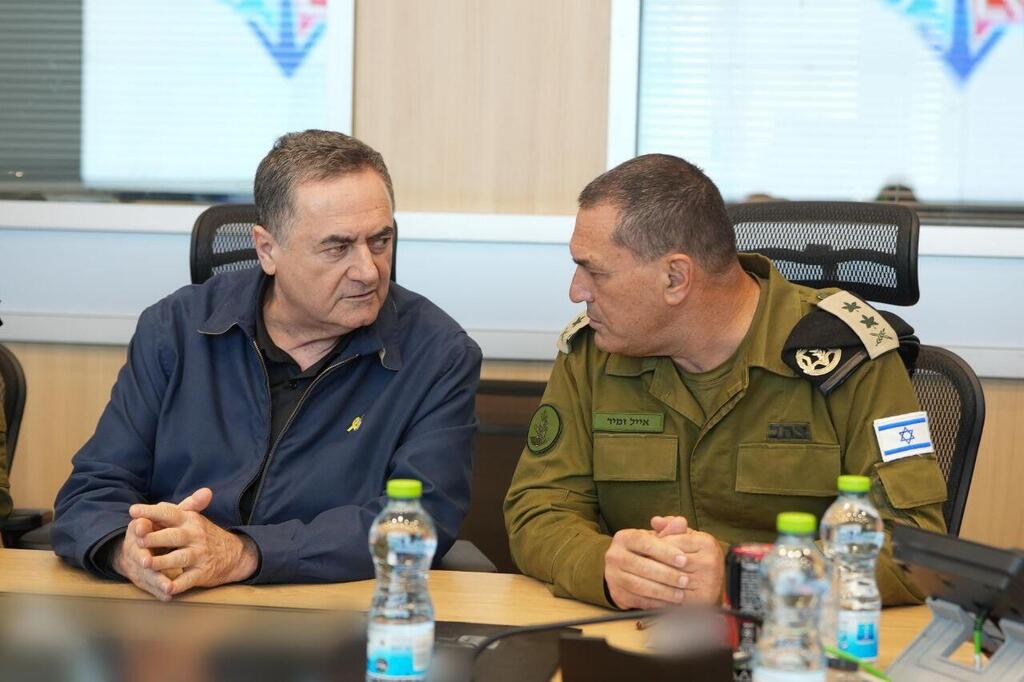
(Photo: Defense Ministry)
The new review will expand beyond the original committee’s work and examine issues the Israel Defense Forces never investigated, including intelligence warnings, operational failures and the Jericho Wall document, an internal assessment outlining Hamas’ invasion plan. Katz said Volansky will also reassess several investigations the panel marked in red, which it deemed incomplete or carried out without sufficient rigor.
Katz said the comptroller will be asked to develop uniform criteria for determining personal accountability. He said the findings should be submitted within 30 days so he can finalize his position on senior IDF appointments under his authority in light of the Oct. 7 failures, though officials expect Volansky to request more time. That could prolong the freeze on key appointments well beyond the one-month window.
Beyond the review of the Turgeman report, Volansky will also examine the work of the Coordinator of Government Activities in the Territories, the military body overseeing Palestinian civilian affairs; deception efforts used by Hamas against Israeli intelligence; and pre-Oct. 7 assessments within Military Intelligence and the Operations Directorate.
The Turgeman Committee’s “meta-investigation,” presented to senior IDF commanders two weeks ago, examined the army’s internal probes into the Oct. 7 attack. The discussion was described as tense, with harsh exchanges and criticism. Zamir said he supports establishing an external, systemwide and multidisciplinary inquiry — language that differed from earlier calls for a formal state commission.
The committee identified several topics the IDF never fully examined, particularly how intelligence warnings were handled over the years and how the military interpreted the Jericho Wall plan. It also reviewed dozens of internal investigations and categorized them by quality: five were labeled red, meaning they were poorly conducted or assigned to teams lacking expertise; about one-third were labeled orange, meaning they required further work; and the remaining third were labeled green, meaning they were complete and credible.
The red-labeled probes included reviews of the Operations Division led at the time by the current Military Intelligence chief Maj. Gen. Shlomi Binder, an assessment of the army’s underlying strategic conception, the investigation of the night before the attack, the navy’s operational review and an examination of the military’s overall operational planning.
Katz said his longstanding position to block promotions for officers who served in Southern Command during the attack “remains in force.” He added that the appointment of a military attaché to Washington, a senior diplomatic-defense post at the Israeli Embassy, is unrelated and should not delay any IDF appointments.