

Tensions inside Lebanon are escalating against the backdrop of Israeli strikes on Hezbollah targets in southern Lebanon and U.S.-mediated contacts between Israel and Lebanon.
At the center of the latest uproar is a satirical video aired by Lebanon’s LBCI network showing Hezbollah Secretary-General Naim Qassem as an “Angry Birds” character, while Prime Minister Benjamin Netanyahu and Israelis are portrayed as pigs attacking Hezbollah operatives.
‘Angry Bird’ Hezbollah chief, president Aoun in kippah: internal tensions in Lebanon worsen


The clip quickly turned into another flashpoint in Lebanon’s deepening political divide.
Hezbollah and its allies are furious over recent decisions by Lebanon’s government, led by President Joseph Aoun and Prime Minister Nawaf Salam, to outlaw the group’s military and security activity. Hezbollah also rejects disarming under what it describes as U.S. and Israeli pressure, and opposes direct negotiations with Israel.
Lebanon’s official leadership, for its part, says its decisions are independent. It supports direct talks with Israel, with U.S. help, and sees the process as an opportunity for Lebanon. At the same time, Beirut continues to demand an end to Israeli strikes, condemns the attacks, calls for an Israeli withdrawal from Lebanon and seeks the release of Lebanese prisoners.
Hezbollah views the process as surrender.
Aoun has also come under attack in recent days after defending a U.S. State Department statement issued after Israeli-Lebanese talks in Washington. The Lebanese president said the statement did not introduce anything new and was based on messages similar to those included in the 2024 ceasefire agreement between Israel and Lebanon. Hezbollah supporters saw it as justification for continued Israeli strikes.
Aoun has said every step he took regarding the negotiations was coordinated with Parliament Speaker Nabih Berri. But Berri, who belongs to the Amal movement, Hezbollah’s ally, said the president’s comments were inaccurate.
Hezbollah has accused several Lebanese channels in recent months of inciting internal tensions and echoing Israeli messages. It has frequently attacked MTV Lebanon, but this time focused on LBCI.
Hezbollah said videos aired by LBCI crossed the line from political disagreement into cheap and offensive insults that degrade political discourse and fuel social tensions. The group called on supporters of the “resistance” to be aware of what it described as dangers being planned against all Lebanese citizens and to avoid being dragged into the enemy’s agenda.
Hezbollah lawmaker Ibrahim Moussawi also condemned LBCI, accusing the channel of trying to provoke sectarian conflict and drag Lebanon into internal strife while, in his words, Israel wages an open war against the country. He called on Lebanese authorities to act against media outlets that incite sectarianism under the cover of free speech.
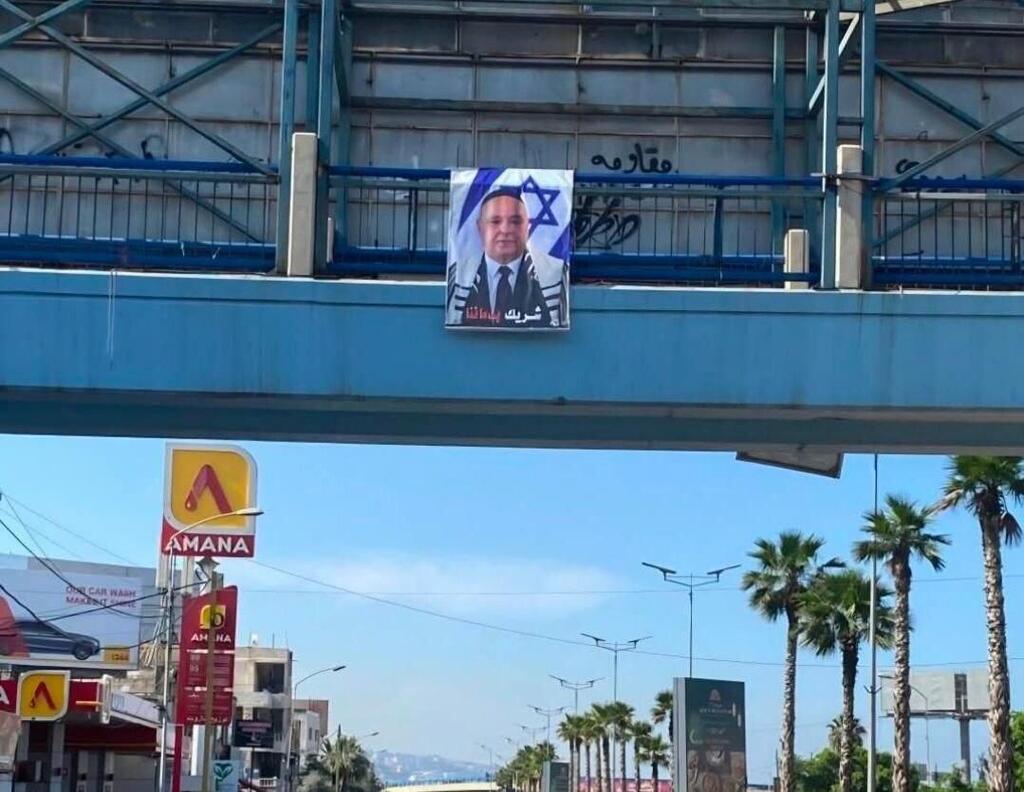
A poster of president Aoun in a kippah
Lebanon’s Al-Modon news site, which is not affiliated with Hezbollah, reported that the video immediately sparked sectarian controversy. Accounts aligned with Hezbollah circulated AI-generated images portraying Christian figures as pigs, while others accused LBCI of implementing foreign dictates aligned with US and Israel.
The Lebanese presidency said Aoun rejects all attacks on Christian and Muslim religious leaders and spiritual figures. He urged all sides to keep political disagreements in the political sphere and avoid personal attacks, especially at a time that requires broad national solidarity.
Berri also warned against incitement targeting Lebanese religious and national symbols, saying it serves the interests of the enemy.
Salam said that however deep Lebanon’s political disagreements may be, personal insults, defamation, bullying and accusations of treason are unacceptable and deepen division. He called for restraint to avoid dragging the country into an atmosphere of internal conflict.
The tensions have also spilled into the streets and TV studios.
A photo attacking Aoun was hung on a pedestrian bridge on the old road to Beirut’s airport. The AI-generated image showed him against the background of an Israeli flag, wearing a kippah, with the caption “partner in our blood.”
In another incident, a televised argument between Lebanese journalists Tony Boulos and Mohammed Yacoub turned physical on OTV. Boulos, known as a Hezbollah opponent, called Yacoub, who supports the “axis of resistance,” an Iranian agent. Yacoub then threw a cup of water at him.
Al-Akhbar, a newspaper affiliated with Hezbollah, described the episode as a microcosm of Lebanon’s deep split in politics, media and social networks. It also criticized OTV for airing the segment even though it had been prerecorded, saying the exchange served Israeli interests.