


Two soldiers and a civilian were killed over the past week by Hezbollah’s explosive-laden first-person-view (FPV) drones, and Israel is changing course after restrictions imposed by the United States: IDF Chief of Staff Lt. Gen. Eyal Zamir has instructed Northern Command and the Israel Air Force to strike the production and supply chain of the FPV drones, including deep inside Lebanon.
Since the ceasefire with Lebanon was declared, a truce that has been repeatedly violated, the IDF has not struck in Beirut, and the overwhelming majority of its attacks have been carried out in southern Lebanon, in the area south of the yellow line. Under the new directive, the Israel Air Force will also be able to strike farther north, with the goal of significantly damaging what has become the main threat to IDF forces in recent days.
Interceptor launch in the Upper Galilee


A senior IDF official addressed the FPV drone threat, saying: “This is a complex challenge, and there is no generic magic solution.”
Against the backdrop of a recent experiment that failed, he added, “The Jewish mind is working on solutions that will neutralize 80% of the problem, but until then, we must not be ashamed to use simple protective nets if they save lives. If it helps, then soldiers need to put up nets until a solution is found.”
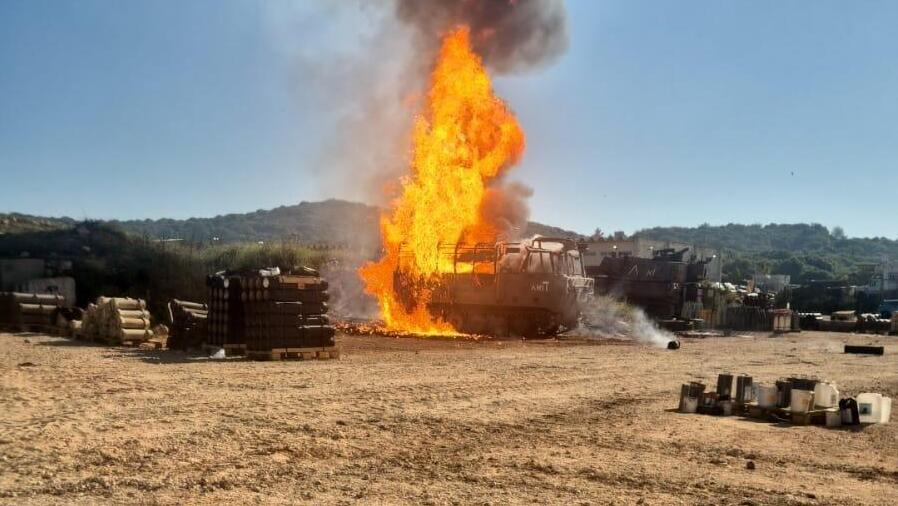
FPV drones hits an IDF vehicle
Hezbollah FPV drone attacks over the past week killed an armored corps soldier, Sgt. Idan Fooks, Golani Brigade soldier Sgt. Liem Ben Hamo and Shfaram resident Amer Hujeirat. Many others were wounded in a series of additional incidents.
The terrorist organization continued launching FPV drones on Thursday, both toward forces operating in southern Lebanon and toward the northern border. A reserve officer and soldier were lightly wounded near Misgav Am after one of the drones hit the area.
Interceptors were also launched several times following the detection of suspicious aerial targets in southern Lebanon. In one incident, a rocket was intercepted.