

Attorney General Gali Baharav-Miara on Friday rejected a government-backed plan that would allow ultra-Orthodox men who evade military service to fly abroad for the Jewish New Year pilgrimage to Uman, Ukraine, without being subject to arrest at airports or border crossings.
Baharav-Miara said in her legal opinion that such a plan “is contrary to the law” and would violate the state’s duty to enforce conscription equally. “The government and its ministers have no authority to create an arrangement that interferes with law enforcement and orders authorities not to act,” she wrote.
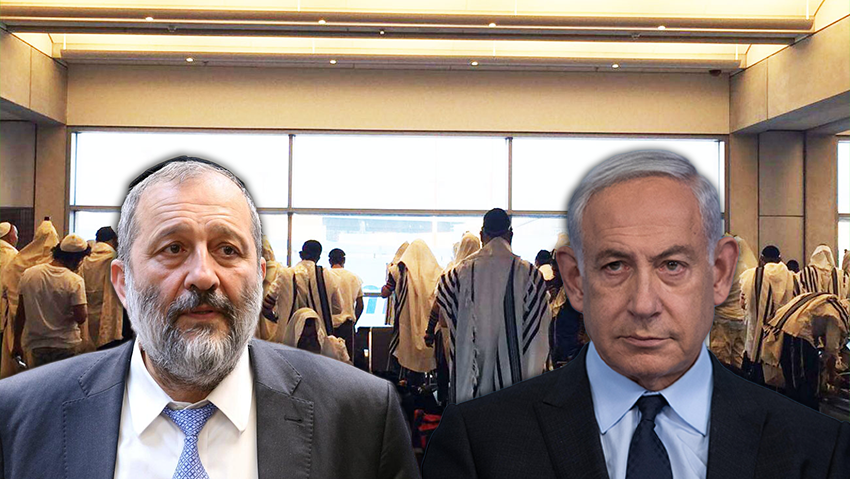
Her stance drew sharp criticism from ultra-Orthodox political leaders. A senior figure in one party accused her of “seeking to sow division and chaos,” while Rabbi Natan Ben Nun, head of the Breslov Union in Uman, said the decision unfairly prevents Hasidim from fulfilling a religious obligation. “We hope a solution is found soon so that seminary students can fly to Uman without fear of arrest,” he said.
Legal officials had already warned the plan would face court challenges. The proposal was pushed by Shas leader Aryeh Deri, who reportedly linked it to a budget transfer of about 10 million shekels from five ministries to cover the cost of infrastructure and security for pilgrims in Moldova, where most travelers pass en route to Uman. Prime Minister Benjamin Netanyahu discussed the matter directly with his Moldovan counterpart, officials said.
Opposition leader Yair Lapid urged the attorney general to block the plan, calling it “illegal” and warning he would petition the High Court of Justice if it moves forward. Civil society group Israel Hofsheet (Free Israel) also called for its cancellation.

The Jewish New Year pilgrimage to Uman
(Photo: AFP)
Amid concerns of mass arrests of draft evaders, former Elad mayor Israel Porush, head of the Haredi advocacy group Magen U’Moshia, threatened mass protests at Ben Gurion Airport. “If we can’t fly, no one will fly,” he said, warning of a possible mobilization of 20,000 people. Transportation Ministry Director-General Moshe Ben-Zaken condemned the threat as “violent rhetoric,” saying it could carry “serious consequences.”
The funding package sought by Deri is meant to address Moldovan demands for dedicated resources to handle the influx of pilgrims. A professional negotiating team has been appointed to finalize the details. But not all ministers back the plan. Immigration Minister Ofir Sofer of the Religious Zionist Party said this week he was disturbed that the government was prioritizing the pilgrimage funding “in complete detachment from the harsh reality the people of Israel are facing.”