

Brigadier General Mickey Barel, former head of the Military Police, referred to the breach by ultra-Orthodox protesters into the home of the current Military Police commander, Yuval Yamin, in Ashkelon. “This is a very serious incident, where lawbreakers decide to do what they think they can do in the face of both police and state failure,” Baral told ynet.
Baral said he had spoken with Yamin: “He was not at home. They entered his yard and caused damage to the house. The family was in a state of panic and was evacuated. He was not deterred.”
Hundreds of protesters in Ashkelon
(Photo: Yoeli Brim, Mordi Mordi)


Dozens of extremists protesting the renewed IDF enforcement campaign against draft evaders entered the courtyard of Military Police commander and clashed with police forces. According to Kikar HaShabbat, the head of a yeshiva in Ashdod, Rabbi Moshe Shmieda, instructed his students before the break-in to “maintain secrecy” and travel to Ashkelon for a “rage protest” over the arrest of two yeshiva students.
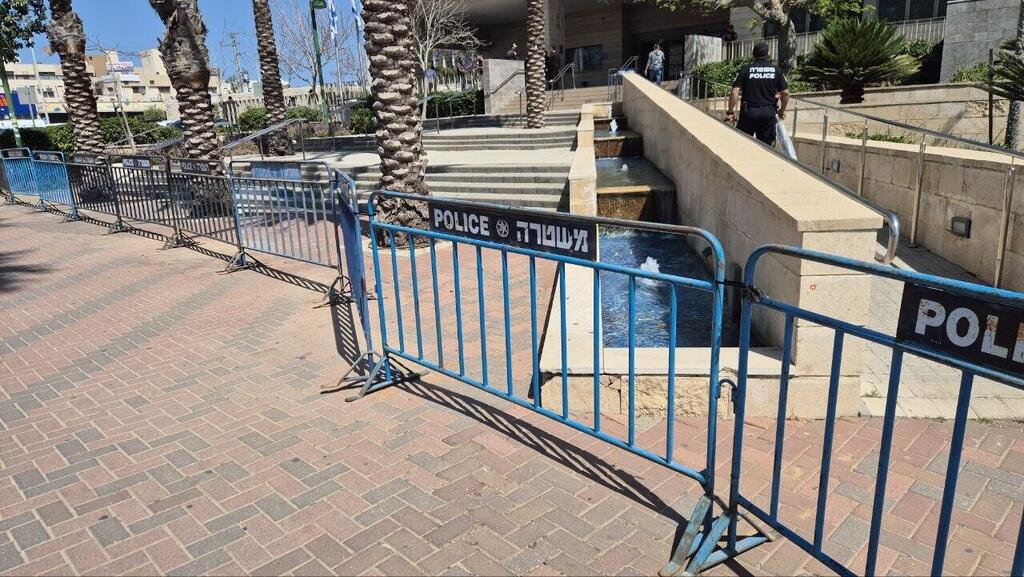
Police arrested 25 of the protesters, 13 of whom have already been released. Fences were erected around the Ashkelon courthouse ahead of a hearing on extending the detention of the remaining 12.
“This is something that cannot be allowed to pass quietly,” Baral said. “That applies to soldiers and to public officials alike. Families must be outside the rules of the game. As part of the failure, I don’t think this happened by surprise. There were previous protests near Yuval’s home and roadblocks at the entrance to Ashkelon, and all of it was reported in the ultra-Orthodox media. A police body has intelligence—it should have been prepared. Now there must be a very harsh response against these rioters. It is not acceptable that a senior officer’s home needs to be secured by the police.”
Referring to reports that a yeshiva head in Ashdod was behind the break-in, Baral said: “Someone organized them, someone gave instructions. These rioters do not act on their own initiative. Just as the police know how to deal with crime families and dismantle organizations, they need to know how to deal with extremist factions as well—they know exactly who the people are.”
So in your view, those who sent them should be treated like a crime family?
“Absolutely.”
Baral added: “I think the entire public demands very aggressive enforcement against these lawbreakers. This unit, which is not always in the spotlight, works at checkpoints, border crossings, investigations, prisons, policing. Over the past three years they have worked extremely hard during the war; they will not be deterred and will continue doing their job. Draft evasion is a criminal offense—it cannot be that there is enforcement against a secular draft evader and not against a religious one.”
The prime minister, defense minister, and chief of staff all condemned the break-in. If you were Military Police commander today, what would you tell the chief of staff?
“The chief of staff spoke with Yuval and gave him full backing. I know Yuval and the Military Police personnel; this will not stop them. When they need to enforce the law, including by force, if incidents like this happen. I believe the state and the police must join forces. It cannot be that an entire sector places itself outside the law and does whatever it wants.”
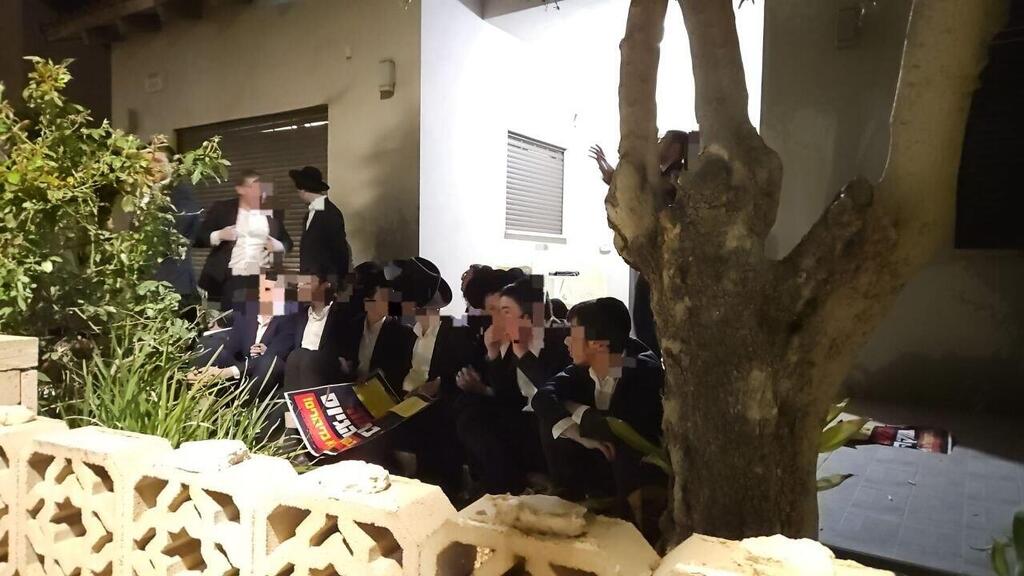
The break-in at Brig. Gen. Yuval Yamin's home
(Photo: Police spokeswoman)
Yaakov Vider, a member of the Bnei Brak city council and chairman of the Likud faction in the city, said: “This all comes from the same place. The fact that this is allowed is outrageous—lawlessness, a fictional democracy. I do reserve duty. I think, there should be another way to bring ultra-Orthodox into the army. When a child from this community sees soldiers, they are like aliens to him. And ultra-Orthodox soldiers are afraid to walk in uniform in the city.”
He added: “We need to focus on ultra-Orthodox employment, remove barriers—there are many examples. And there is a gap with the power brokers: they have SUVs, apartments, they fly abroad—I envy them. In Bnei Brak there are people who don’t even know what a plane looks like. The disconnect from the public is clear.”
Referring to the extremist protests that preceded the break-in, Vider said: “This is a tiny extremist fringe—and who suffers the most? The residents of Bnei Brak. A woman told me yesterday she was stuck outside the city for five hours. The weaker populations are the ones who are hurt most. If I were to break into a bank tomorrow, what would the police do—clear the way for me? The police issued a statement yesterday telling people to clear the roads and not come. Excuse me? Everyone knows who these rioters are. And they are rioters—you cannot block roads. You arrest them, fine them. You certainly don’t clear the road and beg them. This behavior by law enforcement agencies, including the prosecution, is what leads to this.”