

Nearly five weeks after saying the Iranian people’s moment of freedom was approaching, President Donald Trump said overnight Wednesday into Thursday — again — that the war is nearing its end, arguing that its objectives are almost complete.
The White House has touted the elimination of Iran’s leadership and what it describes as a regime change, but a review of the goals Trump outlined at the outset of the war presents a more complex picture: Iran’s navy has been severely damaged, yet its nuclear program remains deeply buried in fortified sites, the Middle East is far from stable and Iran’s regional proxy network continues to operate.
Trump’s address to the nation
(Video: The White House )


On Feb. 28, hours after Israel and the United States launched their joint attack on Iran, Trump laid out the war’s objectives in an eight-minute video, saying the aim was to protect Americans by removing immediate threats from the Iranian regime. Even before his latest remarks, The New York Times compared those initial goals with the current situation.
Trump had pledged to destroy Iran’s missile arsenal and dismantle its missile industry. While Israeli Prime Minister Benjamin Netanyahu later said an existential threat from tens of thousands of ballistic missiles had been removed, Iran continues to launch missiles at Israel eight months later, though at significantly reduced levels.
Before the Times analysis, U.S. and Israeli forces had destroyed large numbers of ballistic missiles and launchers in airstrikes, but many remained intact, and Iran continues to fire missiles across the region along with drones. Israeli officials said more than two weeks ago that about 70% of Iran’s launchers had been destroyed, though no total figure was provided.
Trump also vowed at the start of the war to destroy Iran’s navy. U.S. and Israeli forces have since inflicted heavy losses. On March 4, a U.S. submarine torpedoed an Iranian vessel returning from a naval exercise in India, killing at least 180 crew members, according to the Times.
Assessments of the damage vary and are often contradictory, making accuracy difficult to gauge. A measurable indicator is the number of missiles fired at Israel per barrage, which dropped from dozens on the first day of the war to only a few more recently. Still, the missile threat has not been eliminated, and Iran continues launches, sometimes timed to coincide with peak civilian activity.
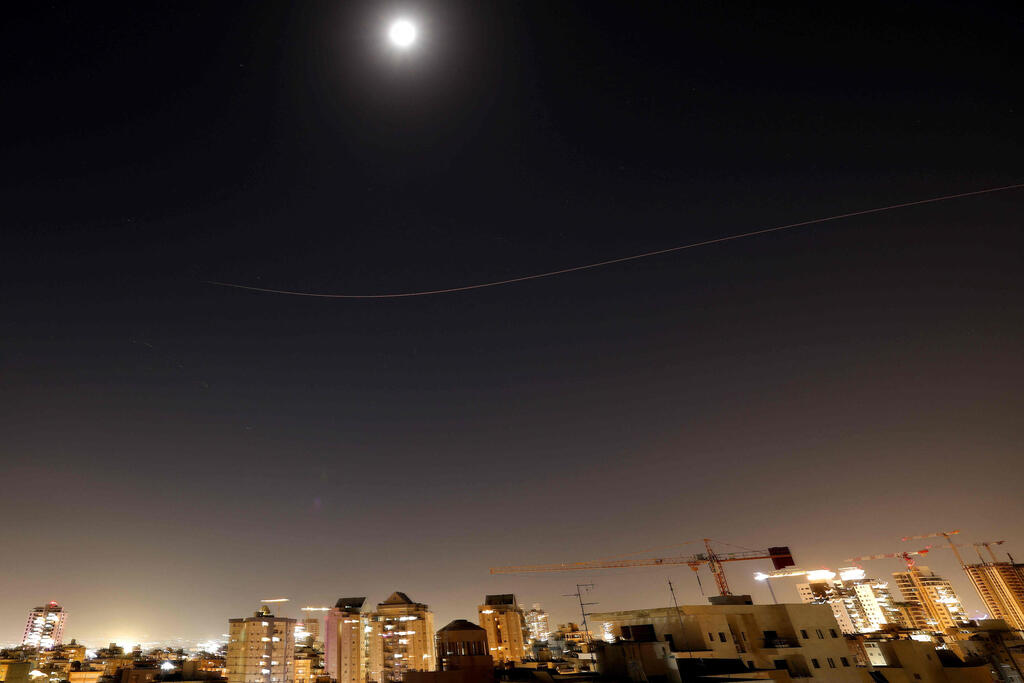
On the fourth day of the war, in what appeared to be a show of force in the Gulf of Oman, U.S. Central Command said it destroyed 11 Iranian vessels. However, the strategic Strait of Hormuz remains closed, the threat to it persists and Iran is considering nationalizing the passage and imposing transit fees.
Two weeks later, the Israeli air force struck Iranian naval targets in the Caspian Sea for the first time. The chairman of the Joint Chiefs of Staff, Gen. Dan Caine, said this week that more than 150 Iranian naval vessels had been destroyed, though it remains unclear how many are still operational. The threat of naval mines in the Strait of Hormuz also remains.
Footage: IDF strike in the Caspian Sea
(Video: IDF)
Trump said at the outset that Iranian-backed militias would no longer be able to destabilize the region or attack U.S. forces. However, the Times reported that these groups are still active, including militias in Iraq that have launched rockets at U.S. diplomatic sites.
Hezbollah joined the war three days after it began, despite Israeli claims that the threat from the north had already been removed. A month into the conflict, the Houthis in Yemen — Iran’s last major proxy to enter the fight — launched a missile toward southern Israel. While their rate of fire has remained relatively low, threats continue. The U.S. Embassy in Iraq warned as recently as this morning that Iran-aligned armed groups could carry out attacks in central Baghdad within 24 to 48 hours and again urged Americans to leave the country.
As for roadside bombs mentioned by Trump early in the war, the Times noted that while Iran-backed militias used such devices against U.S. troops in Iraq two decades ago, they have not used them in recent years.
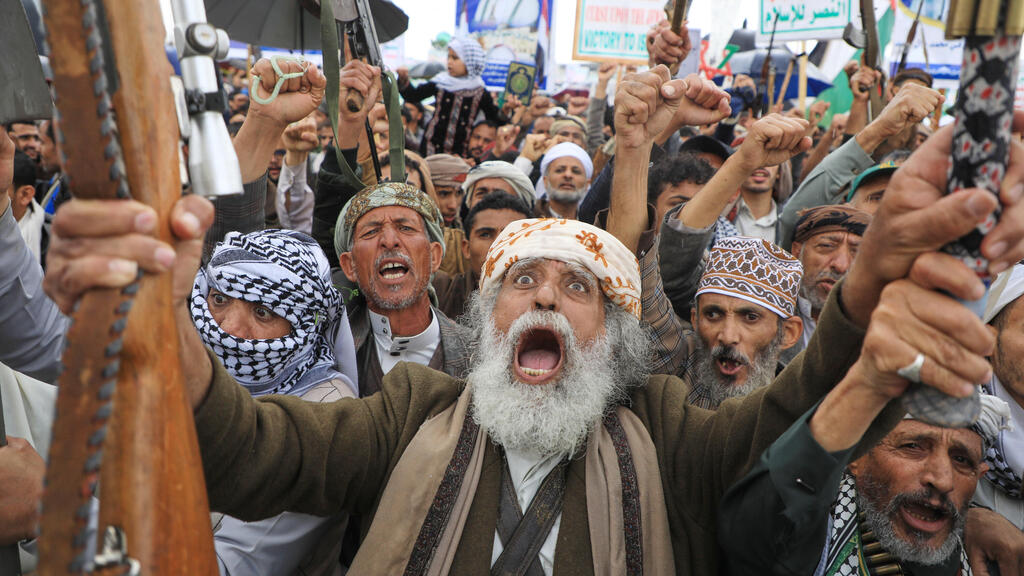
Houthi supporters in Yemen protest in support of Iran during the war
(Photo AP Photo/Osamah Abdulrahman)
Trump also vowed Iran would never obtain nuclear weapons. During the conflict, the United States carried out limited strikes on nuclear facilities, which he described as devastating, saying they had set the program back decades. However, about 440 kilograms (970 pounds) of uranium enriched to 60% remains in Iran’s possession — a level that can be further enriched to weapons-grade relatively quickly. Experts say this stockpile could produce the core material for roughly 11 nuclear bombs within weeks.
Discussions in recent weeks have included the possibility of a ground operation to remove the enriched material or a negotiated transfer out of Iran, but Tehran has refused and a ground operation is considered highly risky. An alternative approach has been to bury the material at its current sites, making access difficult and potentially delaying retrieval for at least a year. U.S. strikes have targeted tunnels around the enriched uranium at Natanz and, reportedly, Isfahan.
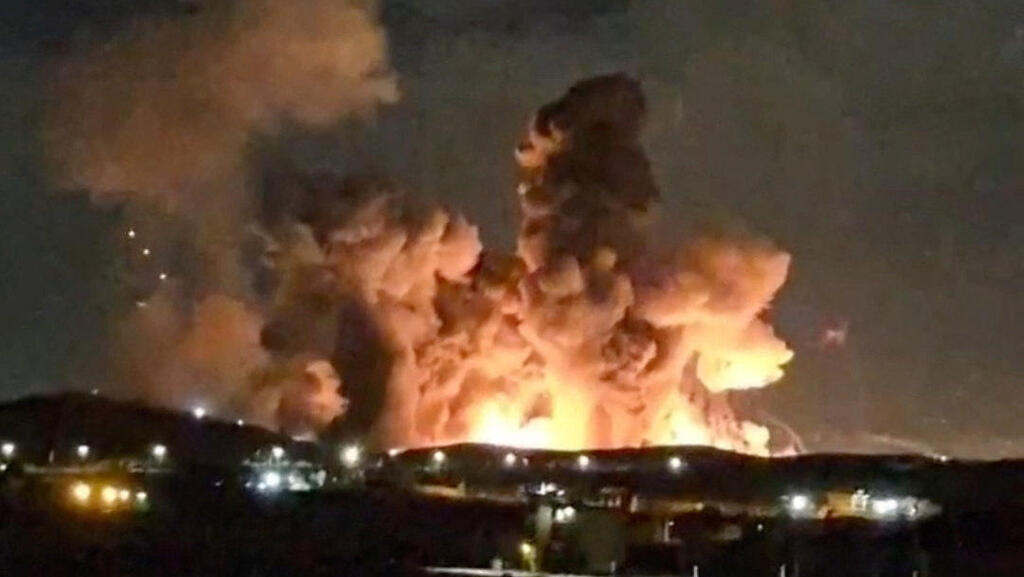
A strike in Isfahan this week
(Photo: Social Media/Reuters)
Trump has downplayed the issue in recent days, saying he is not focused on the uranium and arguing it is buried too deep to be easily accessed. He has also called on Iranians to seize control of their government, though no widespread uprising has materialized.
He has further claimed that a regime change has effectively already occurred following the killing of senior Iranian leaders. However, the new supreme leader, Mojtaba Khamenei is viewed as aligned with the same hardline camp, supporting domestic repression and an aggressive foreign policy.
Despite U.S. and Israeli assertions that war goals have largely been achieved, Iranian officials continue to threaten escalation. A spokesperson for Iran’s emergency command, quoted by the Tasnim news agency, said Tehran would continue fighting until the United States and Israel face lasting defeat and surrender, and would intensify military operations.
Oil prices rose again following Trump’s latest remarks and indications the war will not end soon. Brent crude climbed about 6% to roughly $107 per barrel, while WTI rose about 5% to $105. Trump also warned that if no agreement is reached, the United States could strike Iran’s energy infrastructure, including power plants, possibly in simultaneous attacks