



The IDF on Sunday announced a daily “tactical pause” in combat operations in select areas of the Gaza Strip to facilitate the delivery and distribution of humanitarian aid.
The military said the pause, in effect from 10 a.m. to 8 p.m. local time, will apply to areas where Israeli troops are not currently operating—specifically Al-Mawasi, Deir al-Balah and Gaza City. The measure will be observed daily until further notice.
Gallery
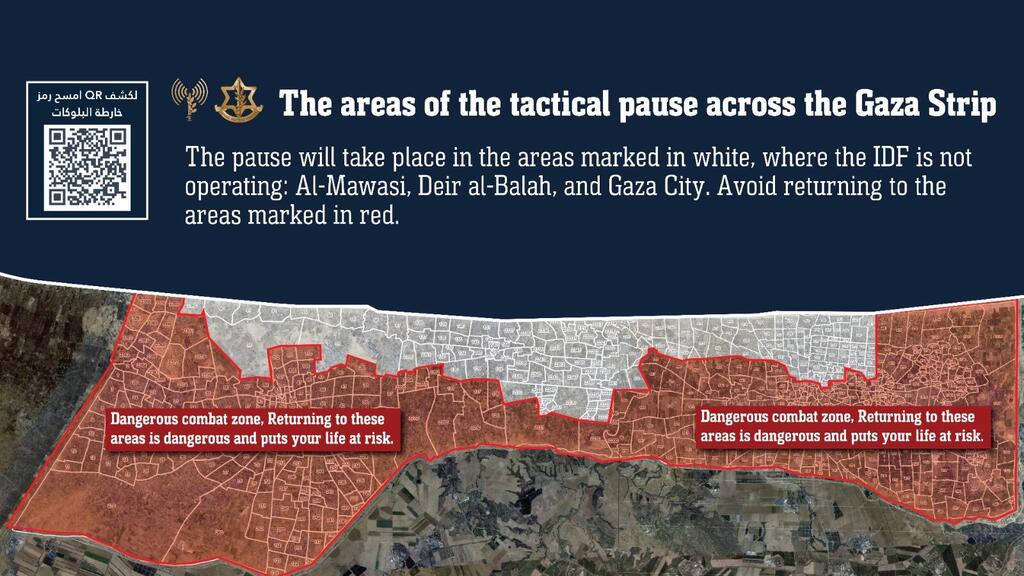
A map distributed by the IDF shows regions in Gaza designated for a daily tactical pause in military operations to allow the flow of humanitarian aid. The white-shaded areas, including Al-Mawasi, Deir al-Balah and Gaza City, are considered safe zones, while red-shaded areas remain active combat zones
(Illustration: IDF)
The decision was made “in accordance with directives from the political echelon,” the military said, and is part of an ongoing effort led by COGAT—the Israeli agency that coordinates civilian affairs in Palestinian territories—to expand humanitarian access.
The IDF said the pause was coordinated with the United Nations and international humanitarian organizations following discussions over the past week.
In addition to the daily pause, designated secure routes will be open from 6 a.m. to 11 p.m. to allow for the safe movement of aid convoys transporting food and medicine throughout the Gaza Strip.
Get the Ynetnews app on your smartphone: Google Play: https://bit.ly/4eJ37pE | Apple App Store: https://bit.ly/3ZL7iNv
The military emphasized that humanitarian measures will continue alongside ongoing offensive operations against terrorist organizations in Gaza. “The IDF is prepared to expand the scale of this activity as required,” the statement said.
United Nations aid chief Tom Fletcher said that UN teams will step up efforts to feed Palestinians in Gaza during pauses in designated areas announced by Israel.
"In contact with our teams on the ground who will do all we can to reach as many starving people as we can in this window," he said in a post on X.
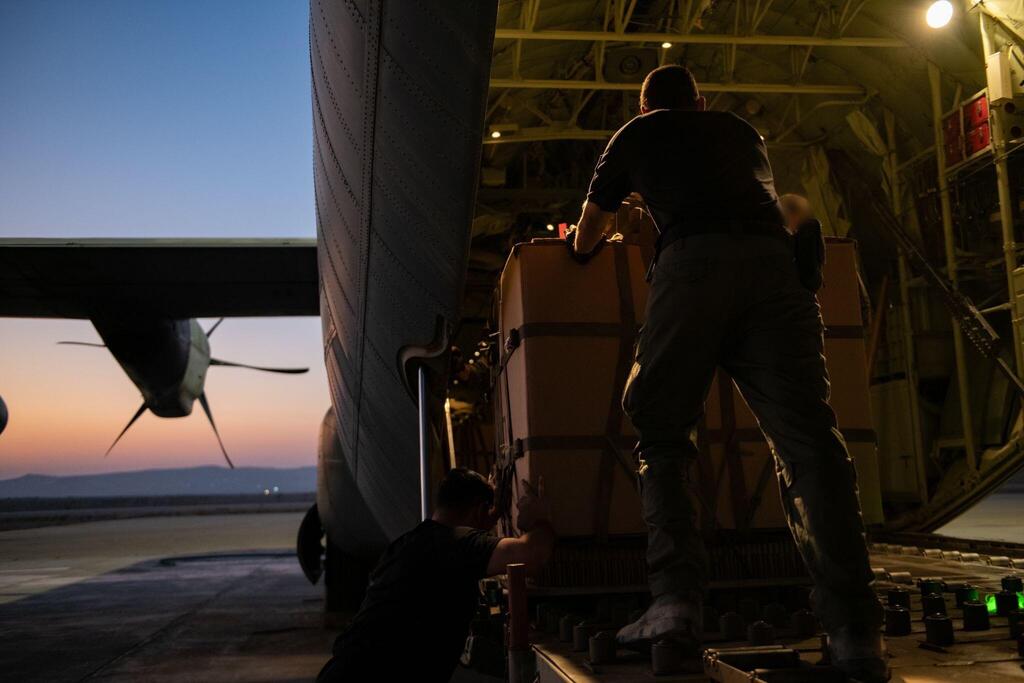
Preparing for the humanitarian aid airdrop over Gaza
(Photo: IDF)
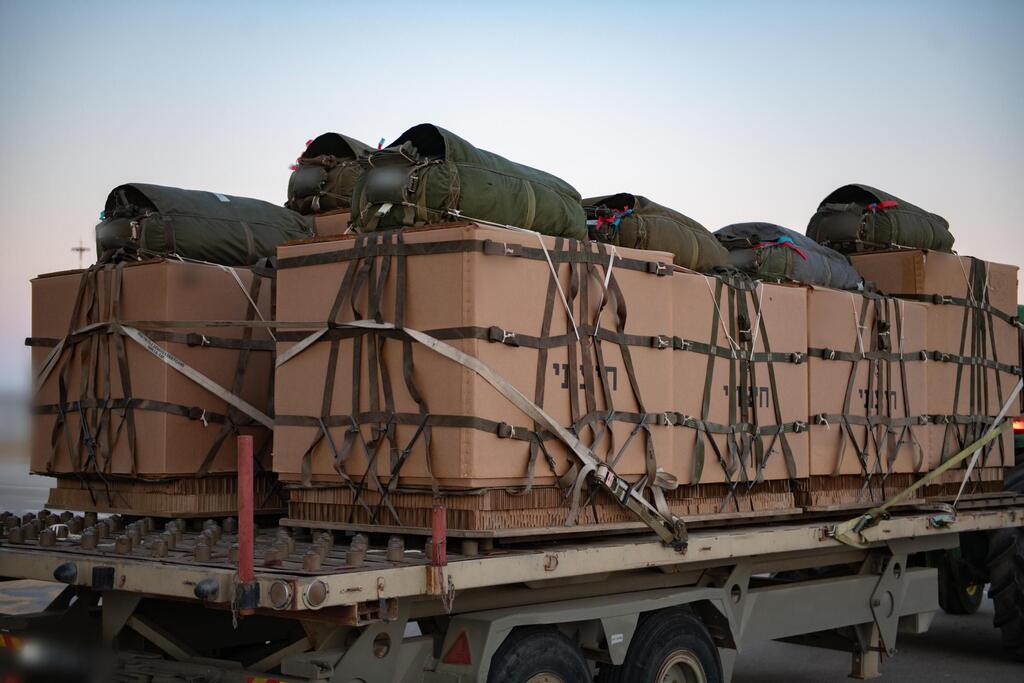
Preparing for the humanitarian aid airdrop over Gaza
(Photo: IDF)
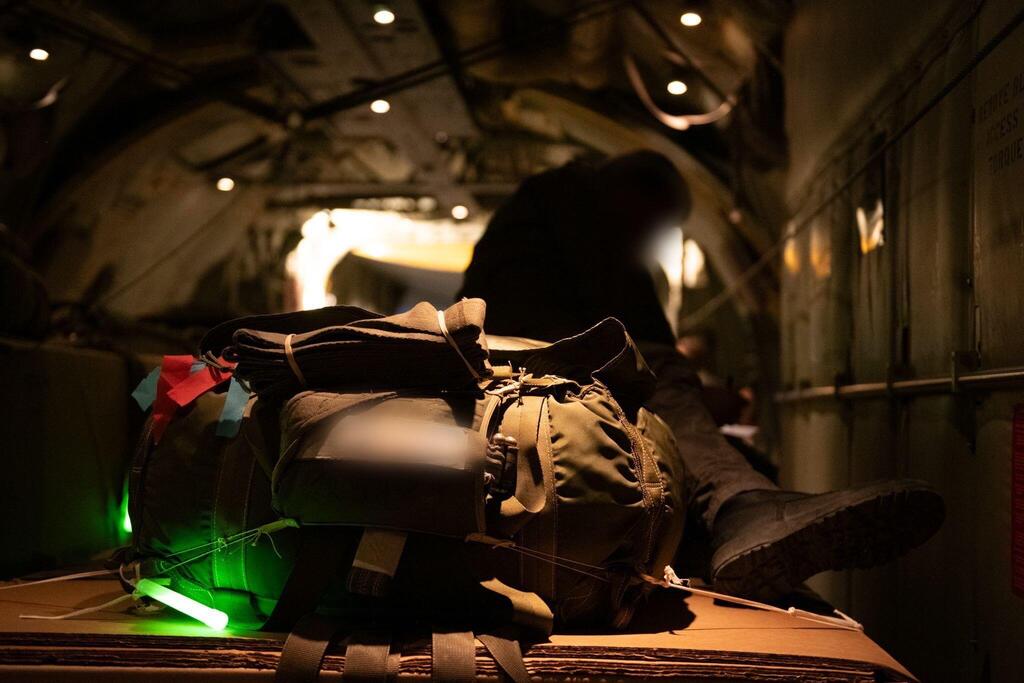
Preparing for the humanitarian aid airdrop over Gaza
(Photo: IDF)
On Saturday night, the Israeli Air Force conducted its first aid airdrop—delivering seven pallets of flour, sugar and canned food provided by international organizations—under direct instruction from Israel’s political leadership.
While other countries had conducted airdrops before, this marked Israel’s own inaugural operation. As part of this effort, the IDF also coordinated with COGAT to connect a power line to Gaza’s southern desalination plant. This increased daily water production from 2,000 to 20,000 cubic meters, serving roughly 900,000 residents.