


The IDF has moved in recent days from aggressive offensive action in the Gaza Strip to a far more restrained posture, with commanders saying that even when armed terrorists are identified beyond the yellow line, troops may now be required to wait for approval from higher levels before striking.
The change marks a significant shift from the previous operational routine, when Israeli forces regularly acted on intelligence opportunities and carried out frequent targeted strikes.
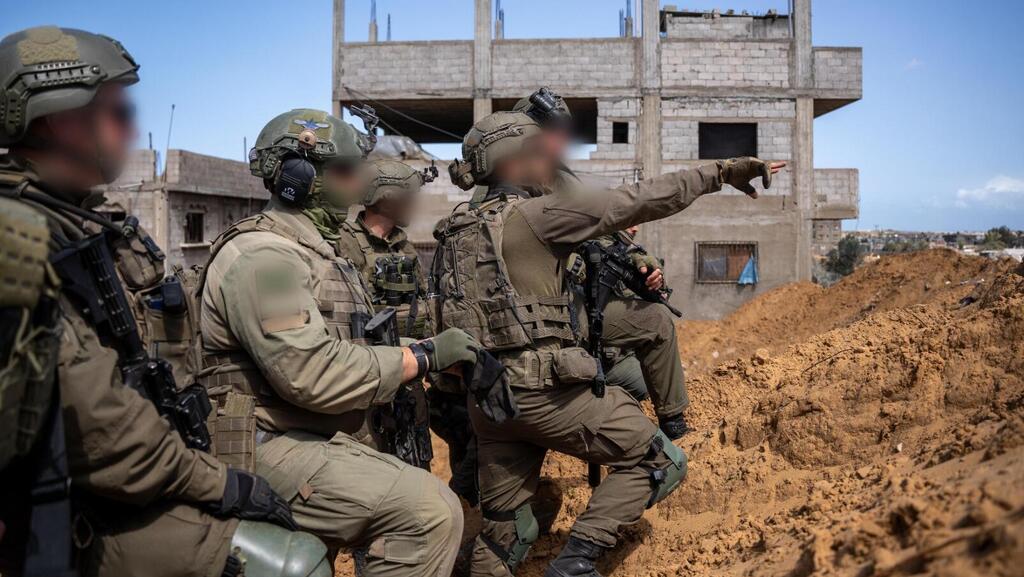
“First of all, anyone who tells you that we are at risk here does not know what he is talking about,” a senior officer serving in Gaza said. “In any situation where a soldier or a force feels any kind of threat, we act. A battalion commander knows that if there is a threat to his forces, he fires without asking. That is clear. At the same time, there has been a significant change. Beyond the yellow line, deep in the area, we do not act. Even if we see armed men. It is a different policy. We send it up and wait for approval. In practice, there has not been a strike for several consecutive days.”
The IDF has raised the level of authorization required for certain strikes as high as the chief of staff, effectively requiring political approval in some cases.
Commanders were also recently given explicit instructions to halt immediate-response fire, except in cases involving the removal of a direct threat.
Another officer described the contrast with the situation only weeks earlier.
“There were targeted killings here every day, sometimes several times a day. We hunted them. They felt pursued and fled from places, but we were so focused on them that many operational opportunities were created. And when you do not have to ask too high up, you act, and it happens quickly. Now it is quiet, there is nothing,” he said.
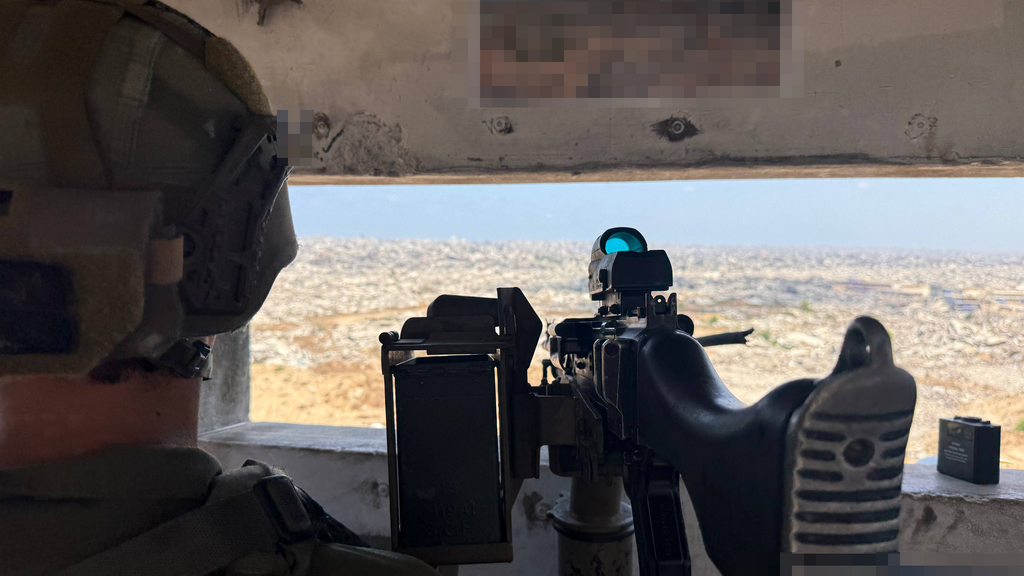
The Israeli side of the yellow line area in Gaza
(Photo: Roni Green Shaulov)
He compared the current situation to the period in Lebanon after Operation Northern Arrows, when Israeli forces maintained broad freedom of action against Hezbollah terrorists before that approach later changed.
“They were firing there all the time at Hezbollah terrorists and there was freedom of action until Operation Roaring Lion. It is true that it was different because they had been pushed back, but in terms of the use of fire, there was a situation in which we were firing routinely without receiving fire in return. And that was also the case in the Strip. Now it has changed.”
Troops serving in Gaza say the enemy quickly recognizes such shifts in operational behavior.
“They see what is happening. They are not stupid. After several months of the noise of strikes, suddenly there is quiet. They understand that something is happening,” one officer said. “I assume they will begin rebuilding things they wanted to rebuild and could not during the days of the strikes. The terrorists do not disappear. They are trying to adapt to the new situation.”
The change comes against the backdrop of political debate over plans advanced by the Board of Peace for Gaza.
Prime Minister Benjamin Netanyahu said Sunday that Israel rejects the council’s 15-point document and would not agree to an IDF withdrawal before Hamas is disarmed.
“First of all, I want to make the main point clear: As long as I am prime minister, there will be no Palestinian state. Not in Gaza and not in Judea and Samaria. Not Fatahstan and not Hamastan. Regarding specific things that have recently appeared in the news, I want to be precise here: Israel rejects the 15-point document. I heard people say: ‘You did not say so.’ So here I am saying it again: Israel rejects the 15-point document. The IDF will not carry out any withdrawal until Hamas is disarmed.
“And when I say Hamas must be disarmed, that means the heavy weapons, the less heavy weapons, all the weapons. We are talking about real disarmament, not fictitious disarmament. Now we are talking with the Americans about this issue. They have ideas, some of them are acceptable to us and some are not acceptable to us, and we know how to stand up to these things. We proved it in the past and we are proving it today as well. In addition, the IDF will continue to thwart threats against our forces and our citizens.”
‘There will be a return to the old approach’
The IDF had spent recent months preparing for a possible change in operating conditions by pushing Hamas farther back, widening the boundaries of the yellow line and increasing the pace of strikes and targeted killings.
Throughout June and July, the military issued near-daily statements on terrorists killed in Gaza. The IDF’s deeper presence and improved intelligence picture generated frequent opportunities for action.
“There is always concern when you are static and only responding. You move from proactive operations to defense,” one officer said. “For a soldier, that means moving to routine security activity. You are no longer pushing forward. You are waiting on the line to repel terrorists. On the yellow line.”
He added that commanders do not expect Hamas to disarm voluntarily.
“No one is fooling themselves that Hamas will disarm. It is only a matter of time until something happens. Tunnels, weapons transfers or something else, and then there will be a return to the old approach.”
Every soldier interviewed emphasized that the new policy does not leave forces exposed to immediate danger.
If troops identify a direct threat, they said, they remain authorized to eliminate it immediately.