

Former Shin Bet chief Ronen Bar filed a defamation lawsuit against Prime Minister Benjamin Netanyahu in Tel Aviv District Court on Wednesday, accusing him of spreading false allegations about Bar's conduct before the October 7, 2023 Hamas massacre and promoting conspiracy theories suggesting that the security chief had advance knowledge of an imminent attack. Bar is seeking 3 million shekels in damages and wants the court to reject any claim of immunity by Netanyahu.
In the lawsuit, Bar argues that Netanyahu received repeated warnings about the risk of a major security escalation but continued pursuing a policy of restraint toward Hamas. He is seeking the disclosure of documents detailing intelligence assessments and security discussions in the months preceding the massacre, declaring that in the absence of a state commission of inquiry, the truth would have to emerge through the courts.
Gallery
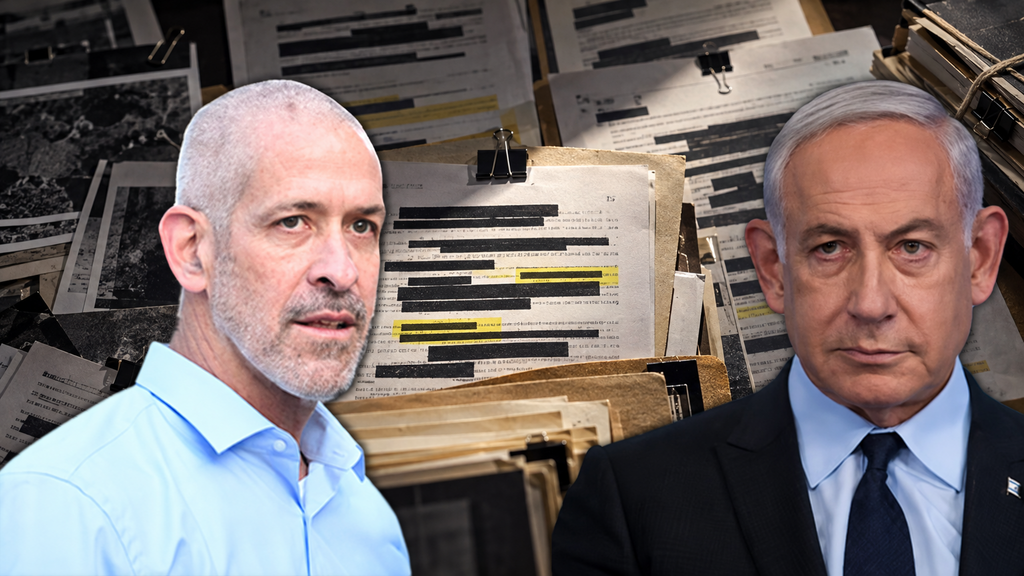
Former Shin Bet chief Ronen Bar and Prime Minister Benjamin Netanyahu
(Photo: Yair Sagi, Alex Kolomoisky)
The lawsuit, filed through attorneys Reuven Behar, Yoram Bonen and Doron Kol of the FBC law firm, presents Bar's account of the warnings he delivered to Netanyahu throughout 2023 and the intelligence developments in the hours before Hamas launched its attack.
Bar acknowledges that the Shin Bet failed to provide the intelligence necessary to prevent the massacre. However, he maintains that Netanyahu is attempting to shift responsibility for the disaster onto the security agency while obscuring his own decisions and policies.
"As the head of the service, I bear responsibility for the Shin Bet's failure to provide the intelligence required regarding the October 7 attack and its timing," Bar wrote. "Accordingly, with my head bowed before the bereaved families, I resigned from my position."
Bar announced his departure after the government had dismissed him. At the time, an interim High Court order against the dismissal was in effect, and the court subsequently ruled that the government's decision had been unlawful.
The lawsuit argues that Bar's acceptance of responsibility for the Shin Bet's intelligence failure does not absolve Netanyahu of responsibility for the policies that preceded the massacre. It accuses the prime minister of pursuing a strategy of containment, maintaining quiet in Gaza and facilitating funding that ultimately strengthened Hamas, despite Bar's objections.
He said he had remained silent for three years while awaiting the establishment of an independent state commission of inquiry that would examine both the Shin Bet's achievements and its failures.
"We fought, eliminated senior Hamas figures in Gaza and Lebanon, and brought hostages home through daring Shin Bet operations and determined negotiations," he wrote, accusing Netanyahu of conducting a sustained campaign of false allegations against him.
"Given the prime minister's unrestrained outburst, I decided not to remain silent and to show the public the motives behind such improper conduct," he added.
Bar further accused Netanyahu of using his position to prevent the establishment of any commission of inquiry while attempting to shape public opinion through what the lawsuit described as baseless manipulation.
"The plaintiff had no choice but to ask the honorable court to restore truth to its rightful place as the preferred option in this kind of discussion," the filing states.
Warnings ignored, restraint maintained
A central element of Bar's lawsuit concerns the intelligence assessments and recommendations he says he presented to Netanyahu throughout the months preceding October 7.
According to the filing, Bar repeatedly warned of the possibility of a multi-front confrontation, particularly involving Gaza, and cautioned that Israel's deterrence was weakening. He says those warnings intensified between July and September 2023, as Hamas expanded its activities and Israel approached the Jewish High Holidays.
Bar disputes the assessment that Hamas had been deterred from launching a major confrontation. He maintains that Hamas leader Yahya Sinwar had become increasingly ideological and unpredictable, and that the Shin Bet recommended offensive measures against senior Hamas figures and operatives directing attacks from Gaza.
The proposals included restricting the entry of workers from Gaza, conducting targeted operations against terror organizers in the West Bank and preparing strikes against senior Hamas leaders. According to Bar, several recommendations were dismissed, received no response or were never implemented.
The updated lawsuit account also includes an allegation concerning a July 9, 2023, security cabinet meeting. Bar says that, against the backdrop of the discussion, some government officials had floated the idea of allowing Hamas to control the West Bank. He says he insisted on making clear that Hamas was a fundamentalist religious movement committed to Israel's destruction and the murder of Israelis. The filing does not identify the officials who raised the idea or establish that it was adopted as government policy.
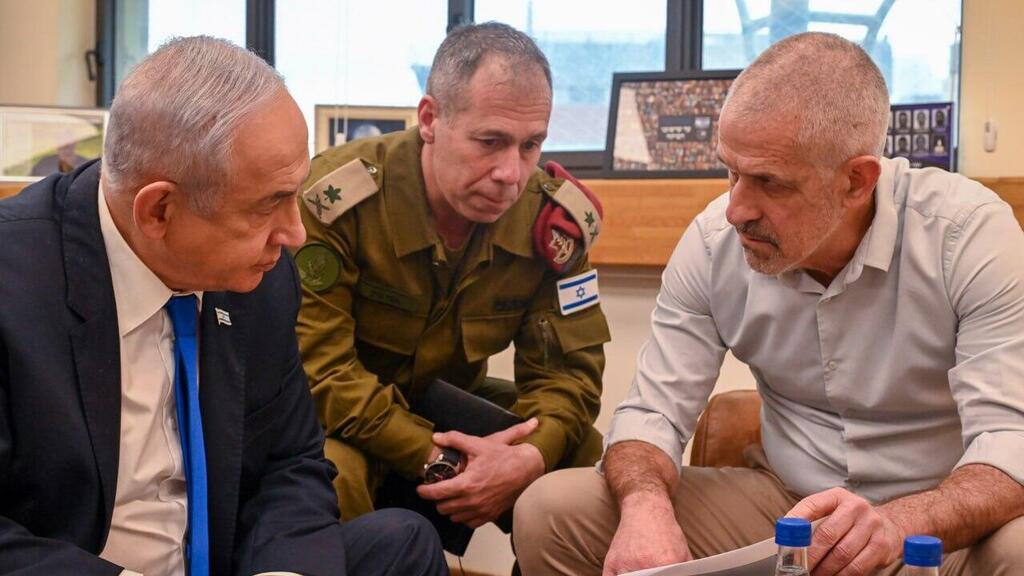
(Photo: GPO)
The lawsuit also challenges Netanyahu's broader policy toward Gaza, which Bar characterizes as an approach of "quiet at any cost." He alleges that the prime minister favored avoiding military confrontation, preserving relative calm and allowing Hamas to remain the governing authority in the territory.
Bar further claims that Netanyahu supported continued Qatari funding to Gaza despite Shin Bet warnings that some of the money was contributing to Hamas' military buildup.
According to the lawsuit, intelligence presented to Netanyahu indicated that funds ostensibly intended for civilian needs were also supporting activities such as tunnel construction and weapons procurement. Bar says he supported action against senior Hamas leaders and that the security agency had developed plans for targeted killings, but those plans were not approved.
The filing also describes disagreements over the Shin Bet's role in shaping national security policy. Bar alleges that Netanyahu told him strategic decisions were the government's responsibility rather than the intelligence chief's, even as the agency continued warning about the consequences of restraint.
What happened on the night of October 7?
Another central dispute concerns the intelligence available to Netanyahu during the hours immediately preceding the Hamas attack.
Bar rejects Netanyahu's allegation that the Shin Bet concealed information about an imminent threat. According to the lawsuit, the agency distributed an alert at 3:03 a.m. on October 7 to Israel's security organizations, including the military, police and National Security Council.
The warning identified indications of possible offensive activity along the Gaza border, although the exact nature and scale of the threat remained unclear.
Bar says he also instructed his staff to update Netanyahu's military secretary at the time, Avi Gil, in accordance with the communication procedures used by the Prime Minister's Office. The decision, he claims, was documented in the Shin Bet's computerized operations-center records before the attack began.
The lawsuit describes another obstacle to direct communication between the intelligence chief and the prime minister. Bar claims that, unlike former prime ministers Naftali Bennett and Yair Lapid, Netanyahu did not provide him with his personal cellphone number. Communications therefore passed through his military secretary or chief of staff Tzachi Braverman.
Bar alleges that Netanyahu neither returned his calls nor intervened after the attack began. He also claims that Netanyahu did not change the procedure requiring security agencies to communicate with the prime minister through his military secretariat even after October 7.
The filing also rejects claims surrounding the deployment of a Shin Bet tactical team known as Tequila during the night. According to Bar, such teams are dispatched many times a year, and their deployment does not require the agency director's personal authorization. He argues that the decision to send a team cannot, by itself, demonstrate advance knowledge of an impending large-scale assault.
Bar also denies speaking with the IDF chief of staff or the head of Military Intelligence before the attack.
According to his account, his first conversation with the chief of staff took place at 6:29 a.m., after rocket fire had already begun. During that conversation, he warned that the rocket barrage might be intended to divert attention from infiltrations into Israeli territory.
The lawsuit further alleges that Netanyahu had prohibited Bar from speaking with then-Defense Minister Yoav Gallant. It notes that senior military officials, including the head of Southern Command and the IDF Operations Directorate chief, returned from leave in response to the developing situation.
Bar argues that Netanyahu has repeatedly blamed the Shin Bet for matters outside the agency's operational responsibility, including the deployment of military forces, supervision of civilian gatherings and activation of local security teams.
The lawsuit describes those accusations as malicious and false allegations intended to conceal the truth from the public.
'The lies can no longer be allowed to spread'
Bar also links the deterioration in his relationship with Netanyahu to an affidavit he previously submitted to the High Court of Justice.
In that affidavit, he raised concerns about potential security risks involving advisers in the Prime Minister's Office and their alleged connections to Qatar, as well as allegations that the government sought to use the Shin Bet against political protests.
According to Bar, Netanyahu's subsequent statements amounted to a personal campaign of defamation that also damaged the reputation of the security service, its personnel and those killed in the line of duty.
He cites the continued absence of a state commission of inquiry, alongside reports of alleged attempts to alter official records and what he describes as efforts to establish misleading narratives about October 7, as reasons for taking legal action.
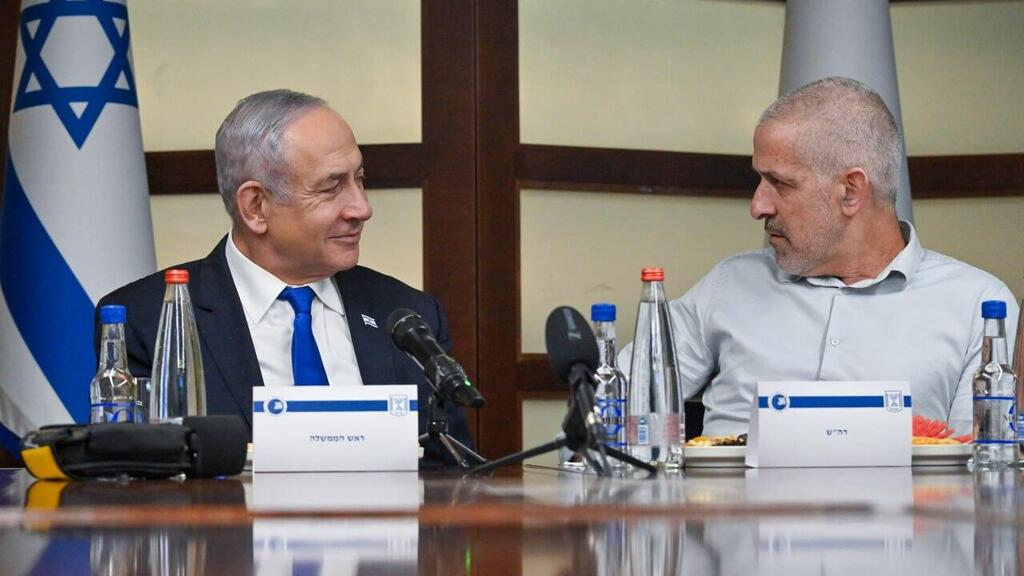
(Photo: GPO)
"It is no longer possible to allow the prime minister's stream of lies to continue seeping into public consciousness," Bar wrote.
He argues that attempts to conceal information, rewrite history and systematically spread conspiracy theories represent not only unacceptable leadership practices but also a danger to Israel.
As part of the proceedings, Bar intends to seek disclosure of intelligence assessments, meeting records and other documents relating to the warnings he says were delivered before the massacre.
His lawyers anticipate that Netanyahu could invoke immunity and say they are prepared to challenge such an argument. They acknowledge that the court would have to balance the public interest in examining the evidence against the need to protect national security.
"In an era of divisive leadership based on lies, only determined action will restore truth to the public discourse," Bar wrote.
He urged Netanyahu not to hide behind claims of immunity, adding: "In the absence of a state commission of inquiry, the truth will emerge in court. A little light will dispel much darkness."
The warnings Bar says Netanyahu received
The lawsuit includes a detailed chronology of meetings, written assessments and recommendations delivered to Netanyahu between November 2022 and October 2023. The following are the central developments, according to Bar's account.
November 7, 2022: At an initial working meeting before Netanyahu returned to office, Bar warned that Sinwar was directing attacks from Gaza into the West Bank without paying a price. He reiterated an earlier recommendation to target Sinwar and strengthen Israeli deterrence. The filing records no response from Netanyahu.
January 8, 2023: Bar warned that Sinwar was seeking a multi-front confrontation and that the absence of an Israeli response to attacks directed from Gaza was undermining deterrence. He recommended action in Gaza, including possible restrictions on workers entering Israel.
January 17: During a visit to the Shin Bet, Netanyahu called for managing the confrontation with Hamas in Gaza through measures that were not overly aggressive.
February 13: Bar sent Netanyahu an unusual personal letter warning of a "perfect storm." According to the lawsuit, he argued that Israel's internal divisions and instability in the Palestinian arena were creating an opportunity for its enemies. Netanyahu's response focused on the Shin Bet's responsibility to protect elected officials and their families.
March 7–22: Bar warned that Hamas was drawing encouragement from Israel's internal divisions and that intelligence warnings about attacks had increased threefold. He recommended targeting a senior Hamas figure in Gaza, but says the proposal received no substantive response.
April 3–19: A series of intelligence assessments warned of growing cooperation among hostile organizations and increasing attacks originating from the West Bank and Gaza. Bar advocated targeted offensive measures to reverse the deterioration in deterrence.
May 21: Following Operation Shield and Arrow, Bar presented intelligence suggesting Sinwar was undergoing what he described as a messianic transformation. He recommended expanding targeted killings across multiple arenas. According to the lawsuit, Netanyahu expressed concern that Israel's enemies could respond by attempting similar operations against him personally.
May 24: Bar warned that Hamas had interpreted Israel's reluctance to confront it as a sign of weakness. He called for a change in policy, but says his recommendation went unanswered.
July 6: In an annual strategic planning document, the Shin Bet outlined Hamas' military buildup and recommended renewed targeted operations. According to the filing, the document was delivered to Netanyahu through his military secretary and returned several days later with handwritten comments from the prime minister. Netanyahu wrote that the head of the Shin Bet was not responsible for setting Israel's national strategy.
July 9: Bar told a security cabinet meeting that Operation Guardian of the Walls in 2021 had marked a turning point toward multi-front confrontation. According to the lawsuit, the discussion took place against the backdrop of a proposal by some government officials to allow Hamas to control the West Bank. Bar says he demanded that it be made clear that Hamas was a fundamentalist movement committed to destroying Israel and killing Israelis.
July 23: Bar says he delivered a direct strategic warning of war, explaining that Israel's enemies viewed the country's internal divisions as an opportunity. He cautioned that intelligence could not necessarily predict the precise date or hour of an attack and recommended preventive action. According to the lawsuit, Netanyahu did not act on the warning.
August 2: An intelligence assessment warned of connections between Hamas and Iranian terror networks and the possibility of an escalation in Gaza. Bar recommended preparations for military confrontation and continued targeted operations.
August 20–22: Bar warned that Israel was entering a dangerous period ahead of the Jewish High Holidays. He argued that Hamas was no longer deterred and was intensifying its involvement in attacks, calling for offensive action and improved preparedness along the Gaza border.
September 3: Bar warned that Hamas was exploiting Israel's policy of maintaining calm to strengthen itself without consequences. He recommended targeting operatives directing attacks from Gaza.
September 12: At a cabinet discussion attended by Netanyahu, Bar warned that the security situation required a change in approach. According to the lawsuit, Netanyahu instead instructed officials to seek the quietest possible holiday period.
September 14–17: Bar reported an unusual message from an adversary that he interpreted as evidence of inadequate Israeli deterrence and an increasingly unavoidable confrontation. The updated account explicitly states that Bar immediately informed Netanyahu about the message. He recommended heightened alertness along the Gaza border.
September 21: A Shin Bet assessment recommended a preemptive strike to prevent further escalation. According to Bar, the proposed operation was postponed until after the holidays because of Netanyahu's instruction to maintain calm.
September 27: At a security discussion, Netanyahu said he did not want an escalation with Gaza and called for the judicious use of force.
October 1: Bar warned that the level of terrorist activity being directed from Gaza had reached a peak. He recommended a plan to target senior Hamas figures and those directing attacks, while warning that fighting could erupt before the holiday period ended. According to the lawsuit, Netanyahu authorized preparations for the proposed operations, but no follow-up meeting was convened and the measures were not implemented.