


Another warning issued before the October 7 attack has now come to light. About three weeks before the massacre, then-Shin Bet chief Ronen Bar warned the Knesset Foreign Affairs and Defense Committee’s Subcommittee on Intelligence and Secret Services of the near-term risk of war, including a possible multi-front conflict, ynet has learned.
Bar called Prime Minister Benjamin Netanyahu in July 2023 to warn of the risk of war. Bar later briefed opposition leader Yair Lapid on the same warning. Netanyahu’s office said at the time that it did not specifically refer to concern "of a war in Gaza.”
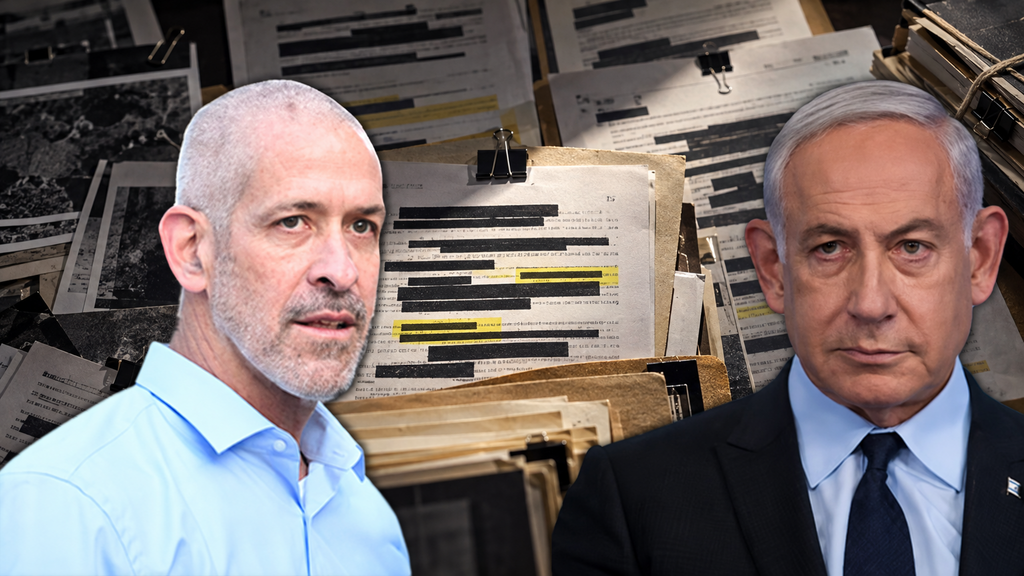
Ronen Bar, Benjamin Netanyahu
(Photo: Yair Sagi, Alex Kolomoisky)
That same summer, the IDF Intelligence Directorate sent Netanyahu several dramatic letters warning that Israel’s enemies saw a historic opportunity. According to available information, Netanyahu did not order changes in security preparedness in response to the warnings or convene structured discussions on their implications. Netanyahu’s supporters argued that the warnings were all issued against the backdrop of Knesset votes on the reasonableness standard and therefore were not taken seriously.
The IDF later confirmed that Netanyahu had received four separate warning letters between March 2023 and July 2023 about enemies across multiple arenas perceiving the domestic crisis as an opportunity.
But it now emerges that, two months later, about three weeks before October 7, Bar asked to appear before the Subcommittee on Intelligence and Secret Services. It is unusual for the head of the Shin Bet to request such an appearance, and the proceedings themselves are classified.
Several sources confirm that Bar told lawmakers he was warning of the near-term possibility of war breaking out — and of a multi-front war.
Although the evidence presented remains classified, the title of the presentation was “The Perfect Storm.” The lawmakers understood the central message to be that deterrence was eroding because of the division within Israeli society, in a way that was encouraging Israel’s adversaries and could ultimately lead to a broader conflict.
Security officials say Bar asked to address the subcommittee because he believed his warnings were not being taken seriously by the political leadership. His appearance, they say, illustrates that deep concern persisted within the security establishment long after the Knesset votes connected to the judicial overhaul, and that the warnings issued two months earlier that summer were not politically coordinated.
Renewed clash between Netanyahu and Ronen Bar
The revelation comes amid a fierce dispute that reignited this week between Netanyahu and Bar over what each knew before October 7 and what was done in response to the warnings.
Netanyahu accused the former Shin Bet chief of “failures and crimes,” arguing that on the night of the massacre Bar knew of a “real danger” but failed to inform him. Bar responded that the prime minister was presenting documents and protocols selectively and manipulatively, announced that he intended to sue Netanyahu for defamation and called for the materials to be released in full. ynet
The dispute also centers on excerpts from security discussions that Netanyahu released in February.
Among other things, his office highlighted remarks Bar made during an Oct. 1, 2023, situation assessment, six days before the massacre, including support for humanitarian measures and a statement that at that stage Israel could not embark on an “initiated round” of fighting.
According to other reports from the same meeting, however, Bar also said that Yahya Sinwar “feels strong,” that Israel needed to confront him and that an operational plan for Gaza was required.
The full transcript of the meeting has not been published, leaving the broader context disputed.
The phrase “The Perfect Storm” had already appeared in an affidavit Bar submitted to the High Court of Justice in April 2025.
Bar argued there that, throughout 2023, the Shin Bet warned the political leadership that Israel’s internal divisions were creating a sense among its enemies of a “window of opportunity” and could bring Israel to a “perfect storm.”
According to Bar, as early as April that year he recommended a forceful and focused move to halt the erosion of deterrence.