

July 2024 was a pivotal month in the war in Gaza. A deal agreed upon by all sides was on the table.
Netanyahu had given his consent; Sinwar, under pressure from Qatar in Doha and from the IDF on the ground, had given his consent; control of the Philadelphi Corridor, which Netanyahu had presented as an existential issue, had been resolved through a creative arrangement involving sensors and an Egyptian commitment; the IDF was desperate for a respite; the Israeli negotiating team had thrown its weight behind the effort; and the Hostages and Missing Families Forum had mobilized to help. By July 27, it had all fallen apart.
Not all the details of the deal were made public. On its margins were several personal elements of public interest. To make it easier for Netanyahu to agree to the deal, the Hostages and Missing Families Forum approached Karim Khan, the prosecutor of the International Criminal Court in The Hague. Khan's role was to seek the cancellation of the request to the court to issue arrest warrants against Netanyahu and then-Defense Minister Yoav Gallant.
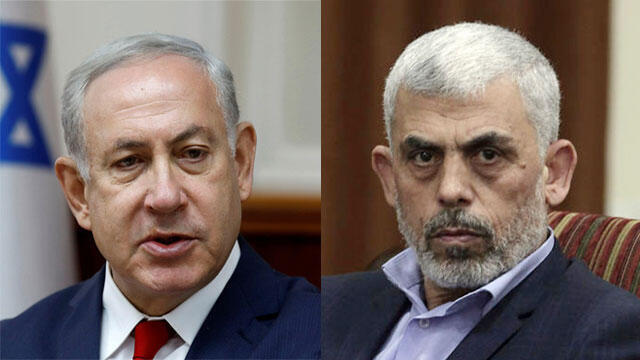
Such a possibility exists if a person suspected of war crimes is found to be working toward peace. Alongside the Israelis, a request has been made to the court to issue arrest warrants against Sinwar, Mohammed Deif and Ismail Haniyeh. For the sake of balance, the deal was supposed to cancel their warrants as well.
Why did Khan agree to remove the cloud hanging over Netanyahu and Gallant? An Israeli involved in the process points out that a different kind of cloud was hanging over Khan himself: A female employee of the court had accused him of sexual harassment. Khan assumed that an Israeli hand, perhaps the Mossad, was behind the complaint. If he freed Netanyahu and Gallant from their arrest warrants, the complaint would disappear in an instant.
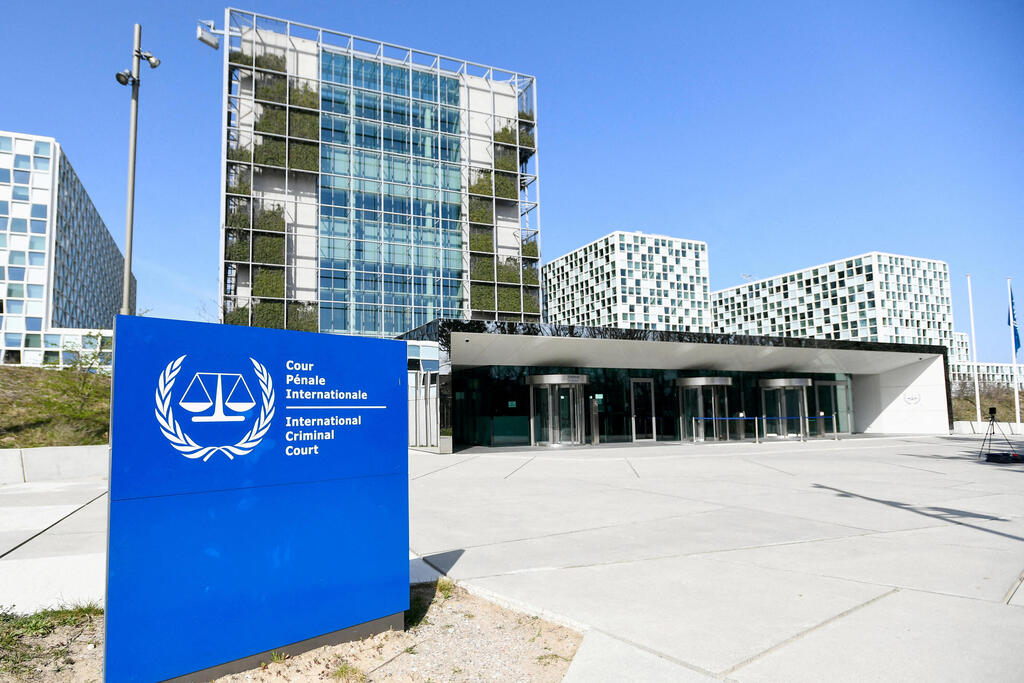
The International Criminal Court in the Hague
(Photo: Piroschka van de Wouw/Reuters)
Khan, who visited the communities near the Gaza border in early December 2023, agreed to hear more and more testimonies from survivors of the massacre. The Hostages and Missing Families Forum arranged to fly them to The Hague.
But the negotiations failed. They could not have succeeded because they contained an inherent flaw: Mossad head David Barnea, IDF hostage affairs chief Nitzan Alon and and Shin Bet head Ronen Bar, who led the Israeli negotiating team, saw every problem as an obstacle that needed to be overcome; Netanyahu saw every problem as a blessing, a gift that would spare him the need to reach an agreement.
In principle, Netanyahu and Hamas were playing the same game. He and they behaved like the groom in the old Jewish joke who demanded on his wedding night that the bride be stripped of all her clothes. Once she was undressed, he declared: "I don't like her nose."
The hostages paid the price, some with their lives, others with another year of terrible suffering in the tunnels.
Why does this matter now? Because it sheds light on the decision-making process of the outgoing government. At every stage of the negotiations, someone from Netanyahu's office made sure to secretly update Smotrich. He would burst into a meeting to which he had not been invited or call a news conference and threaten to bring down the government if an agreement was signed. Ben-Gvir would immediately follow with a similar threat.
Netanyahu would explain to the Americans that they had to understand: He did not have a majority in the Knesset to approve the agreement, and he could not allow his government to collapse.
As more details emerge from the three-year saga, it becomes increasingly clear that the recurring coalition crisis was a bluff, a performance staged for Israel's security chiefs and the Biden administration.
Smotrich would not have left the government in the middle of realizing his messianic vision in the West Bank. Ben-Gvir would not have left for the same reason a cat does not walk away from a bowl of cream, not while there is still something left to eat.
Netanyahu was not obeying them. He was using them.
If Smotrich and Ben-Gvir were not the reason the deal collapsed, what was? I can only speculate.
First, the timing. The proposed deal came too late for the hostages and their families, but too early for Netanyahu. He found it difficult to agree to a deal that would be interpreted as ending the war just nine months after the massacre. Israelis, including his own supporters, would have asked what had happened to total victory.
Second, the deal was too convenient for him. He would have struggled to explain how he had arranged a pardon for himself in The Hague alongside the murderers of October 7 and prosecutor Khan.
Third, the skies were clearing in America that July. Biden had been forced to abandon his bid for a second term, and Trump had agreed to reconcile with Netanyahu after two and a half years of estrangement.
Netanyahu was not about to put his name to a hostage deal that would strengthen Biden and Harris. By October 2025, with Trump in the White House, Netanyahu had no leverage left in America and no allies remaining. He was forced to say yes.
He can tell himself that waiting was worthwhile. In the intervening period, Sinwar, Deif and Haniyeh, his fellow subjects of arrest warrants in The Hague, were killed. Trump was elected president and agreed to strike Iran, and perhaps he will strike again in the future.
True, none of the war's objectives was achieved. True, Israel's standing in the world deteriorated dramatically. But why be petty?
"We will not surrender" is Likud's election slogan, accompanied by an AI-generated image of the leader looking to his right and slightly downward, toward Israelis stuck in traffic on the Ayalon Highway.
Netanyahu has traveled a long and bitter road from the promise of "total victory" in 2024 to the promise of "we will not surrender" in 2026. He promised a knockout and settled for a draw. And he dragged the country down with him every step of the way.