


Prime Minister Benjamin Netanyahu is expected to travel to the United States later this month to attend the annual AIPAC conference in Washington, against the backdrop of rising tensions with Iran and a growing U.S. military buildup in the region, ynet learned on Tuesday.
The conference is scheduled for Feb. 22–24, and officials in the Prime Minister’s Office confirmed that a trip is under consideration. A possible meeting with U.S. President Donald Trump is also being discussed, according to officials.
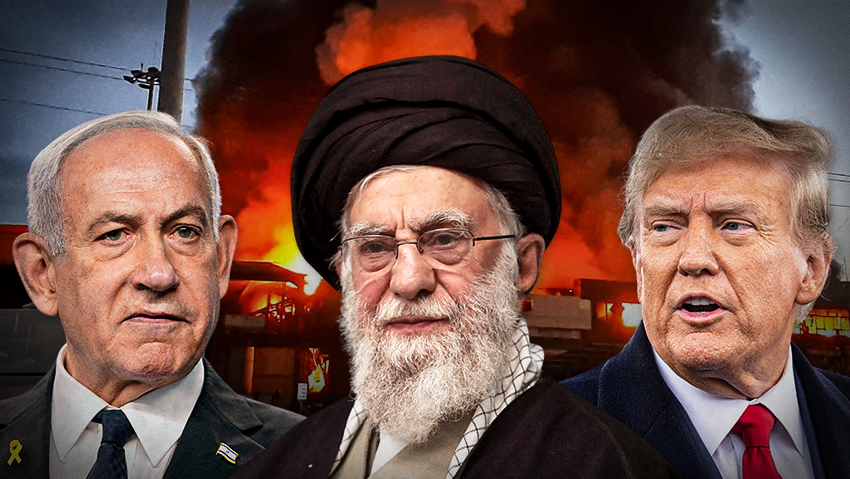
(Photo: Lev Radin/Shutterstock, AP, REUTERS/Nathan Howard)
Iran is expected to top the agenda if the visit goes ahead, particularly if the United States has not taken military action against Tehran by then. In recent days, the U.S. military has reinforced its presence in the Middle East, including the deployment of an F-15E fighter squadron. U.S. Central Command published images of the aircraft, saying their presence enhances combat readiness and promotes regional stability.
The buildup has also included the movement of two additional C-17A Globemaster III transport aircraft from Britain to a base in Jordan to support fighter operations. The United States has announced plans to deploy the aircraft carriers USS Abraham Lincoln and USS Gerald R. Ford to the region as well, though their arrival is expected to take more time.
Meanwhile, Tehran has ramped up its rhetoric. Lawmakers issued a statement warning that any attack on Supreme Leader Ayatollah Ali Khamenei would amount to a declaration of war on the Islamic world and could trigger a fatwa, or religious ruling, calling for jihad. The statement followed comments by President Masoud Pezeshkian, who said that striking the supreme leader would mean “all-out war,” after Trump renewed calls for regime change in Iran.
Inside Iran, large-scale clashes between security forces and protesters have subsided in recent days, but an extensive internet shutdown remains in place. The blackout — the longest in the history of the Islamic Republic — began on Jan. 8, when anti-regime demonstrations escalated into mass protests. During the unrest, the Revolutionary Guard carried out a violent crackdown. Iranian authorities have acknowledged that at least 5,000 people were killed.
The government has cut internet access to hinder protesters’ ability to organize and to prevent images and videos of the unrest from reaching the outside world. While brief and partial connections have been restored at times, access remains severely restricted. Even users who manage to connect report limited functionality, with services such as Google searches largely inaccessible.