


The allegation of aiding the enemy during wartime, leveled against Bezalel Zini — the brother of Shin Bet chief David Zini — marks a significant escalation in how Israeli authorities are treating the growing phenomenon of smuggling into the Gaza Strip.
Zini is suspected of smuggling large quantities of cigarettes into Gaza for profit, a trade that, according to defense officials, ultimately fuels Hamas’ war economy. The Israel Police claim that such goods, particularly cigarettes sold at exorbitant prices in the enclave, generate cash that is used by Hamas to pay the salaries of its fighters.

The grave charge of aiding the enemy — typically reserved for actions with direct implications on national security — reflects a broader shift in enforcement policy. After a series of smuggling cases involving active-duty and reserve soldiers, the security establishment is now seeking to clamp down on the illicit trade.
Earlier this month, military prosecutors indicted a Desert Reconnaissance Battalion officer and soldier for smuggling 4,496 packs of cigarettes into Gaza in exchange for 269,000 shekels (about $86,000) in cash. That case was handled discreetly, away from media attention, and the charges included fraud, breach of trust and exceeding authority in a way that endangered national security.
According to military officials, many of these smuggling operations take place in loosely controlled buffer zones along the so-called “yellow line” — areas under Israeli control but adjacent to Hamas-held sectors, where hundreds of trucks pass daily. Some carry construction materials for IDF outposts and roads, while others transport aid and goods destined for Hamas-administered areas.
Sources in the defense establishment believe the cases involving Zini and the soldiers represent only “the tip of the iceberg,” and say additional investigations are underway into similar incidents.
Top IDF commanders have reportedly urged law enforcement authorities to adopt a zero-tolerance approach, especially during what they describe as a murky interim period between wartime operations and an uncertain post-war arrangement.
'A clear act of treason'
“In the coming years, the Gaza Strip will be rebuilt from the ground up — entire cities constructed from scratch through massive infrastructure contracts, involving enormous resources and thousands of trucks entering daily. That will create even greater opportunities for corruption, theft and smuggling. That’s why this phenomenon must be stopped now — it is a clear act of treason in every sense,” said senior IDF officials, who expressed surprise at what they viewed as the Military Advocate General’s office's lenient response in the case of the Desert Reconnaissance Battalion troops.
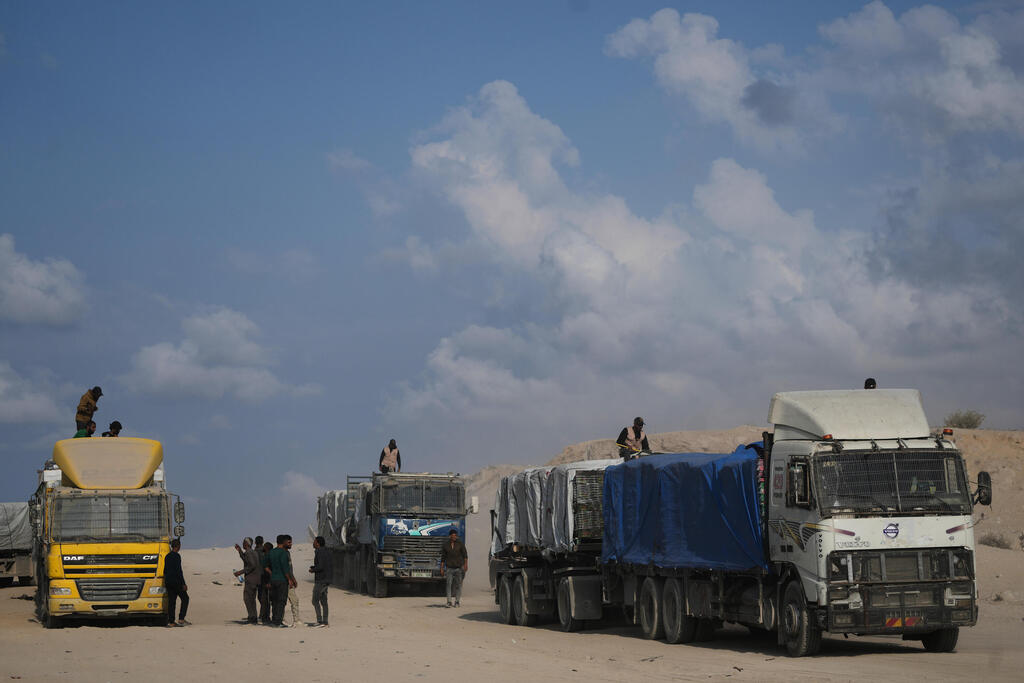
Humanitarian aid convoy entering Gaza
(Photo: AP Photo/Jehad Alshrafi)
“Cigarettes today are in higher demand in Gaza than drones or other dual-use items like batteries, which Hamas needs for reconstruction, because Israel has banned the import of tobacco into the territory. At the height of the war, cigarette packs were being sold for up to 1,000 shekels in Hamas-controlled areas, where the group taxes everything that enters.
"The high tax revenues — including from cigarette sales — flow directly into Hamas’ coffers, allowing it to pay the salaries of thousands of terrorists and tens of thousands of officials, strengthen its military capacity and prepare for the next round. Whether it’s cash or cigarettes being smuggled into Gaza, the result is the same: the enemy grows stronger in the midst of war.”
In the Desert Reconnaissance Battalion case, each pack of cigarettes fetched around 60 shekels — a price that could double or more inside Gaza, especially amid the grim postwar mood among its residents. The Wall Street Journal reported last week that Israel has provided cigarettes as expensive luxury items to certain Gazan clans in exchange for cooperation against Hamas.
In the current case, authorities suspect that other individuals may have smuggled drones and mobile phones into Gaza. However, the allegations against Zini at this stage focus solely on the transfer of cigarettes. That distinction may explain why, after delays in filing a formal prosecutorial declaration, officials ultimately opted to pursue the far more serious charge of aiding the enemy during wartime against Zini and several others.
According to the IDF, all personnel, including soldiers and civilian workers, who operated in the yellow line buffer zone in recent months and smuggled goods into Gaza were fully aware that their deliveries would ultimately end up in terrorist hands. This is also why all smuggling cases are being investigated by the Shin Bet as national security offenses, not by the police as criminal matters.

Shin Bet Director David Zini
(Photo: Olivier Fitoussi)
Police have assisted in the broader investigation, but in Zini’s case, they led the inquiry directly to avoid any conflict of interest due to his family ties. Officials emphasized that smuggling into Gaza is routinely treated as a national security matter, with the Shin Bet serving as the lead investigative agency in such cases.
Police filed a formal prosecutorial declaration against Zini on Tuesday, indicating that criminal charges are expected to be brought against him in the coming days. Zini, who was arrested last month, will remain in custody at least until Thursday.
In addition to Zini, similar declarations were filed against Amir Dov Halperin and Aviel Ben David, signaling expected indictments in their cases as well.
Zini’s father, Rabbi Yosef Zini, defended his son and rejected the allegations leveled against him. “This is all fabricated, without any real concern," he told ynet. "They’re not targeting him — they’re going after his brother. Thank God the public understands this clearly.” Another relative, Shmuel, added: “The truth will come out.”
Judge Yaniv Ben Haroush of the Ashkelon Magistrates’ Court sought to temper public speculation, saying: “It’s important the public knows no tanks or drones were smuggled — otherwise, people believe what they read on social media. I’ve allowed publication of the nature of the suspicions in order to dispel the cloud surrounding the case.”
Addressing the decision to lift the gag order on the suspects’ names, Judge Ben Haroush said the timing was appropriate given the stage of the proceedings. “Considering the positions of the parties, the filing of a prosecutorial declaration,and legal precedent that favors transparency as indictment nears, the time has come to publish the respondents’ names,” he ruled.
Responding to concerns raised about potential harm to the individuals, the judge noted that the objections were vague and not beyond what is typically expected when a suspect’s identity is made public. “These three are suspected of multiple serious offenses, all tied to the smuggling of cigarettes from Israel into Gaza,” he said.
The suspects are part of a broader investigation into the alleged smuggling of millions of shekels' worth of goods from Israel into the Hamas-controlled Gaza Strip. The operation reportedly involved 16 suspects, with legal proceedings underway against 13 of them in a court in Ashkelon. Some of the suspects have been in custody for more than 40 days.
A planned indictment against the 13 individuals was delayed on Monday due to the need for further investigative work. The case, initially set to be heard in the Be’er Sheva District Court, was transferred to the Ashkelon Magistrates’ Court pending completion of the investigation.