


The father of a hostage held in Gaza criticized the government Sunday over its decision to airdrop humanitarian aid into the coastal enclave and implement a daily pause in fighting, saying such gestures remove any incentive for Hamas to release its captives.
“Now, after receiving these gifts, why would Hamas want to return our hostages?” said Tzvika Mor, father of hostage Eitan Mor and head of the Hope Forum, in an interview with Ynet.
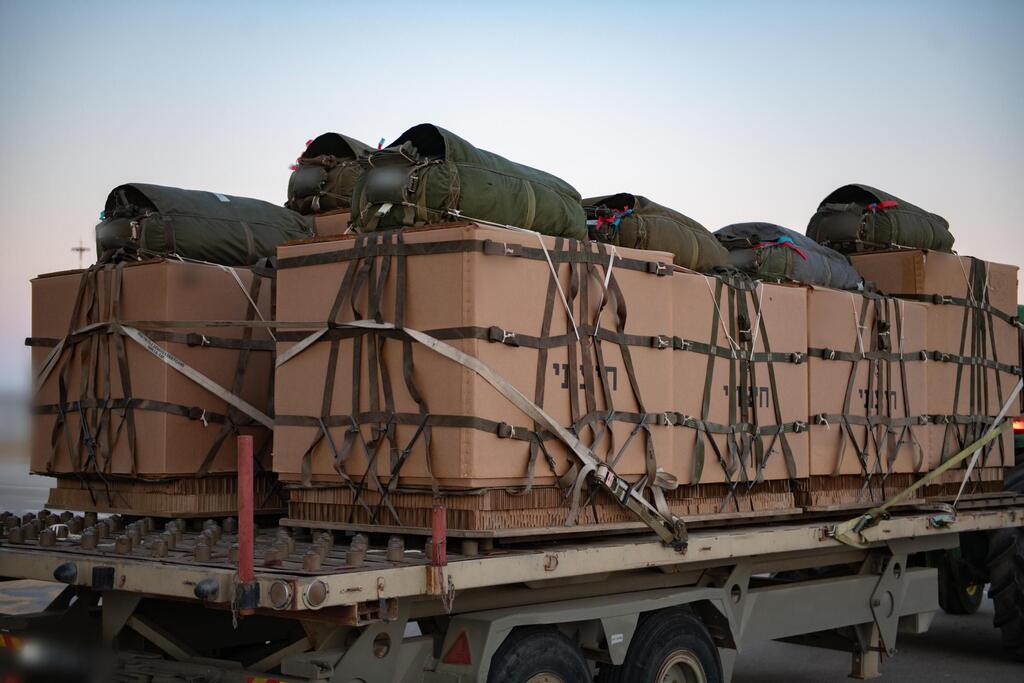
His comments came after the Israeli military announced it had dropped pallets of flour, sugar and canned goods into Gaza — the first such move since the war began on October 7 — and would begin daily humanitarian pauses of 10 hours, including in Gaza City.
The aid drops and new humanitarian corridors were coordinated under political directives, the military said. Power was also restored to a desalination plant in southern Gaza to facilitate water access, and access routes have been opened to allow the United Nations and other aid organizations to operate.
Get the Ynetnews app on your smartphone: Google Play: https://bit.ly/4eJ37pE | Apple App Store: https://bit.ly/3ZL7iNv
Mor, whose son has been held incommunicado for nearly two years, said he is “shocked by how much we’re trying to appease Hamas.” He questioned why Israel is providing aid “without anything in return,” and called on authorities to at least demand lists of captives and allow medical visits. “We’ve been hugging a picture for almost two years, not Eitan,” he said. “I don’t even know if he’s eating, drinking or — God forbid — being abused.”
He argued that only sustained pressure would force Hamas to release the hostages. “If we don’t keep up the pressure, this won’t end,” he said, adding that the war is essential. “They can’t remain our neighbors. If they return to power in Gaza, it will send a message to the West Bank and the region that we are weak.”
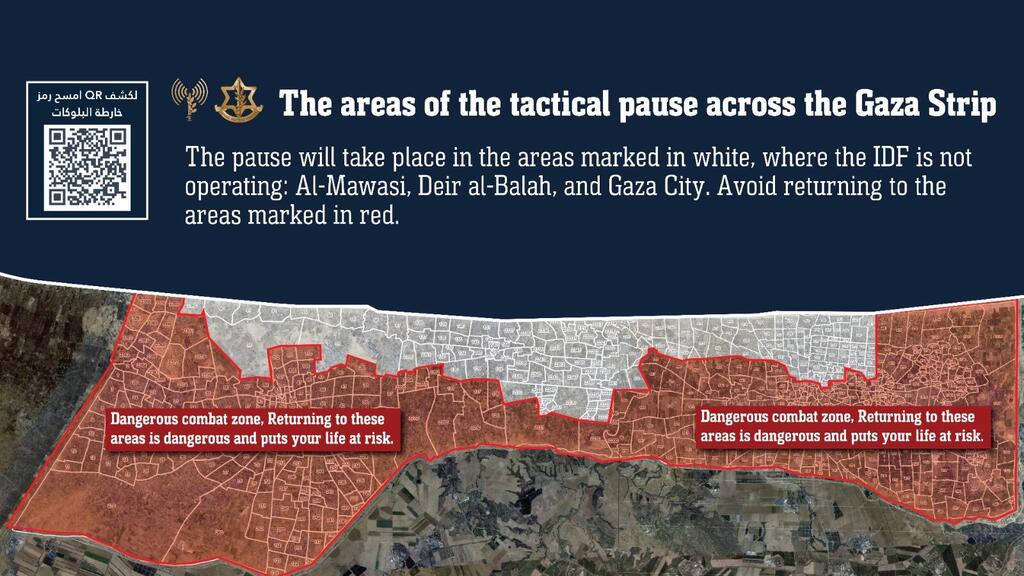
A map distributed by the IDF shows regions in Gaza designated for a daily tactical pause in military operations to allow the flow of humanitarian aid. The white-shaded areas, including Al-Mawasi, Deir al-Balah and Gaza City, are considered safe zones, while red-shaded areas remain active combat zones
(Illustration: IDF)
Addressing the cost of war, Mor said, “If we have to count the dead, how many more soldiers are we willing to sacrifice? This war is about eliminating the threat. And war, like love, cannot be done halfway. It must be finished.”
Sylvia Cunio, mother of David and Ariel Cunio, also held hostage in Gaza, issued an emotional plea. “I beg them to do everything, give Hamas whatever it wants — just bring them home,” she said. Cunio criticized what she described as inaction. “They keep talking, but nothing is happening. We’re already broken. I just hope David and Ariel are okay and strong enough.”
While acknowledging the need for humanitarian aid, she expressed concern that the hostages might be forgotten. “Palestinians need food too — it shouldn’t be like Africa. But I think about my sons who don’t have food, water or hygiene,” she said. “The worst fear is the lack of medicine. They have nothing.”
Cunio said her sons’ partners, Arbel and Sharon, who were released from captivity, remain deeply traumatized. “They’re broken. They know what the boys are going through.”