

Egypt has begun training hundreds of Palestinians to join a force of up to 10,000 to provide security for the Gaza Strip, as Arab countries rally around a vision of postwar Gaza without Hamas, Arab officials told The Wall Street Journal.
Potential recruits have already started training at Egyptian military academies, the officials said. Most of the Palestinians in the force are expected to come from the Palestinian Authority’s security services, with some from the PA’s Fatah faction—Hamas’ secular nationalist rival—possibly coming from Gaza as well.

Preparations in Egypt for a postwar Gaza come as the United States signals that the conflict may soon reach a conclusion. “We believe we can reach a settlement, one way or another, certainly before the end of the year,” U.S. special envoy Steve Witkoff said overnight.
The plan to deploy PA forces in Gaza is expected to face opposition in Israel. Prime Minister Benjamin Netanyahu and other coalition figures have said they will not allow the PA to govern the Strip. This issue lies at the heart of the disagreement between Israel and Arab countries willing to assist in a postwar Gaza, as the Arabs insist on a significant role for the PA.
The composition of the international force, which will include Palestinian security personnel, is still under discussion among Arab countries. The United Arab Emirates, for example, wants to see reforms in the PA before supporting its inclusion in Gaza’s postwar governance. In addition to Palestinians, most Arab forces would come from Egypt, with smaller contingents from Jordan and Gulf states, Arab officials told The Wall Street Journal.
The effort to prepare Palestinians to replace Hamas comes as many Arab countries have publicly opposed the group’s continued control of Gaza. Last month, the 22-member Arab League called for Hamas to disarm and end its rule in the Strip for the first time.
“Hamas should not be part of the day after,” said Mahmoud al-Habbash, a senior adviser to PA President Mahmoud Abbas, who confirmed the plan to train up to 10,000 security personnel. “Without the PA, it’s either Hamas or chaos,” he said. Al-Habbash added that the international community is expected to fund the initiative, with an initial force of 5,000 sent to Egypt for six months of training starting on the first day of a ceasefire. The Wall Street Journal noted that Hamas has not commented on the plan or related reports.
Last week, Egypt and Qatar presented Hamas with a proposal to create an international force largely made up of Arab security personnel, including the PA forces Egypt has begun training, officials told The Wall Street Journal. Hamas rejected the plan, which required the group to relinquish all military and political control of Gaza.
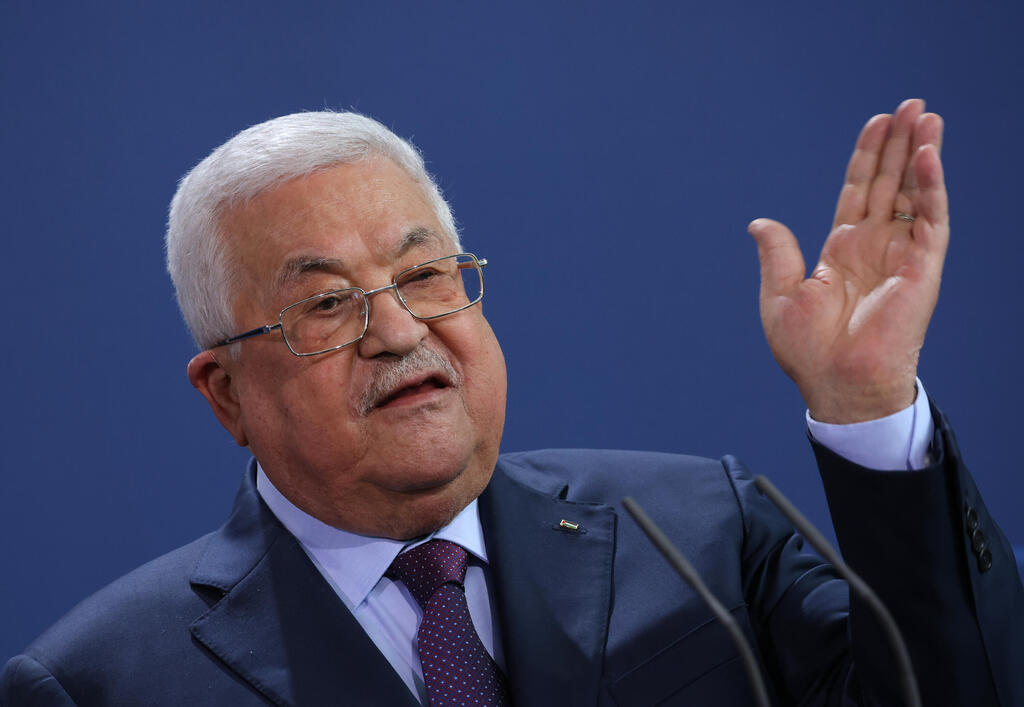
PA President Mahmoud Abbas
(Photo: Sean Gallup / Getty Images)
Instead, Hamas indicated it would accept a previous U.S.-Israeli proposal calling for a 60-day ceasefire, the release of 10 hostages, and hundreds of Palestinian prisoners—an offer Israel has yet to respond to.
Israel, as noted, opposes PA control of Gaza, citing the authority’s “support for terror.” Despite this, Israel cooperates with the PA in the West Bank. The Wall Street Journal reported that the failure to establish a new Palestinian leadership in Gaza has meant that during the war, whenever Israeli forces withdrew, Hamas quickly reasserted control.
Palestinians themselves have limited trust in the authority. A May poll by Palestinian pollster Khalil Shikaki found that 81% of Palestinians want Abbas to resign. The PA has long been plagued by corruption allegations and is widely seen as collaborating with Israel in the West Bank. Khaled Elgindy, a former adviser to Palestinian negotiators, told The Wall Street Journal that training the forces is “an attempt by Arab states to rehabilitate the Palestinian Authority, which is suffering a crisis of legitimacy.”
Hussein Ibish, a senior scholar at the Arab Gulf States Institute in Washington, said that even if Israel accepts PA security forces in Gaza, the postwar plan will need to integrate former Hamas police or risk a split in who provides security for the Strip. He added that the plan also requires U.S. support, as Washington is likely the only actor able to pressure Israel to agree. “If Americans are not going to force the Israelis, what’s the point?” he said.
First published: 10:05, 08.27.25