

It was a different kind of visit: Egyptian Foreign Minister Badr Abdelatty took Palestinian Prime Minister Mohammad Mustafa yesterday morning to the Rafah border crossing—the first time Mustafa, who has been in office for just over a year, has been this close to Gaza. Mustafa came to declare that the Palestinian Authority in Ramallah is responsible for Gaza’s affairs. His Egyptian host was not entirely on board.
For Israeli observers, one striking detail was that neither the Palestinian prime minister nor the Egyptian foreign minister mentioned Hamas or Islamic Jihad even once. Instead, they aired their criticisms of Israel and outlined plans concerning only the two million residents of the Strip. Abdelatty, who began his career as a diplomatic adviser at Egypt’s embassy in Tel Aviv, knows Israel well.
Gallery
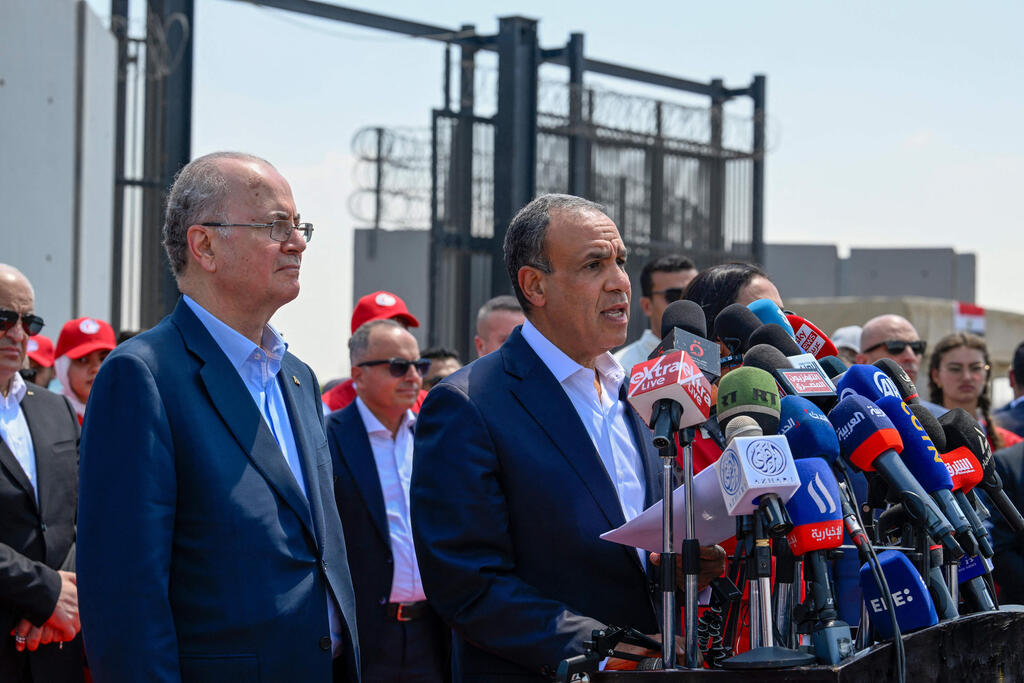
Badr Abdelatty and Mohammad Mustafa making a statement to the press at the Rafah crossing
(Photo: Khaled DESOUKI / AFP)
Beyond sharp criticism of Israel, Egypt is quietly campaigning against efforts to relocate Gaza residents. Several African countries—Algeria, Libya, Sudan, and especially Somaliland—have already been flagged as potential U.S. and Israeli destinations for a Gaza transfer. Aside from Algeria, these are hardly desirable destinations: fractured, low-income countries where life is unlikely to be much better than in Gaza.
At the Rafah crossing, Abdelatty sent a message to Gazans: “We are with you in the terrible suffering on the land that belongs only to you.”
Yet, according to a senior Egyptian official, Donald Trump and Netanyahu continue to believe that hundreds of thousands of Palestinians will emigrate “of their own free will” to Africa, with those who refuse remaining in Gaza. Transporting them by bus through Egypt would be far cheaper, but if Egypt refuses to cooperate, a costly airlift would be the only option. As Abdelatty’s speech yesterday suggested, President Abdel Fattah el-Sisi is not ready to strike a deal.
El-Sisi’s grand vision centers on bringing mobile homes to Gaza as part of its reconstruction. His plan involves sending Egyptian workers, engineers, architects, and other staff to the Strip, creating jobs for Egyptians while rebuilding homes for Gazans. But el-Sisi suspects that Israel has a back-up plan designed to erase Egypt’s presence: “You didn’t annex the Strip, so you won’t be part of the celebration.”
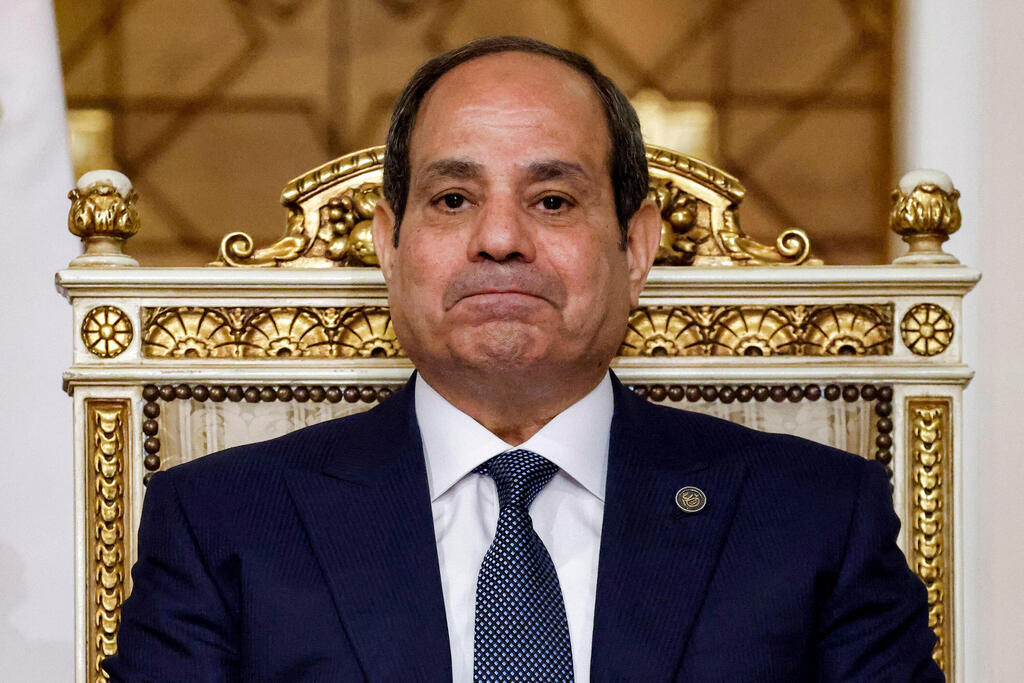
Egyptian President Abdel Fattah el-Sisi
(Photo: REUTERS/Benoit Tessier/Pool)
Over the weekend, Gaza refugees revealed the harsh realities of life in Egypt. With no work rights, they can only seek street jobs or informal labor for meager pay. Hundreds of babies born in Cairo will not receive Egyptian citizenship, and children cannot be enrolled in public schools, kindergartens, or even private institutions for those who can afford it.
Most painful of all, the “new arrivals,” denied state healthcare, must pay out of pocket for medical services. As one veteran businessman put it, Egypt operates on the principle that even if you managed to leave the Strip (and paid dearly to do so), no one intends to make your stay in Egypt easy or pleasant.
 Smadar Perry
El-Sisi’s larger plan is on hold for now. Jobs for Egyptians in Gaza are not guaranteed, and worrying reports from Jerusalem suggest that the far-right is considering declaring a “Greater Israel” that would incorporate the Strip. Prime Minister Netanyahu neither confirms nor denies this.
Abdelatty spoke of starving children, disease, and blocked humanitarian aid, sending a clear message to Gazans: “We are with you in the terrible suffering on the land that belongs only to you.” With trucks lined up along the border, Israel will find it difficult to dismiss the criticism coming from its southern neighbor as anything but grounded.