

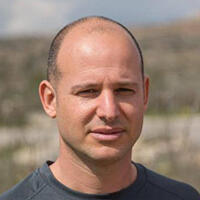
IDF Chief of Staff Lt. Gen. Eyal Zamir said Wednesday that the army has additional targets in Iran ready to strike and is on high alert for a return to intense fighting, even as the United States discusses a possible agreement with Tehran.
Zamir made the remarks during a visit to the village of Khiam in southern Lebanon, where he also addressed the ongoing fighting against Hezbollah.
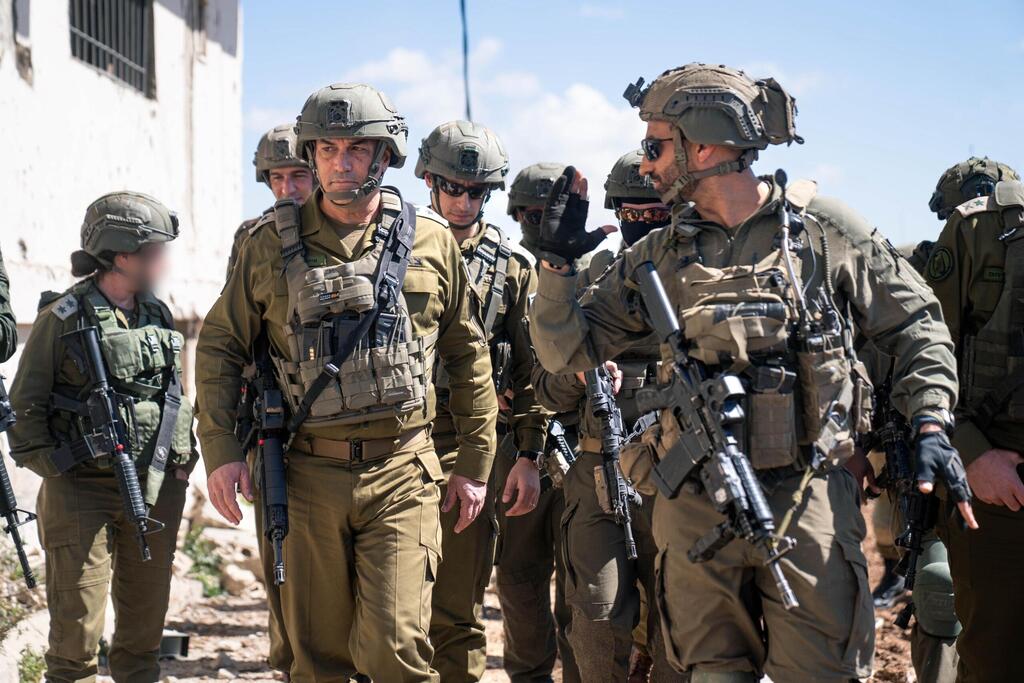
“In Iran, we still have a series of targets ready for attack,” Zamir said. “We are on high alert to return to a powerful and broad campaign that will allow us to deepen our achievements and further weaken the Iranian regime.”
Zamir said Israel has “a historic opportunity to change the regional reality” in the multi-front campaign. He said cooperation and coordination with the U.S. military are continuing and that Israel is monitoring developments.
During the visit, Zamir held an operational assessment with senior commanders, including Maj. Gen. Rafi Milo, head of the Northern Command; Maj. Gen. Rami Abudraham, head of the Technological and Logistics Directorate; Brig. Gen. Yuval Gez, commander of the 91st Division; and brigade and battalion commanders from the standing army and reserves.
Zamir received briefings from the division commander and brigade commanders, spoke with battalion commanders fighting in the sector and toured a Hezbollah underground facility that Israel said was discovered beneath a children’s clothing store.
Addressing the fighting against Hezbollah, Zamir said forces under Northern Command “continue to operate to carry out the mission of defending the communities, removing all types of threats and deepening the damage to Hezbollah.”
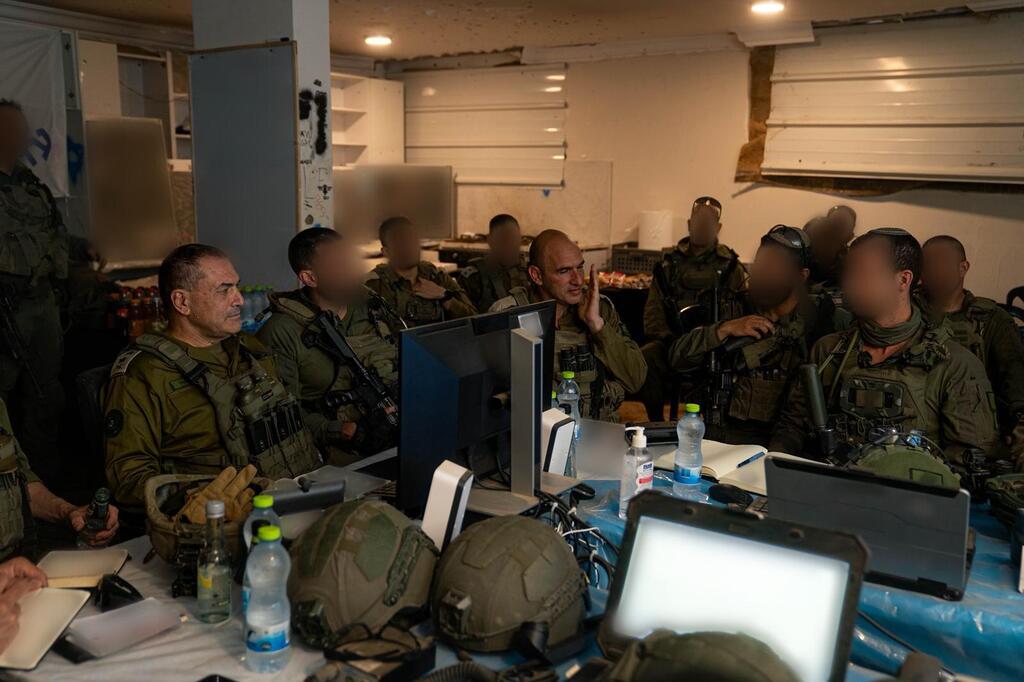
Zamir (left) in Khiam, southern Lebanon
(Photo: IDF)
“Your mission is to remove every threat from our communities and from our forces,” he said. “All of the IDF’s capabilities are at your disposal. You have no restriction on the use of force for this purpose. Continue the mission of locating the enemy in the area and destroying it.”
Zamir said that since the start of Operation Roaring Lion in late February, more than 2,000 Hezbollah terrorists have been eliminated. “We will use every opportunity to deepen the damage to Hezbollah and its continued weakening,” he said.
Zamir said he toured a Hezbollah tunnel about 25 meters, or 82 feet, beneath what he described as an innocent-looking children’s clothing store.
“This is further proof that Hezbollah uses civilian space to carry out terrorist activity under the cover of the population,” he said. “You are operating systematically to locate and destroy these infrastructures.”
He praised commanders and reservists, saying they were serving on “the front line of defense” and that the military was “the protective wall for the communities of the north.”
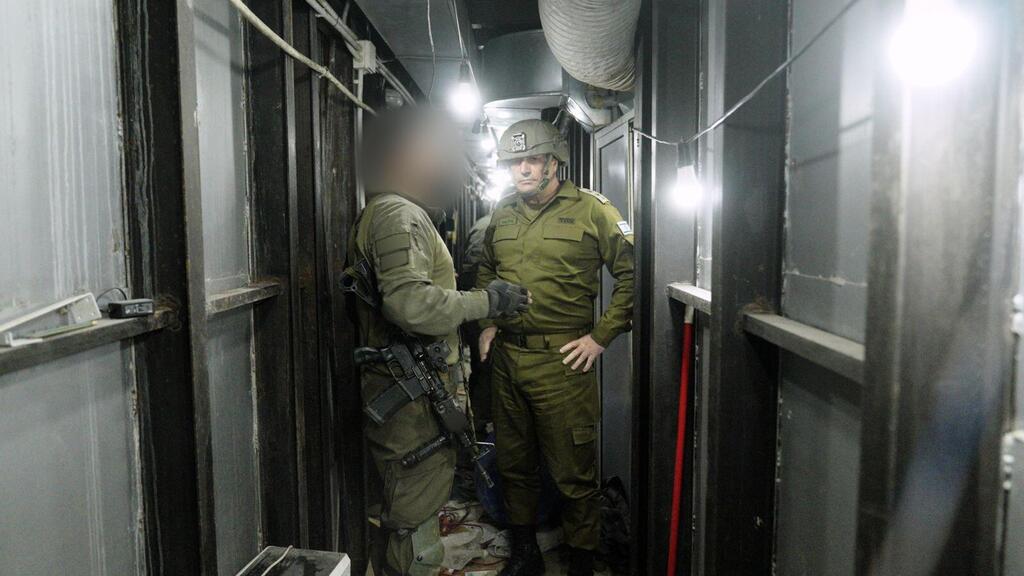
Zamir tours a Hezbollah tunnel beneath a children’s clothing store in Khiam, southern Lebanon
(Photo: IDF)
“We will not pull back until security is ensured and a long-term solution is reached for the communities of the north,” Zamir said.
Despite Zamir’s statement that there were no limits on the military’s use of force, the IDF is barred from striking Beirut, where Hezbollah’s leadership is directing its campaign against Israel despite the ceasefire.
Lebanese Prime Minister Nawaf Salam also addressed the fighting between Israel and Hezbollah, saying Lebanon would “reconsider and develop” its plan for centralizing weapons under state control, based on developments in recent months.
Salam said the question of a meeting with Prime Minister Benjamin Netanyahu was premature. “Any high-level meeting requires extensive preparation, and the timing is critical and linked to progress in negotiations,” he said. “What is needed is negotiations with Israel and internal negotiations to expand the authority of the state. We are not moving toward normalization, but toward peace.”
Salam said it was not the first time Lebanon had held direct negotiations with Israel. “Establishing a ceasefire will be the basis for any new round of negotiations with Israel in Washington,” he said, adding that communication with Hezbollah is taking place through its ministers in the government.
Despite U.S. talk of an agreement with Iran, President Donald Trump renewed his threats against Tehran. “Assuming Iran agrees to give what has been agreed to, which is, perhaps, a big assumption, the already legendary Epic Fury will be at an end, and the highly effective Blockade will allow the Hormuz Strait to be OPEN TO ALL, including Iran,” Trump wrote on Truth Social. “If they don’t agree, the bombing starts, and it will be, sadly, at a much higher level and intensity than it was before.”
Trump’s statement came amid reports of significant progress in U.S.-Iran contacts toward an initial memorandum of understanding to end the war, which would allow broader negotiations on a final agreement.
Iranian officials, however, have mocked Trump and portrayed him as having backed down in the face of Iranian threats after he paused the operation to break the Iranian blockade in the Strait of Hormuz and did not renew the war following Iranian attacks on ships in the Persian Gulf and on the United Arab Emirates and Oman. Trump has avoided describing those attacks as violations of the ceasefire.