

A tanker carrying Iranian liquefied petroleum gas caught fire in the Gulf of Aden near Yemen on Saturday, raising questions about the cause of the explosion and the ship’s ties to Iran’s sanctioned oil trade. While Houthi rebels denied responsibility and the European Union suggested it may have been an accident, new information links the vessel to Tehran’s clandestine maritime network.
The ship, named MV FALCON, was transporting liquefied petroleum gas (LPG), commonly used as cooking gas, when a fire broke out on board. The exact circumstances of the incident remain unclear.
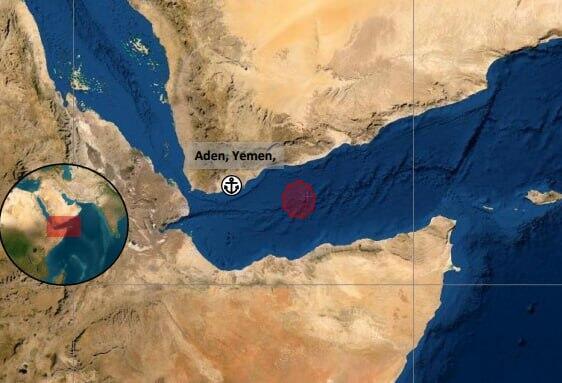
(Photo: UKMTO)
Iran International, an opposition media outlet based outside Iran, reported that the vessel was struck by a missile of unknown origin. Israeli officials denied involvement in the incident, while Iranian state media rejected claims that the tanker had any connection to Iran.
Tracking data shows the tanker was registered under the flag of Cameroon and owned by an Indian company. It was loaded with LPG at Iran’s Asaluyeh port on September 25 and was reportedly en route to the port of Ras Isa in Yemen. The destination suggests the cargo was intended for the Houthis, the Iranian-backed rebel group that controls much of northern Yemen.
There were 24 crew members on board the MV FALCON, including 23 Indian nationals and one Ukrainian. One crew member is missing, while the others evacuated the vessel after the fire broke out. A Greek ship was nearby at the time of the incident, and a French aircraft was dispatched to assist in the response.
The U.S.-based advocacy group United Against Nuclear Iran (UANI) had previously identified the MV FALCON as part of Iran’s “ghost fleet” — a network of tankers that transport oil and petroleum products in violation of international sanctions.
The European Union's maritime security center said it believed the fire was likely the result of an accident. The United Kingdom Maritime Trade Operations (UKMTO), which monitors commercial shipping in the region, published the vessel’s coordinates and noted a reported explosion on board.