

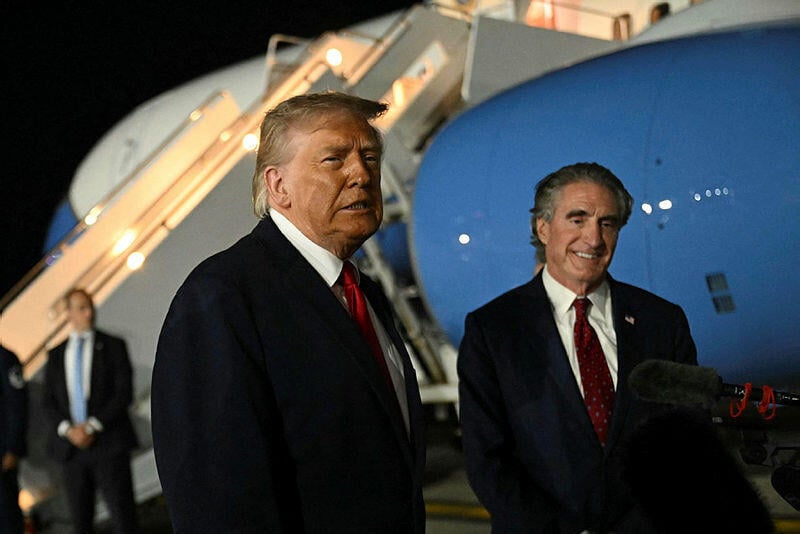
U.S. President Donald Trump said Tuesday that Iran shot down a U.S. Apache helicopter while it was patrolling over the Strait of Hormuz, adding that Washington would have to respond.
“I have just been informed by our Great Military that last night the Iranians shot down one of our highly sophisticated Apache Helicopters while patrolling over the Strait of Hormuz,” Trump wrote on Truth Social. “There were two pilots involved, both are safe and uninjured. Nevertheless, the United States must, of necessity, respond to this attack.”
The helicopter crashed near the strait Monday. CNN, citing two U.S. officials, reported that the aircraft was downed by an Iranian Shahed drone that struck it. Axios cited a U.S. official as saying it was unclear whether the strike was intentional.
U.S. Central Command said an unmanned surface vessel operating in the area located the crew and rescued them from the water. The rescue was led by U.S. Naval Forces Central Command and the 82nd Airborne Division, with support from U.S. Air Force and Navy units, including Task Force 59 of the U.S. Fifth Fleet.
CENTCOM said the two crew members from the U.S. Army AH-64 Apache were rescued after the helicopter crashed off the coast of Oman while patrolling regional waters at 7:33 p.m. Eastern Time on June 8. The soldiers were recovered safely within about two hours and were in stable condition.
Speaking to reporters on the runway at New York’s John F. Kennedy International Airport before returning to Washington, Trump said the crew members were unharmed.
“The pilots are fine,” he said. “Nobody injured.”
Before announcing the downing of the helicopter, Trump said the United States and Iran were in “the final stages” of what he described as “a very good deal” that would not allow Iran to obtain a nuclear weapon “in any way, shape or form.”
Iranian Parliament Speaker Mohammad Bagher Ghalibaf, considered a senior figure in Tehran’s negotiating team, issued a warning on X: “We prefer the language of diplomacy, but we speak other languages far more fluently. Break your commitments, and we’ll switch to what we speak best. You ride the horse you saddled!”
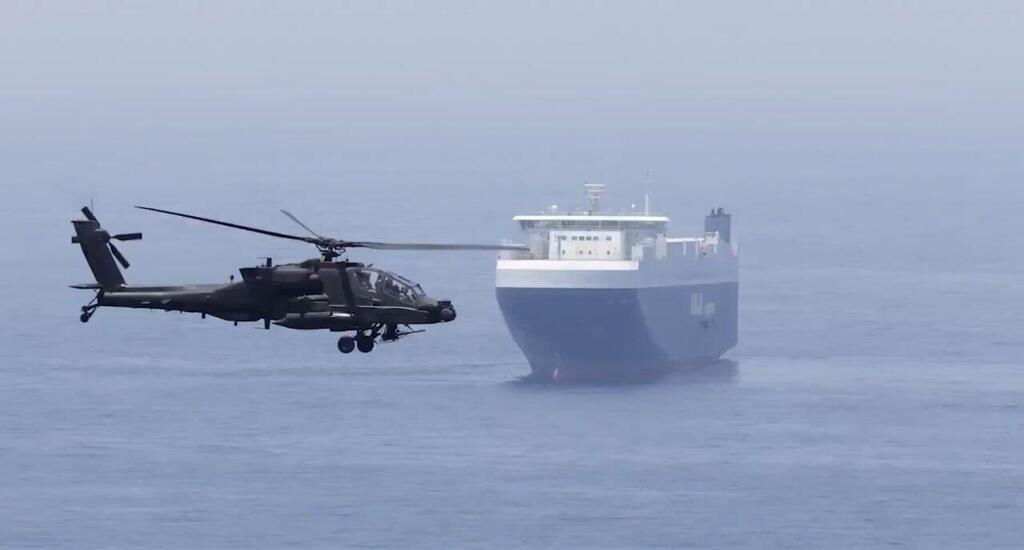
(Photo: US CENTCOM)
The U.S. military has been using Apache helicopters to enforce the blockade imposed on the Strait of Hormuz and ensure the closure of the strategic trade route. CENTCOM has also used MQ-9 Reaper drones and F-35 fighter jets as part of its operations in the area.
Iran has claimed during the fighting that it downed about 30 drones, while fighter jets were also downed over the Gulf during Operation Epic Fury, known in Israel as Operation Rising Lion. The Apache is the first such helicopter reported to have crashed.
Last month, U.S. Central Command published images on its official social media accounts showing CENTCOM commander Adm. Brad Cooper flying over the Strait of Hormuz in an Apache during a short operation Trump called “Project Freedom.”
Reports also said several U.S. aircraft were damaged in Iranian attacks on an American air base in Saudi Arabia during the fighting, while others were damaged after Iran attacked them while they were airborne.