

Iran’s Supreme Leader Ayatollah Ali Khamenei turned in early January to longtime ally Ali Larijani to steer the country amid nationwide protests and the threat of U.S. military strikes, The New York Times reported Sunday, citing interviews with senior Iranian officials and members of the Revolutionary Guards.
According to the report, Larijani, 67, a former Revolutionary Guards commander and veteran politician who now heads the Supreme National Security Council, has effectively been running the country in recent months. His rise has sidelined President Masoud Pezeshkian, a heart surgeon turned politician who has publicly downplayed his political role, saying, “I’m a doctor, not a politician,” and cautioning that he cannot solve all of Iran’s problems.
Gallery
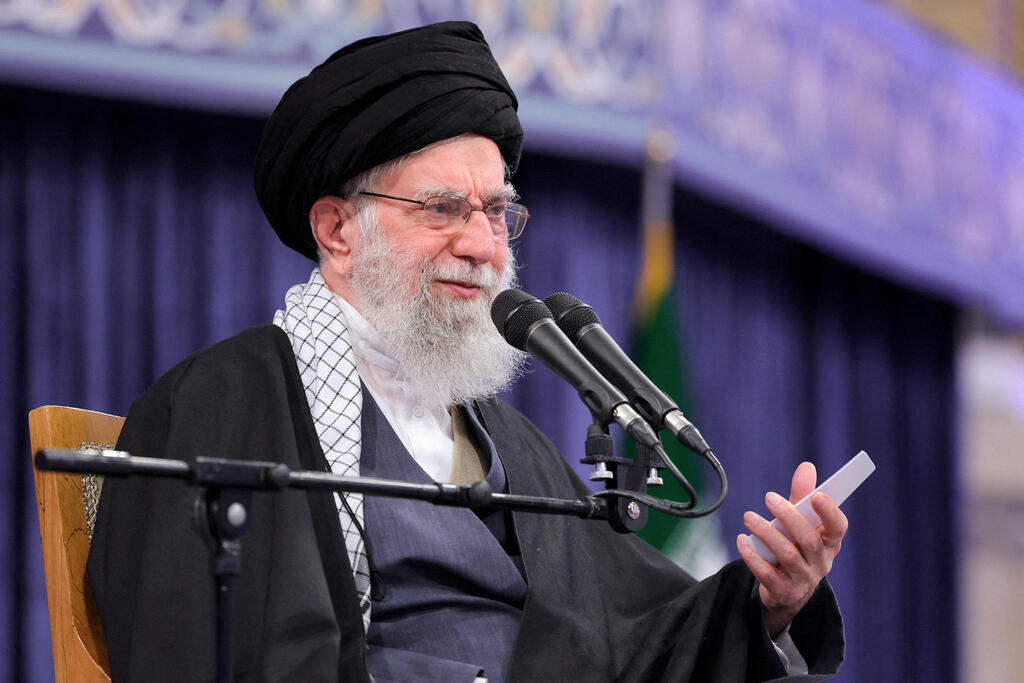
(Photo: Office of the Iranian Supreme Leader/WANA (West Asia News Agency)/Handout via REUTERS)
The Times report is based on interviews with six senior Iranian officials, including one affiliated with Khamenei’s office; three members of the Revolutionary Guards; and two former Iranian diplomats, as well as Iranian media accounts. The officials and Guards members spoke on condition of anonymity to discuss internal deliberations.
According to those sources, Khamenei instructed Larijani and a small circle of political and military confidants to ensure that the Islamic Republic could survive not only potential U.S. and Israeli airstrikes, but also the possible assassination of its top leadership, including Khamenei himself.
Nasser Imani, a conservative analyst close to the government, told the newspaper that Khamenei has a long and close relationship with Larijani.
“The supreme leader fully trusts Larijani,” Imani said in a telephone interview from Tehran. “He believes Larijani is the man for this sensitive juncture because of his political track record, sharp mind and knowledge. He relies on him for reports on the situation and pragmatic advice. Larijani’s role will be very pronounced during war.”
The report said Iran’s leadership is operating on the assumption that U.S. military strikes are inevitable, even as diplomatic contacts over a possible nuclear deal continue. Iran has placed its armed forces on the highest state of alert and is preparing to resist any attack, according to the officials and Guards members cited.
Iran has positioned ballistic missile launchers along its western border with Iraq, within range of Israel, and along its southern coast on the Persian Gulf, within range of U.S. bases and other regional targets, the report said. In recent weeks, Iran has periodically closed its airspace to test missiles and conducted military exercises in the Persian Gulf, briefly shutting the Strait of Hormuz, a critical global energy corridor.
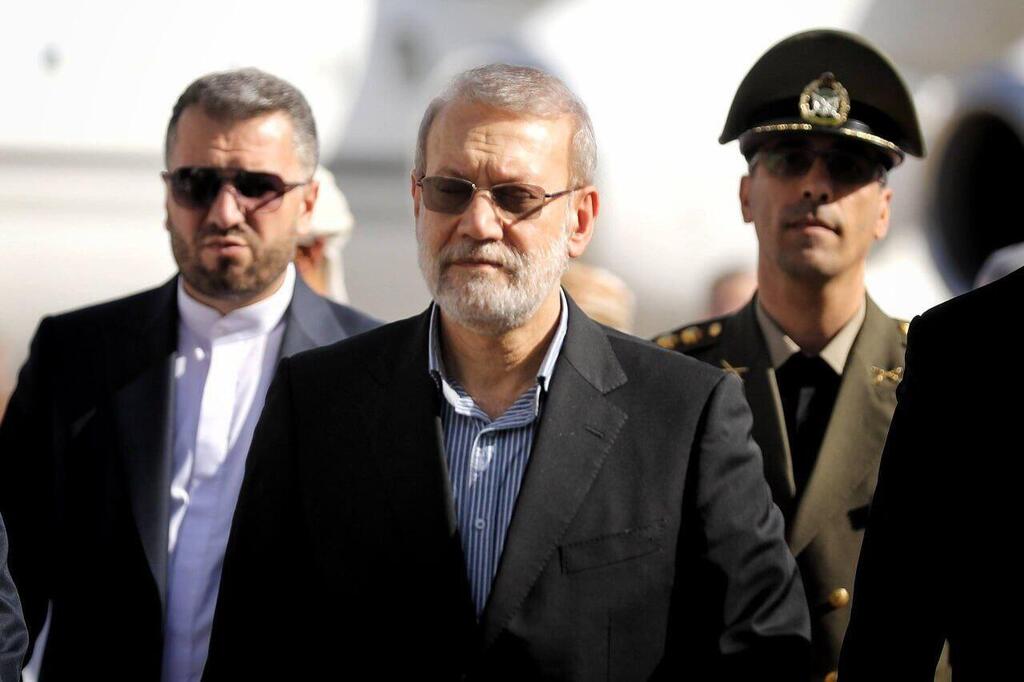
Ali Larijani
Khamenei has also issued a series of internal directives aimed at ensuring continuity of governance. According to the report, he has designated four layers of succession for military and government posts he personally appoints, instructed senior officials to name up to four replacements and delegated authority to a tight circle of aides in case communications are disrupted or he is killed.
While in hiding during the 12-day war with Israel last summer, Khamenei named three potential successors, though their identities were not made public. Larijani is almost certainly not among them because he is not a senior Shiite cleric, a requirement for the role of supreme leader, the report said.
Still, Larijani is part of Khamenei’s inner circle, which includes Maj. Gen. Yahya Rahim Safavi, the supreme leader’s top military adviser and former commander of the Revolutionary Guards; Parliament Speaker Mohammad Bagher Ghalibaf, designated to lead Iran’s armed forces in wartime; and Ali Asghar Hejazi, Khamenei’s chief of staff.
Some of the planning reflects lessons drawn from Israel’s surprise strike in June that killed senior members of Iran’s military command in the opening hours of the conflict, according to the report. After the ceasefire, Khamenei appointed Larijani to his current post and established a new National Defense Council to oversee wartime military affairs.
“Khamenei is dealing with the reality in front of him,” Vali Nasr, an Iran expert at Johns Hopkins University, told the newspaper. “He is expecting to be a martyr and thinking this is my system and legacy, and I will stand until the end. He is distributing power and preparing the state for the next big thing, both succession and war, aware that succession may come as a consequence of war.”
In the event of war with the United States and Israel, special police units, intelligence agents and Basij militia forces would be deployed in major cities to prevent domestic unrest and identify suspected foreign operatives, according to the officials cited.
The report also said Iranian leaders are weighing contingency plans for political survival if senior figures are killed, including who would manage the country in such a scenario. Larijani is said to top that list, followed by Ghalibaf and former President Hassan Rouhani.
Larijani’s public profile has risen sharply in recent weeks. He has traveled to Moscow for talks with President Vladimir Putin, met regional leaders and overseen nuclear negotiations with Washington. He has also appeared frequently in Iranian media and on social platforms, often more prominently than the president.
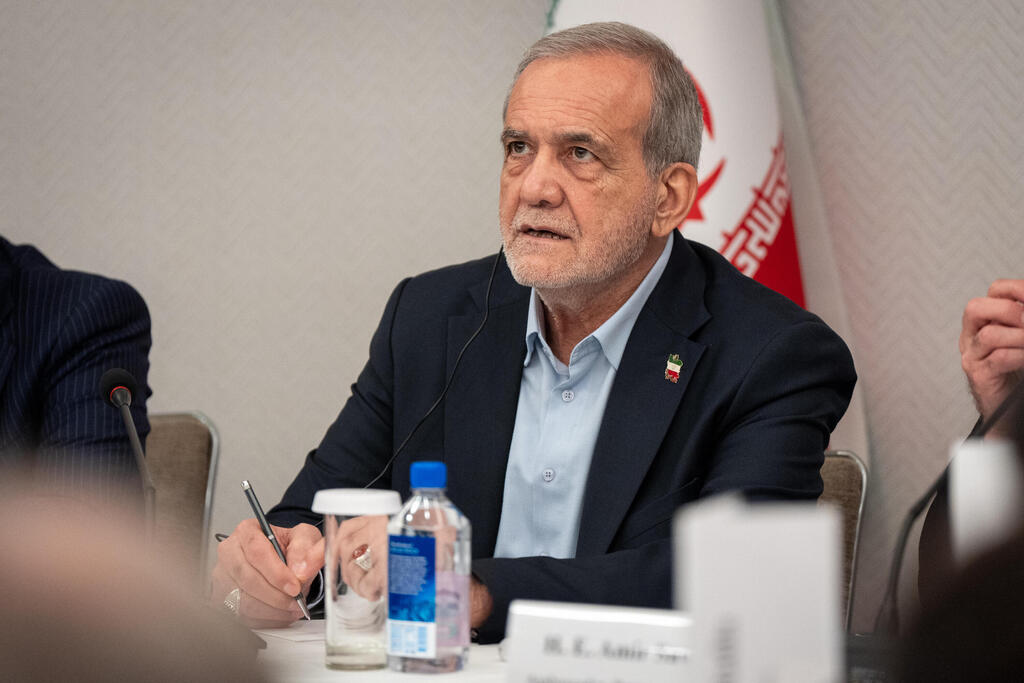
(Photo: AP Photo/Angelina Katsanis)
Meanwhile, Pezeshkian has appeared to defer to Larijani. According to Iranian media cited by the Times, the president told a cabinet meeting that he had to appeal to Larijani to lift internet restrictions that were harming e-commerce.
The report also described contacts between Washington and Tehran during the unrest. In January, U.S. Middle East envoy Steve Witkoff sought to reach Iran’s foreign minister, Abbas Araghchi, after President Donald Trump warned that the United States would strike Iran if it executed protesters. Araghchi reportedly sought authorization from Pezeshkian to engage, but the president directed him to obtain approval from Larijani instead, underscoring Larijani’s central role.
Iran’s leadership has publicly denied seeking war but has vowed to respond forcefully to any attack. “We are not looking for war, and we won’t start the war,” Larijani said in an interview with Al Jazeera during a visit to Doha. “But if they force it on us, we will respond.”