


After a postponement Thursday, the Security Cabinet is set to convene Sunday to discuss preparations for a possible U.S. strike on Iran, addressing both defensive readiness and potential offensive coordination.
Israeli officials are operating under the assumption that Israel would assist the United States in the event of an attack, with responsibilities divided between the two countries.
Gallery
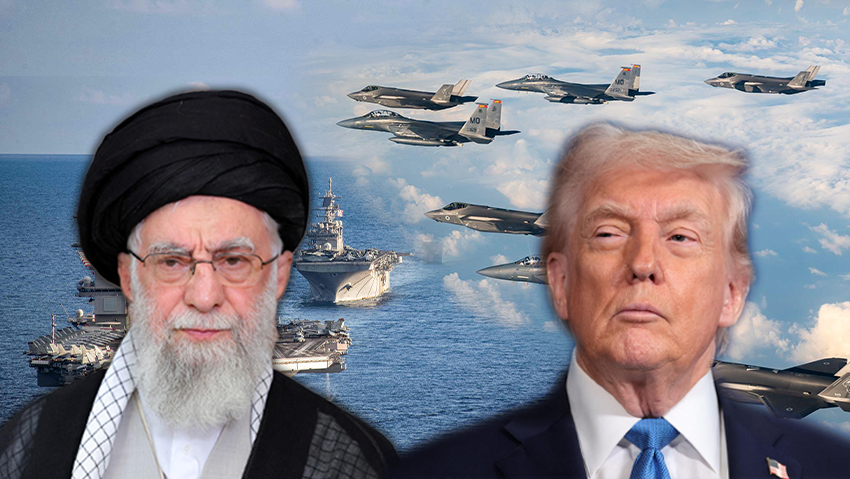
(Photo: REUTERS/Jonathan Ernst, Office of the Iranian Supreme Leader/WANA (West Asia News Agency)/Handout via REUTERS)
Israel had prepared for possible action over the weekend, but by Thursday it became clear that any strike had been delayed to an unspecified — though likely near-term — date.
While a diplomatic arrangement between Washington and Tehran remains on the table, officials say the prospects for military escalation currently appear higher.
Deep gaps in the sides’ fundamental positions have complicated efforts to bridge differences. Some officials in Washington view Iran’s leadership as weakened and under economic and political pressure, potentially vulnerable to substantial concessions. Iranian leaders, however, appear reluctant to risk being seen domestically as yielding to U.S. demands, even at the cost of military confrontation.
Trump: 'Maybe we're going to make a deal, you're going to be finding out over the next 10 days'


Ultimately, whether any Iranian compromise proposal is deemed sufficient to avert conflict may rest largely with President Donald Trump. If he concludes that proposed concessions fall short, options ranging from a limited agreement to a broad military strike remain under consideration.
Hoping for the best, preparing for the worst
Should a military confrontation ultimately materialize, Iran’s capacity to inflict significant damage on Israel, U.S. forces in the Middle East and Gulf states should not be underestimated. Iran’s arsenal of ballistic missiles, drones and allied proxy forces could enable Tehran to mount a painful response.
Meanwhile, public discourse in recent years has at times overstated the strength of Iran and allied terrorist groups such as Hezbollah, while downplaying Israeli and U.S. offensive and defensive capabilities.
A confrontation, if it occurs, would not necessarily develop into a prolonged war of attrition without clear outcome. Israel and the United States maintain significant advantages in airpower, intelligence and technology, which could allow for relatively short and focused operations targeting missile and nuclear infrastructure, even if such strikes do not immediately bring about regime change.
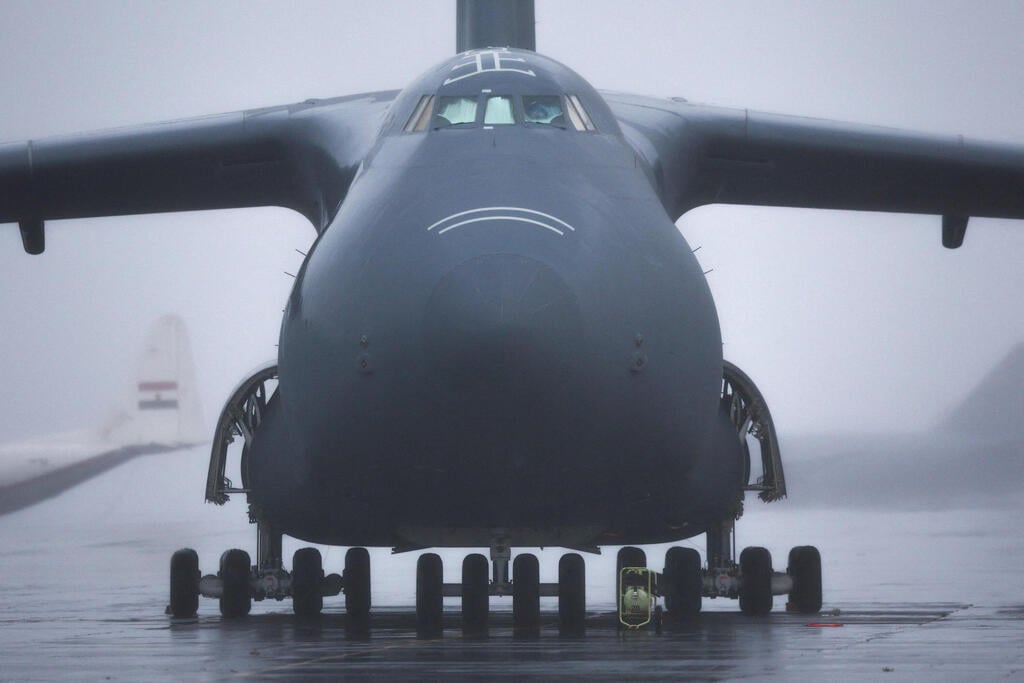
US Air Force C-5 Galaxy aircraft at Lajes Air Base, Azores, Portugal, amid tensions with Iran
(Photo: REUTERS/Pedro Nunes)
The U.S. decision-making process has also drawn scrutiny. It began with public expressions of support for protesters in Iran, continued with sustained negotiations and was accompanied by simultaneous military threats and operational preparations. In previous years, Iran’s missile and nuclear programs were not broadly treated by Washington as sufficient grounds for an all-out war.
From Israel’s perspective, officials see the current moment as a potential opportunity. Jerusalem's concerns extend beyond Iran’s nuclear program to the expansion of its precision-guided missile capabilities. Close coordination with the United States could enable strikes on production, storage and launch infrastructure, and potentially undermine regime stability by targeting centers of power and mechanisms of repression.
A strategic shift — and the possibility of targeting Khamenei
The clearest sign of a strategic shift is the move away from plans for a “short, decisive strike” toward a more prolonged campaign aimed at sustained pressure, military analyst Ron Ben-Yishai wrote Saturday.
The expected arrival of the USS Gerald R. Ford aircraft carrier to the region, capable of launching up to roughly 150 combat sorties per day, underscores the depth of the buildup. Significant additional naval and air forces are also expected to operate alongside it.
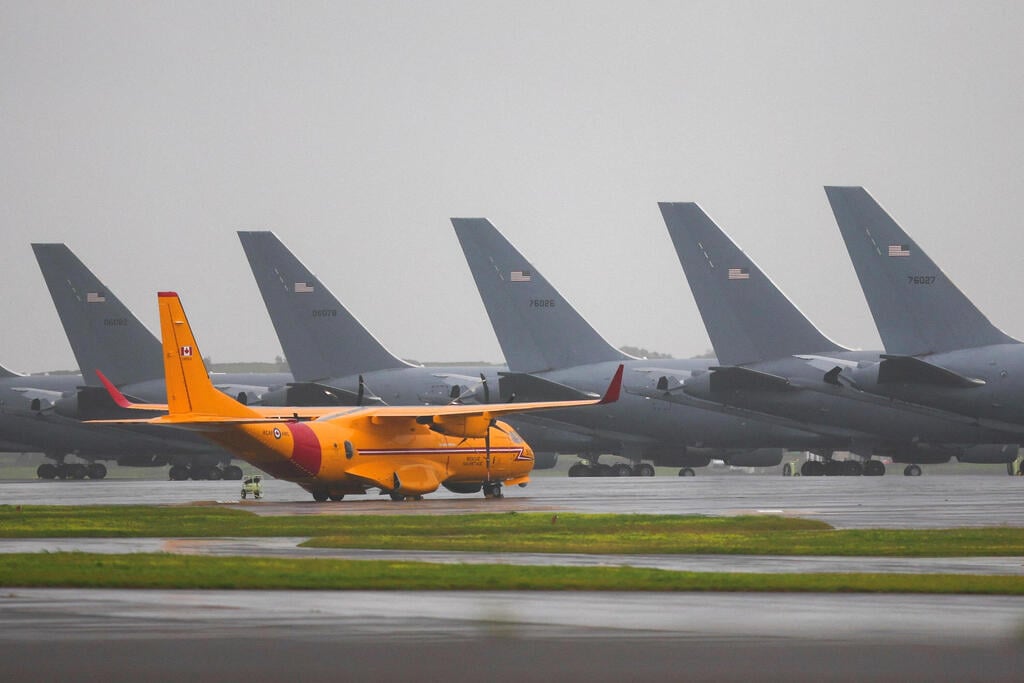
US Air Force aircraft at Lajes Air Base, Azores, Portugal, amid tensions with Iran
(Photo: REUTERS/Pedro Nunes)
Unlike a limited strike, a campaign of attrition would aim at the systematic degradation of regime assets: nuclear facilities, Islamic Revolutionary Guard Corps bases, missile arrays and command centers. According to this approach, only sustained military pressure — rather than a one-time strike — could compel Iran’s leadership to consider far-reaching concessions, or at least sharply reduce its strategic capabilities.
At the same time, a broad military operation would not guarantee the collapse of Iran’s government. History shows that ideological regimes can survive severe blows. Still, sustained targeting of senior leadership, security apparatuses and key repression mechanisms could undermine stability and weaken the regime’s hold on the public. Some assessments do not rule out the possibility of targeting Supreme Leader Ayatollah Ali Khamenei or his son, who is widely viewed as a potential successor.
Iranian society has been experiencing an unprecedented level of unrest since the 1979 Islamic Revolution. A combination of heavy external pressure and growing internal instability could create a new dynamic, though its outcome would be unpredictable.
Iranian concerns were reflected in remarks broadcast Saturday on Al Mayadeen, a network aligned with the pro-Iran axis. A source described as close to decision-making circles was quoted as saying: “Any war against Iran would mark the beginning of an inevitable unraveling of the global order. It would open the door for other powers to exploit the change to implement their geopolitical agendas. Such a war would alter the calculations of China and Russia. Fundamental shifts could push China and Russia to impose new geographic realities that serve their interests. Any military confrontation with Iran would not remain confined to its borders but would affect the entire international balance.”
Timing of a potential strike
The timing of any action would depend on military readiness as well as political and regional considerations, including religious sensitivities during the Muslim holy month of Ramadan, concerns about potential disruption to shipping through the Strait of Hormuz and pressure from regional governments.

US President Donald Trump
(Photo: Mandel NGAN / AFP)
There is also the risk of unintended escalation, including a possible Iranian preemptive move or a miscalculation that could ignite hostilities.
President Trump may prefer to wait until mid-March, after the end of Ramadan. At the same time, he has publicly referenced a timeframe of 10 to 15 days, raising the possibility that action could come sooner.
The arrival of the USS Gerald R. Ford in the eastern Mediterranean toward the end of the coming week also factors into the decision. Its deployment effectively signals the completion of the U.S. force buildup, aside from the possible dispatch of B-2 strategic bombers, which the United States could send directly toward Iran in an effort to surprise its leadership.
Seizing a historic opportunity
Israeli officials are preparing for the possibility that a U.S.-Iran confrontation could provide an opportunity to significantly weaken Tehran’s missile capabilities and those of its regional allies.
Potential targets include ballistic missile stockpiles and production facilities, as well as missile infrastructure linked to Hezbollah in Lebanon and the Houthis in Yemen. Senior Israeli officials have spoken of removing what they describe as long-term strategic threats to Israel.
Ultimately, options remain under consideration: a limited agreement allowing each side to claim an achievement, a restrained strike or a broad and sustained campaign. The decision will be made in Washington, but its consequences will be felt in Jerusalem, Tehran and capitals across the region.