

Three years after the October 7 Hamas massacre, the president of the International Committee of the Red Cross (ICRC) has acknowledged that greater pressure earlier in negotiations to free Israeli hostages held in Gaza might have saved more lives.
In an interview with The New York Times published Saturday, Mirjana Spoljaric said she personally believed that stronger pressure during the initial stages of negotiations could have helped secure the hostages' release sooner.

"I personally believe there was room to apply pressure earlier in the negotiations," she said, adding: "We could have saved more lives."
Asked directly whether Red Cross representatives had been allowed to visit the hostages held by Hamas, Spoljaric shook her head, indicating that they had not. She argued that arranging visits was considerably more complicated than facilitating the hostages' return.
Spoljaric emphasized that Hamas should have released the hostages unconditionally on the first day of the war, but said the organization had to operate within the realities of the conflict.
"We had to work with the tools available to us," she said, describing hostage-taking as among the most complicated and, in some respects, cruel situations humanitarian organizations confront.
She explained that Red Cross personnel themselves encounter hostage situations more frequently than the organization would wish, reinforcing the importance of negotiating swift releases. The objective, she said, must always be to bring the hostages home.
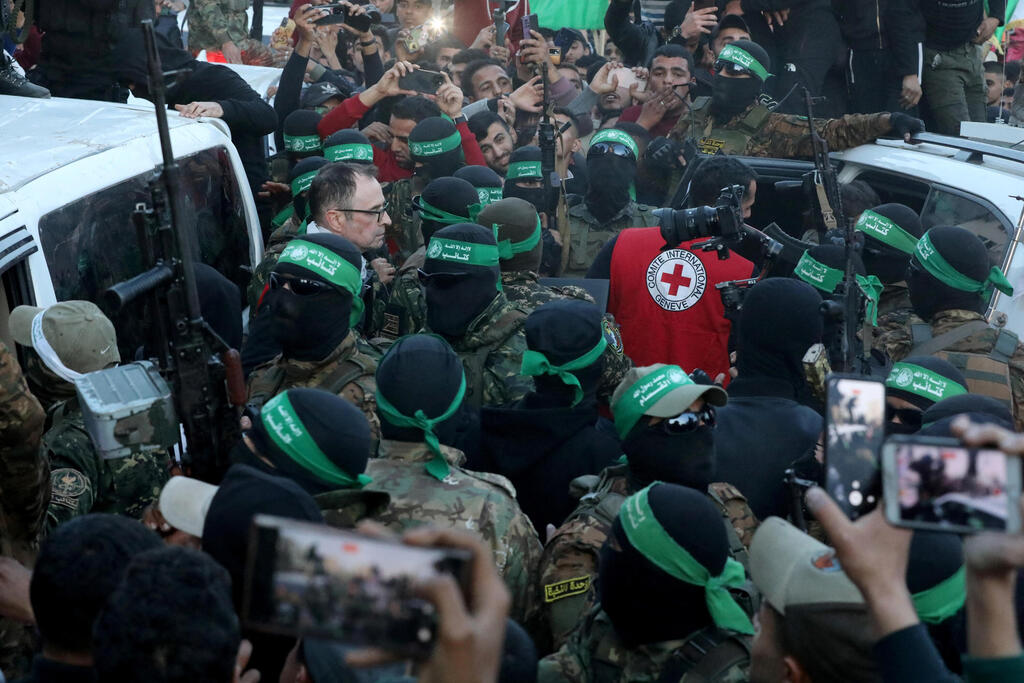
Romi Gonen, Emily Damari and Doron Steinbrecher handed over by Hamas to the Red Cross in Gaza, January 2025
(Photo: REUTERS/Dawoud Abu Alkas)
Spoljaric also disclosed details of her diplomatic efforts during the war, including meetings with Prime Minister Benjamin Netanyahu and senior Hamas officials.
She said she traveled to Qatar twice to meet Hamas leaders, including Ismail Haniyeh, who was later killed, and also held a face-to-face meeting with Netanyahu.
The discussions were difficult, she said, stressing that confidentiality was essential to maintaining the organization's ability to negotiate with opposing parties.
Spoljaric noted that the longer hostage negotiations continued, the more complicated they became, making early intervention especially important.
Red Cross also denied access to Palestinian prisoners
The interview also addressed Israel's refusal to allow the Red Cross access to Palestinian security prisoners held in Israeli facilities.
Spoljaric said the ICRC had enjoyed access to detainees held by Israel for decades before October 7, arranging tens of thousands of family visits over the years.
Securing access to detention facilities during wartime, however, was exceptionally difficult, she explained.
According to Spoljaric, parties to a conflict frequently suspend such visits on security grounds. She argued that the justification did not change the importance of ensuring humanitarian access.
The ICRC is an independent international humanitarian organization headquartered in Geneva, Switzerland. It is not a United Nations agency and operates worldwide, including in conflict zones, as a neutral intermediary.
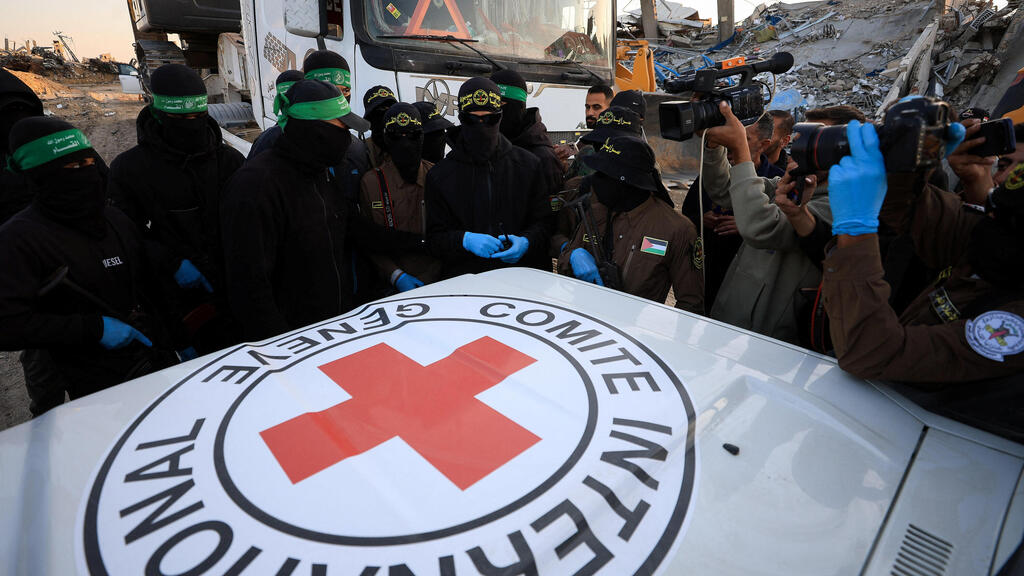
Islamic Jihad hands over the body of slain hostage Sudthisak Rinthalak to the Red Cross in Gaza, December 2025
(Photo: REUTERS/Dawoud Abu Alkas)
Throughout the war, the organization faced criticism in Israel over what was perceived as insufficient sensitivity toward Israeli civilians and hostages held by Hamas.
Israeli officials have generally regarded the Red Cross as less confrontational toward Israel than organizations such as UNRWA, the UN Office for the Coordination of Humanitarian Affairs and the UN human rights office, but have nevertheless criticized aspects of its conduct.
The ICRC has traditionally placed considerable emphasis on access to detainees and prisoners, including Palestinians held in Israeli facilities. Israel's refusal to permit visits to security prisoners, including Hamas terrorists involved in the October 7 attacks, was therefore seen by the organization as a significant obstacle to fulfilling its humanitarian mandate.
Spoljaric's remarks mark a rare public acknowledgment that the international organization's efforts during the hostage crisis may have fallen short, even as she defended the confidential negotiations and neutral approach that underpin its work.