

Thousands of Palestinians have returned to Gaza City and surrounding areas under the ceasefire and Israel’s partial withdrawal — only to find their homes reduced to rubble.
“At least this piece of land is ours,” said 26-year-old Sabah Abu Ghanem, who returned to the city with her family after months in a crowded tent camp in southern Gaza. “I can say these ruins are mine.”
The Gaza Strip
(Video: Reuters)


Abu Ghanem was among the thousands who came back under the Israel-Hamas deal. But when she reached her northern neighborhood, she found it destroyed — like most of Gaza City. Many Palestinians returning north after weeks or months in displacement found little more than dust and broken concrete.
Majdi Nassar, 32, returned to his home in Jabaliya near Gaza City but left for Deir al-Balah in the south less than a day later. He said he would not come back until there was clean water — something that could take a long time. “I couldn’t find any trace of my building, not even the ruins,” he said. “It’s all gone.”
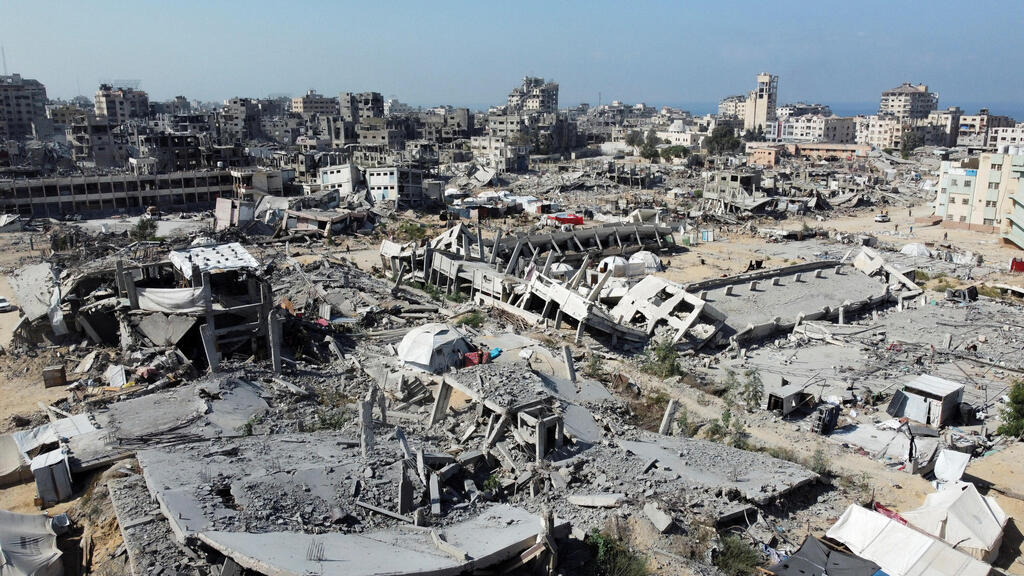
Electricity remains cut off in much of the area, and food supplies are scarce. On Sunday, Israel halted humanitarian aid shipments to Gaza following the deadly Rafah incident in which two IDF soldiers — Maj. Yaniv Kula and Staff Sgt. Itay Yavetz of the Nahal Brigade were killed by an anti-tank missile strike, and another soldier was seriously wounded. After U.S. pressure, Prime Minister Benjamin Netanyahu pledged that aid deliveries would resume Monday despite the earlier suspension.
The conditions in Gaza City are so dire that even those who fought to return now dream of leaving again. “When we arrived, there was no one around — no services, no stores, nothing,” Abu Ghanem said. “Now my dream is to leave for my children’s sake. I want them to have a better life than mine. Gaza is no place for life or dreams.”
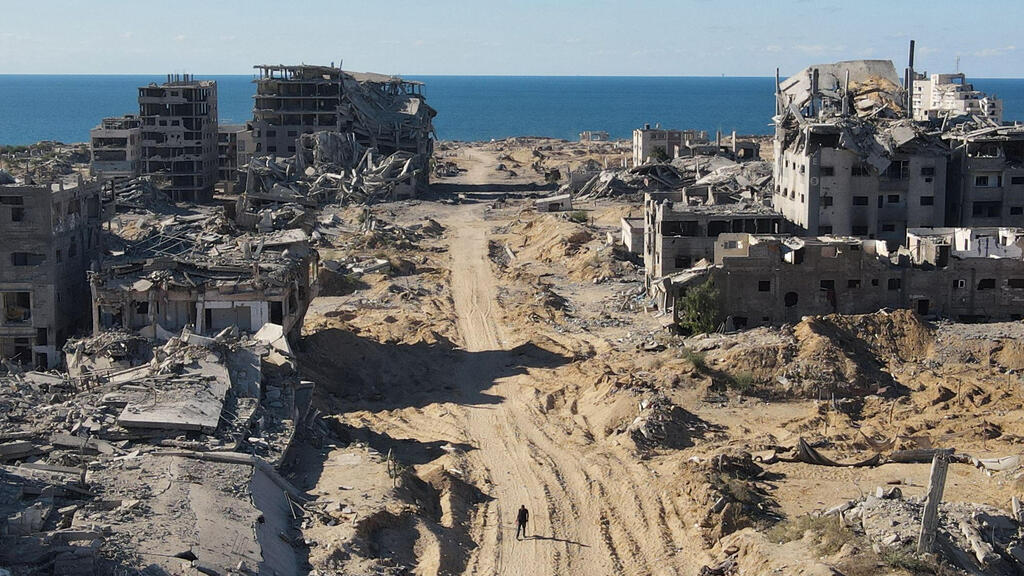
(Photo: AFP)
Meanwhile, Hamas has begun reestablishing its grip on the Strip. Within days of the ceasefire, Hamas terrorists returned to Gaza’s streets in uniform. Members of the group’s internal security and police units appeared at major intersections, and local government officials — city heads, district managers, and bureaucrats — resumed their posts. Hamas even appointed new governors, many of them former military commanders, and placed signs in less-damaged neighborhoods declaring, “We will bring Gaza back to life.”
Suleiman, a resident of central Gaza, said he felt nothing had changed. “I thought after all the war and suffering, they’d finally leave us,” he said. “But no. As soon as people started going back to their land — because most houses are gone — we saw Hamas men spreading out, some in uniform, some not, as if nothing happened. People are still afraid of them, because we know what they’re capable of. The feeling is deep disappointment — mixed with constant fear.”