


While Israeli officials have provided frequent updates on targets and damage in Operation Roaring Lion, the United States has maintained relative ambiguity over the past two days, issuing periodic summaries through US Central Command, known as CENTCOM, alongside footage of missile launches and the destruction of Iranian aircraft and drones.
The quieter tone from Washington does not reflect the scope of the strikes. According to the Institute for National Security Studies, in the first 24 hours of the operation, US forces struck nearly twice as many targets as Israel.
US strikes in Iran
(Video: CENTCOM)


In parallel with offensive operations, the United States has expanded its defensive posture across the Middle East and the Gulf. US air defense systems deployed in countries including Jordan and Qatar have intercepted threats launched toward the region. American fighter jets have also worked to neutralize airborne threats or strike them on the ground before launch.
CENTCOM said three US service members were killed and five seriously wounded during the operation, without specifying where the casualties occurred. President Donald Trump later said the United States would “avenge their deaths.”
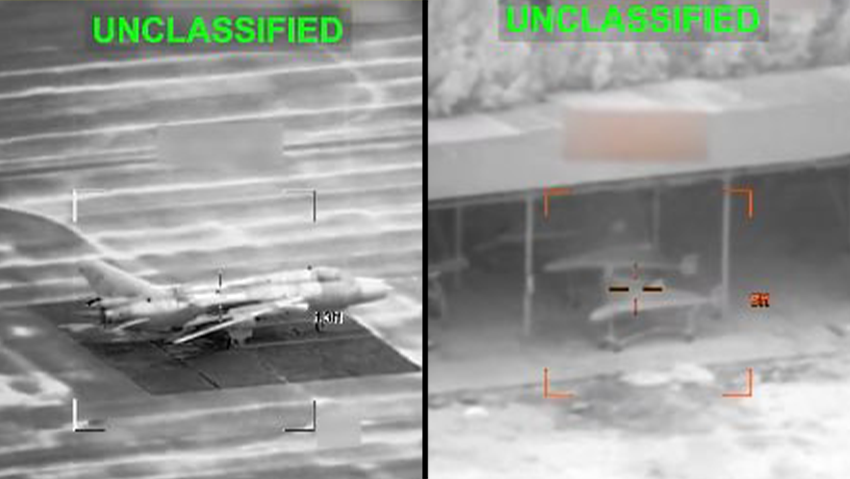
According to various reports and an unofficial division of labor, Israel has focused primarily on western Iran, while US forces have concentrated on eastern and southern areas of the Islamic Republic.
Command centers, air defenses and launch sites
At the start of the operation early Saturday, the United States released limited details, sharing mainly footage of fighter jets taking off from aircraft carriers, Tomahawk cruise missile launches and rockets fired from mobile platforms.
CENTCOM said US and partner forces began striking targets to dismantle the Iranian regime’s security apparatus, prioritizing locations posing an immediate threat. Targets included Revolutionary Guard command and control facilities, Iranian air defense systems, missile and drone launch sites and military airfields.
CENTCOM commander Adm. Brad Cooper said the president had ordered “bold action,” adding that US forces were responding to the call. The command stated its objective was to protect the American people by removing immediate threats from the Iranian regime.
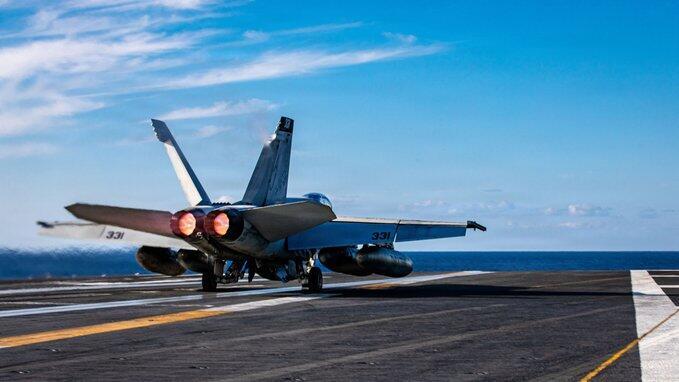
USS Gerald R. Ford launches strikes on Iran
(Photo: CENTCOM)
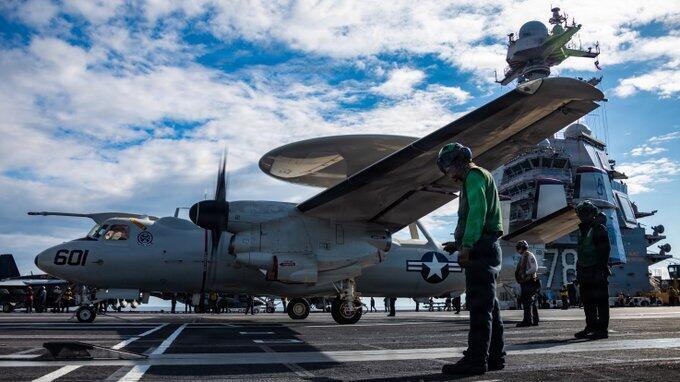
(Photo: CENTCOM)
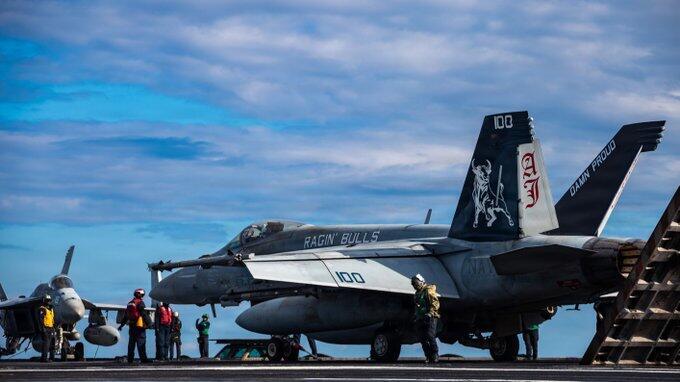
(Photo: CENTCOM)
Later, CENTCOM announced the first use of Task Force “Scorpion Strike,” operating attack drones modeled in part on Iran’s Shahed systems.
Naval forces, fighter jets and missile arrays
On the second day of the operation, CENTCOM said US forces struck an Iranian Jamaran-class corvette, which it said was sinking in the Gulf of Oman. Trump later said nine Iranian vessels had been destroyed and that a naval headquarters had been hit.
(Video: CENTCOM)
(Video: X)
CENTCOM confirmed that US B-2 stealth bombers carrying heavy ordnance targeted Iran’s ballistic missile facilities. It said no country should doubt America’s resolve and described the Iranian regime’s use of ballistic missiles as a long-standing threat that was now being eliminated under presidential orders.
Additional footage released showed US strikes against Iranian fighter jets and drones. The aircraft carrier USS Gerald R. Ford launched sorties toward Iran from the eastern Mediterranean.
In a summary of the first day, CENTCOM said US forces struck command and control centers, Revolutionary Guard headquarters including its aerospace command, air defense systems, ballistic missile sites, naval vessels and submarines, anti-ship missile locations and military communications capabilities.
Forces involved
Thousands of US personnel are participating in the operation and related defensive deployments, operating hundreds of aircraft and dozens of naval vessels from regional bases.
Assets include B-2 stealth bombers; F-35, F-22, F-16 and F-18 fighter jets; A-10 attack aircraft; EA-18G electronic warfare planes; MQ-9 drones; P-8 maritime patrol aircraft; RC-135 reconnaissance planes; airborne early warning platforms; C-17 and C-130 transport aircraft; and aerial refueling tankers.
CENTCOM is also operating multiple destroyers, two aircraft carriers, the USS Abraham Lincoln and the USS Gerald R. Ford, as well as Patriot and THAAD air defense systems deployed across the Middle East, along with additional capabilities it has not detailed.