

The rescue flight carrying the flydubai passengers landed safely in Israel, while the suspected attacker remains detained in Saudi Arabia and is believed to be under questioning.
But many questions surrounding an incident that came perilously close to disaster remain unanswered, from the struggle inside the cockpit and the suspect’s motive to which countries will take part in the investigation.
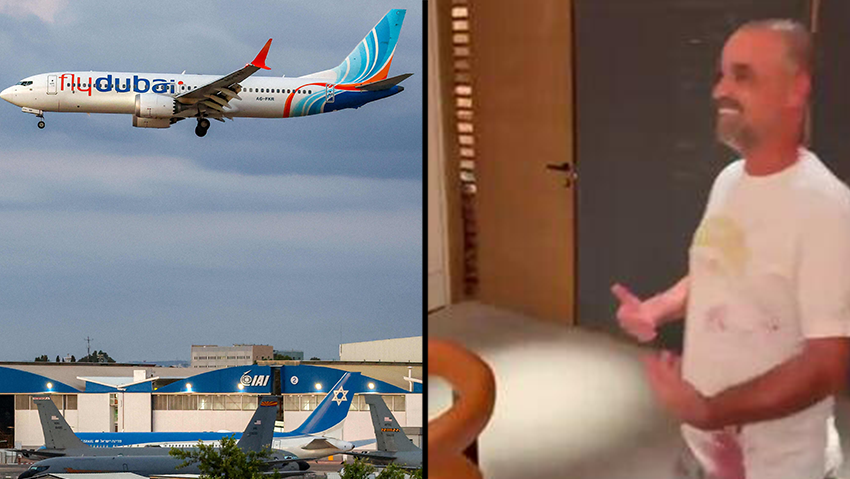
What happened during the critical minutes in the cockpit?
A screenshot of Flightradar24 data shows the aircraft dropping within a short period from around 34,000 feet to about 14,000 feet, at one point recording an instantaneous descent rate of roughly 30,976 feet per minute. Sharp changes in ground speed were also recorded.
After entering Jordanian airspace, the aircraft transmitted squawk code 7700, the international code for a general emergency, followed by 7500, which indicates unlawful interference or hijacking. The aircraft then turned back toward Saudi Arabia and continued flying at a lower altitude over the kingdom. After heading south, it turned west while remaining in Saudi airspace.
Passengers said the captain, despite his injuries, managed to open the cockpit and allow several people inside to overpower the suspected attacker. Other passengers, however, said additional pilots traveling aboard the aircraft opened the cockpit using the access code.
During the struggle, the aircraft’s rudder was torn off. A second flight crew traveling aboard the plane and scheduled to operate the return leg nevertheless managed to land it safely.
Questions still unanswered: Who was flying the aircraft during the steep descent? Was the loss of altitude deliberately caused by the suspect, the result of the physical struggle, or an attempt by the captain to regain control? At what stage of the confrontation was the emergency code entered?
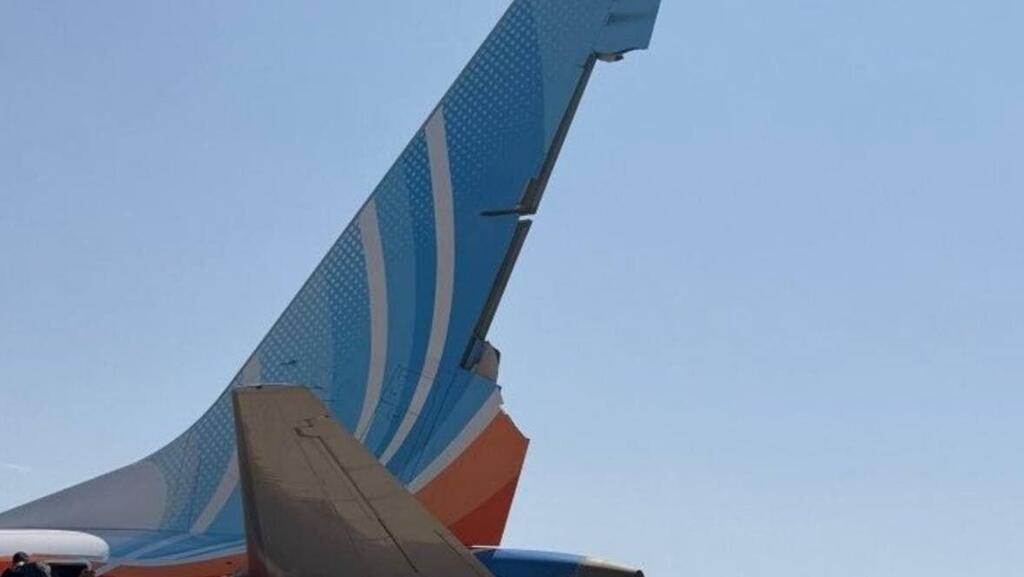
The damaged tailplane of the flydubai aircraft
Was this a planned terrorist attack?
Three Israeli officials told Reuters that authorities were investigating the incident as a suspected attempted terrorist attack. Prime Minister Benjamin Netanyahu said the co-pilot “apparently tried to crash the plane,” while Israeli authorities are examining whether he acted alone or as part of a broader plan.
flydubai, however, has explicitly said that the circumstances and motive remain unknown.
Questions still unanswered: Did the suspect specifically seek assignment to a flight bound for Israel? Was anything found in his possession that could indicate advance planning?
Who is the suspect, and what was known about him before the flight?
Israeli sources identified the suspect, the flight’s co-pilot, as an Omani citizen. Saudi authorities and the airline have not publicly confirmed that information.
Transportation Minister Miri Regev said flydubai violated the aviation agreement between the United Arab Emirates and Israel by assigning an Omani pilot to a flight bound for Israel, arguing that the agreement prohibits such an assignment because Israel and Oman do not have diplomatic relations.
As investigators examine the suspected co-pilot’s motive, the incident has also renewed questions about the level of trust placed in flight crews. Most flydubai pilots are not Emirati citizens and come from countries around the world.
There have previously been cases in which investigators concluded or suspected that pilots deliberately crashed aircraft with passengers aboard. In this case, passengers and crew managed to overpower the suspect and survive.
Questions still unanswered: How long had the suspect worked for flydubai? What security and medical screening had he undergone? Were there previous disciplinary incidents or warning signs? What screening procedures apply to pilots assigned to routes serving Israel?
What did the suspect use to injure the captain?
It is still not fully clear what object was used to attack the captain.
An initial investigation indicates that the co-pilot struck or stabbed him with an emergency axe kept inside the cockpit for use in breaking aircraft windows. Earlier reports referred to a knife or pocketknife.
Videos circulated from the flight show the captain injured and covered in blood. One passenger was filmed saying that the blood on his clothing belonged to the pilot.
Questions still unanswered: Did the suspect somehow pass through airport security in Dubai carrying a weapon, or was the object already available to the flight crew inside the cockpit?
Who will provide the answers?
The suspected attack presents an unusually complicated security and diplomatic investigation: an Emirati airline flying to Israel, losing altitude over Jordan before making an emergency landing in Saudi Arabia, with an Omani suspect and a passenger list made up mostly of Israelis.
It remains unclear which authority will ultimately lead the various aspects of the investigation and how extensively it will cooperate with agencies from other countries.
Saudi Arabia is positioned to play a central role because the aircraft landed there and the suspect is in Saudi custody. The United Arab Emirates, as the airline’s home country, could also take part, while U.S. aviation authorities may become involved because the aircraft was manufactured in the United States.
Israel wants to participate in the investigation. Saudi authorities could permit Israeli involvement, but are not obligated to give Israel a formal role.
Questions still unanswered: Will Israeli intelligence personnel be allowed to question the suspect? Who will receive the flight recordings containing potentially crucial information about what happened? What will happen to the suspect, whether he remains in Saudi Arabia or is transferred to the UAE? And how much of the investigation will ultimately be made public?
First published: 05:37, 10.01.26