


Syrian regime forces began withdrawing Wednesday evening from the predominantly Druze southern Sweida province following five days of intense clashes, Israeli airstrikes and mass cross-border movement of Druze from Israel into Syrian territory.
The withdrawal was part of a ceasefire agreement reached between the regime and senior figures in the local Druze leadership. The deal, announced earlier in the day by Sheikh Yusuf Jerboua, a prominent Druze cleric, calls for the “full integration” of Sweida into the new Syrian administration. However, it also requires the regime’s military units, which were involved in heavy fighting in the region, to pull out and allow local Druze forces to take over internal security.
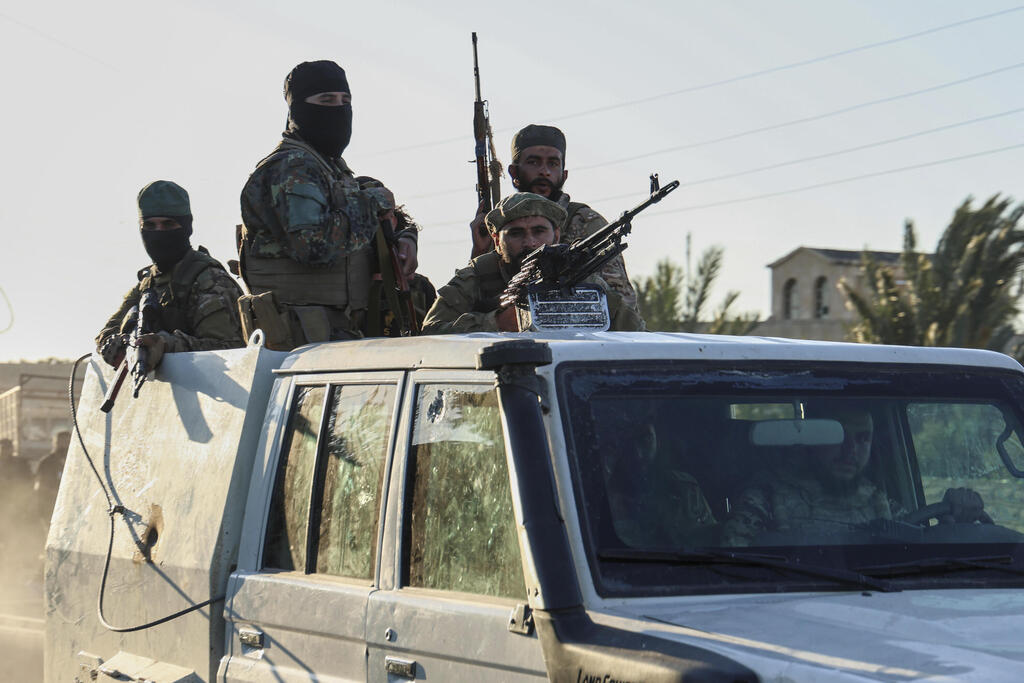
Local media reported that the pullback began around 9 p.m. under the terms of the agreement, which permits police forces affiliated with the regime to remain in the province and coordinate with local Druze security elements. A mechanism was also established to regulate possession of heavy weapons, aimed at ending their use outside of official state frameworks. Coordination with religious and community leaders was emphasized, with sensitivity to the social and historical context of the Druze-majority province.
The ceasefire followed reports of atrocities during the fighting, including summary executions of civilians by regime forces and allied Bedouin militias, public humiliation of Druze religious leaders and the looting and burning of homes. A commission of inquiry is to be established to investigate these incidents.
Israeli strike in Damascus, Syria


Not all Druze leaders have accepted the deal. Sheikh Hikmat al-Hijri, the community’s top spiritual authority in Syria, rejected the agreement outright, calling to continue the struggle “until Sweida is liberated.” He said there could be no negotiation “with the armed gangs calling themselves the government,” and warned that anyone deviating from the unified community position would be held accountable.
A prominent local Druze militia, the Men of Dignity movement, also opposed the deal and demanded a full withdrawal of all regime forces. “After the martyrdom of our best leaders and fighters, the movement will defend itself until the last fighter able to carry a weapon—unless the invaders retreat from all villages and towns,” the group said.
Heavy clashes in Sweida
Reports of Wednesday evening’s withdrawal came shortly after the U.S. State Department called on President Ahmad al-Sharaa’s regime to pull its forces out of Sweida “to allow all parties to de-escalate tensions.” Secretary of State Marco Rubio confirmed shortly afterward that an agreement had been reached, which he said could bring the crisis to an end as early as tonight. The agreement includes “specific steps” required from all sides, he said: “This will require all parties to deliver on the commitments they have made and this is what we fully expect them to do”—a comment likely referring also to an end to Israeli airstrikes.
Control over Sweida remains a central issue in the ongoing tensions. The province is home to Syria’s largest Druze community, numbering about 700,000, and has long feared persecution under the al-Sharaa regime, which has been accused of seeking to “return the Druze to pure Islam” and dismantle their traditional way of life. In April, violent clashes erupted between Druze fighters and regime forces, resulting in more than 100 deaths. That round of fighting ended with a ceasefire in May, and since then Druze forces had maintained security control in the province.
Syrian regime forces humiliating Druze captive in Sweida province
The latest round of fighting has so far claimed more than 300 lives, according to the UK-based Syrian Observatory for Human Rights. That figure includes 69 Druze fighters and 40 Druze civilians, 27 of whom were reportedly executed. It also includes 165 regime soldiers and 18 Bedouin militia members.
Get the Ynetnews app on your smartphone: Google Play: https://bit.ly/4eJ37pE | Apple App Store: https://bit.ly/3ZL7iNv
The violence began late last week after Bedouin gunmen robbed a young Druze man from Sweida. In response, local residents detained several members of Bedouin tribes, escalating tensions. On Tuesday, as fighting continued, al-Sharaa’s forces entered the provincial capital, claiming they aimed to restore order—but according to reports, they joined in the clashes and were involved in attacks against the Druze population.
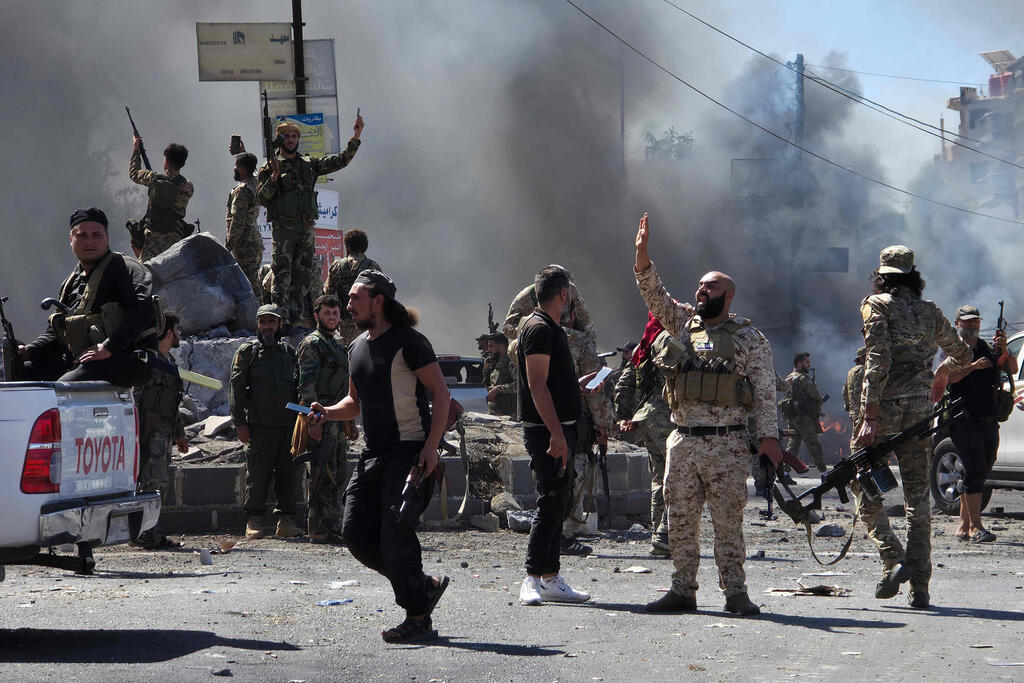
Syrian regime forces entering Sweida province
(Photo: Sam HARIRI / AFP)
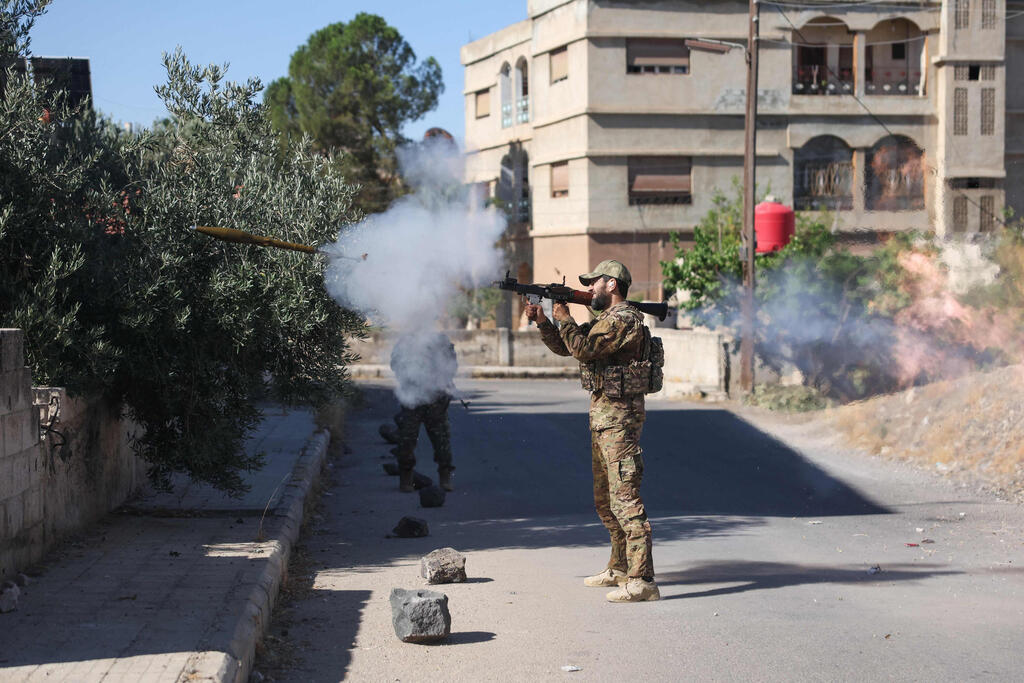
(Photo: OMAR HAJ KADOUR / AFP)
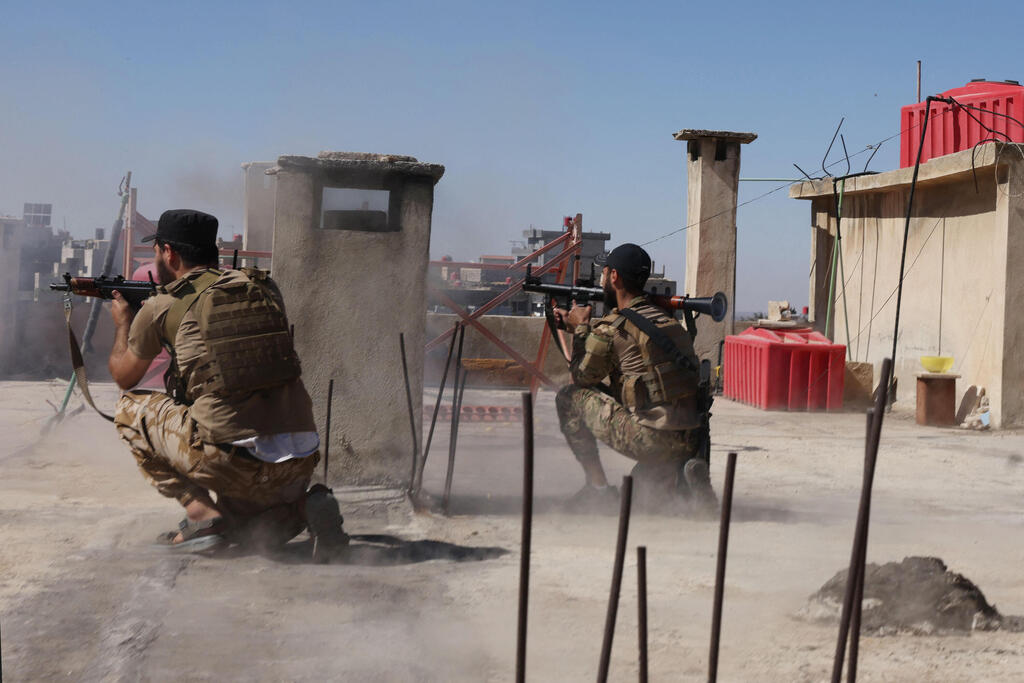
(Photo: Bakr ALkasem / AFP)
Druze leaders appealed to the international community, describing the situation as a campaign of extermination. Israel responded with a series of intensified airstrikes aimed at forcing Syrian forces out of Sweida. Among the targets was the Syrian military headquarters in Damascus, hit in a strike broadcast live on Syrian television, killing five.
A military site near al-Sharaa’s presidential palace was also struck, and an Israeli military source told Reuters the attack was a direct message to the regime: “Israel will not allow a military buildup on its border with southern Syria, and it will not allow the massacre of Druze in Syria,” the official said.